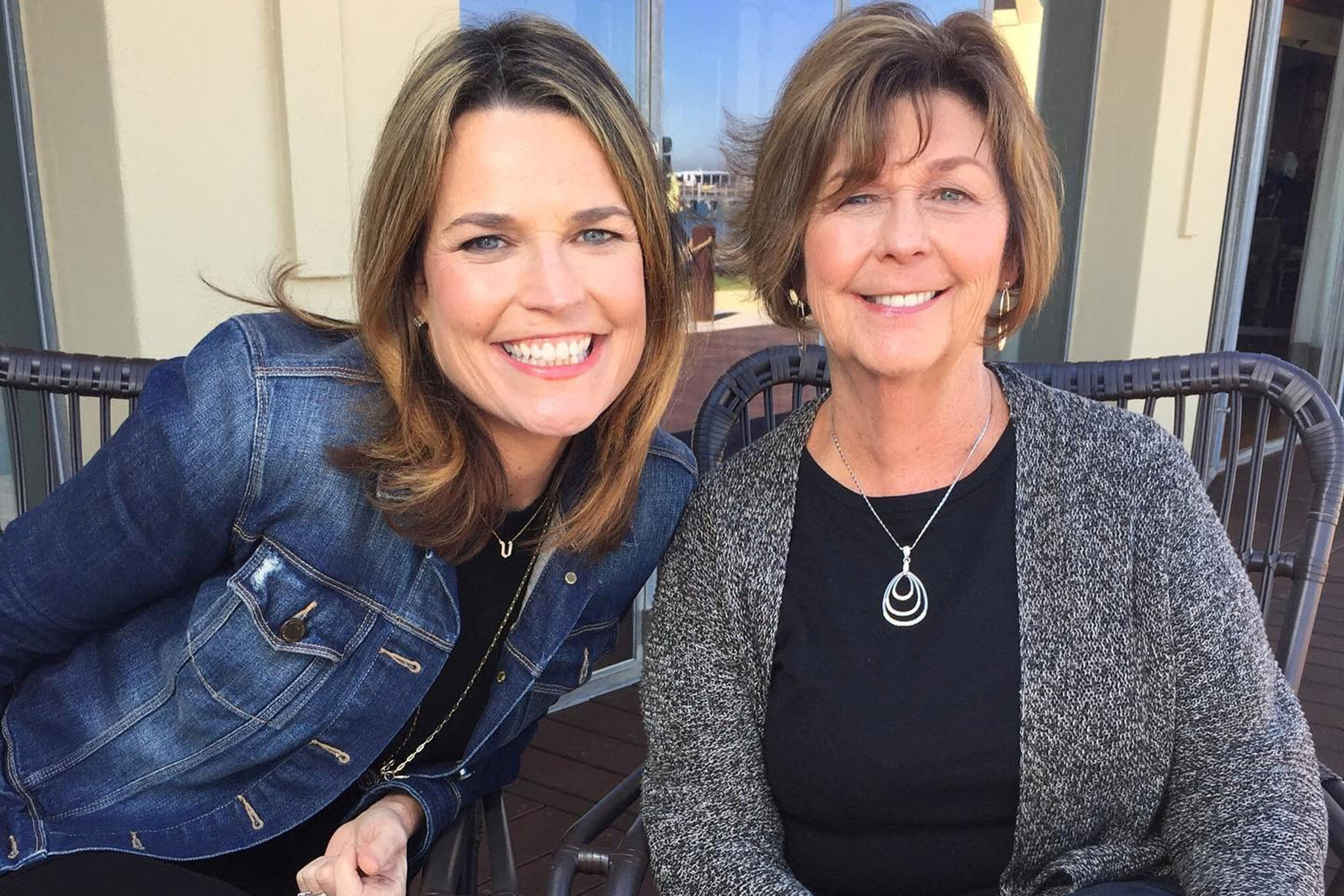
Nancy Guthrie, the 84-year-old mother ofTodayshow co-anchor Savannah Guthrie, has been missing since 1 February, when authorities believe she was abducted from her home in the Catalina Foothills area of Tucson, Arizona. Now, more than five weeks into the investigation, experts are raising urgent questions not only about who took her, but about whether she could have physically survived the ordeal. A sleep specialist has warned that the circumstances of that early morning disappearance may have placed Guthrie in immediate, life-threatening danger from the very first moment she was disturbed.
Speaking on the'Crime Stories'podcast on 7 March, sleep specialistPat Byrnesaid one particular scenario left him immediately concerned. Byrne focused on the human brain's response when someone is violently roused from sleep in the middle of the night—and what that means for an elderly woman with a known heart condition.
Byrne explained that at 2 am, Guthrie was most likely in either deep sleep or REM sleep — the stage associated with dreaming. Being abruptly woken at that hour triggers what is known as sleep inertia, a period during which the brain struggles to transition from sleep to full wakefulness, potentially leaving a person profoundly confused and disoriented for several minutes.
'Our human brains do not go from fully asleep to fully awake,' Byrne said. 'There's this process, and it's called sleep inertia... So, at 2 am, [Nancy Guthrie] was probably either in a very deep sleep or in what's called REM sleep... And the interesting thing about that is if she were in a deep sleep, then she would be incredibly confused.'
According to Byrne, that disorientation alone would have left Guthrie unable to process what was happening, recognise danger, or respond to it in the critical moments when a masked individual was captured on her doorbell camera tampering with the device.
Guthrie has a known heart condition and relies on a pacemaker. The Pima County Sheriff's Department previously confirmed that her pacemaker stopped syncing to her Apple Watch in the early hours of 1 February, a detail that has drawn significant public concern about her condition at the time she vanished.
Byrne said the combination of sleep inertia and her pre-existing cardiac vulnerability raised the stakes enormously. 'The research just shows that elderly people who, even without heart conditions, are at a high risk of heart attacks and being violently woken up from a deep sleep,' he said. 'And so you add on the fact that she has a pacemaker, which means she has a heart condition, makes it worse.'
To provide further context on pacemaker risks, DrSrihari S Naidu, a board-certified cardiologist and professor of medicine at New York Medical College, noted that pacemakers are typically fitted in elderly patients with bradycardia or an abnormally slow heart rate. Dr Naidu, who is not familiar with Guthrie's medical history, explained that for a patient of her age, an abrupt physical shock to the system could carry serious cardiac consequences.
Statement regarding doorbell surveillance footage in the Nancy Guthrie Investigation -pic.twitter.com/JZhd3i8Wx5
Investigators found drops of blood on Guthrie's front stoop, which have since been confirmed by the Pima County Sheriff's Department to match her DNA. Forensic pathologist DrMichael Badensaid the pattern of the spots—drops mixed with air—suggests the blood came from the nose or mouth rather than a wound to the extremities.
Source: International Business Times UK
