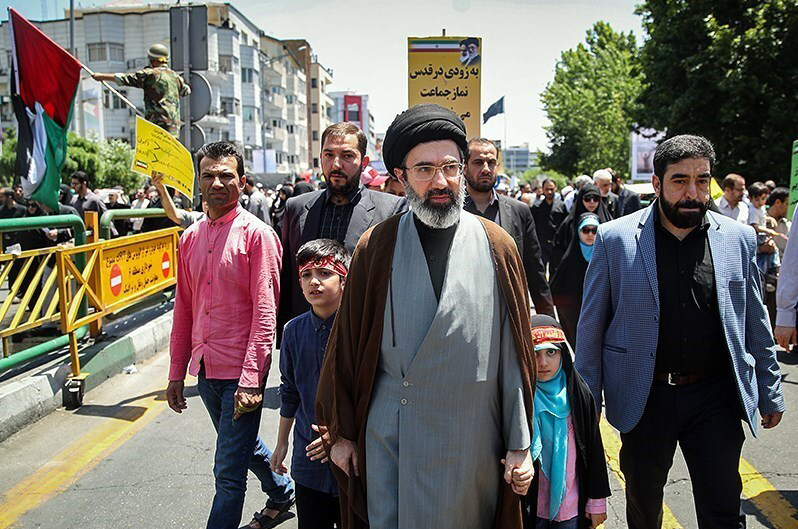
Mojtaba Khameneiis reported to have been chosen in Tehran on Tuesday by Iran's Assembly of Experts as the country's next Supreme Leader after the killing of his father,Ali Khamenei, in US and Israeli air strikes, according to Iran International, which cited anonymous informed sources. If confirmed, the move would placeMojtaba Khameneiat the apex of the Islamic Republic at its most dangerous moment in modern history and, just as strikingly, keep ultimate power within one family for the first time since the 1979 revolution.
For context, nothing has yet been publicly confirmed by the Iranian state and the reported decision is said to remain unannounced until after Ali Khamenei's burial.
A succession in wartime is never tidy, and this one appears to have been pushed through under pressure from the Islamic Revolutionary Guard Corps, raising awkward questions about process as well as power.
For years, Mojtaba Khamenei has been one of the most important men in Iran without ever really becoming a public political figure. Now 55, he is described inreportsas a gatekeeper, fixer and power broker inside the Office of the Supreme Leader, the opaque centre of gravity around which much of the Iranian system has revolved.
That is why his reported elevation looks less like a sudden promotion than the formal unveiling of a figure who has spent decades operating just offstage. His role has often been compared with that of Ahmad Khomeini, the son of Ruhollah Khomeini, who became indispensable to the revolutionary state in its formative years.
The son of the slain Ali Khamenei was injured during one of the attacks. He is being touted as a potential new Supreme LeaderMojtaba Khamenei, the son of the slain Ayatollah Ali Khamenei, was injured during one of the attacks, according to Al Hadath and Times of Israel, citing…https://t.co/tZsJihCGvcpic.twitter.com/8Ak9MvkF6i
The difference is that Mojtaba's rise comes not in a period of ideological consolidation but in the middle of war, strain and a leadership vacuum.
Analysts quoted by Iran International paint him as both central and elusive. Dr. Eric Mandel, director of the Middle East Political and Information Network, said Mojtaba had spent years building ties with the IRGC and consolidating influence inside the regime's power structure, adding that he is 'widely viewed as one of the architects of the regime's repression.'
Arash Azizi, an author and Iran analyst, offered a more direct political reading, saying Mojtaba has been a 'bete noire' of democratic movements since at least 2009, when he was rumoured to have helped orchestrate the repression of protests after the disputed election.
A large part of Mojtaba's authority appears to rest not on charisma or theology but on old loyalties. During the Iran-Iraq War, he served in the Habib Battalion, a unit linked to forces operating under the IRGC umbrella.
Source: International Business Times UK
