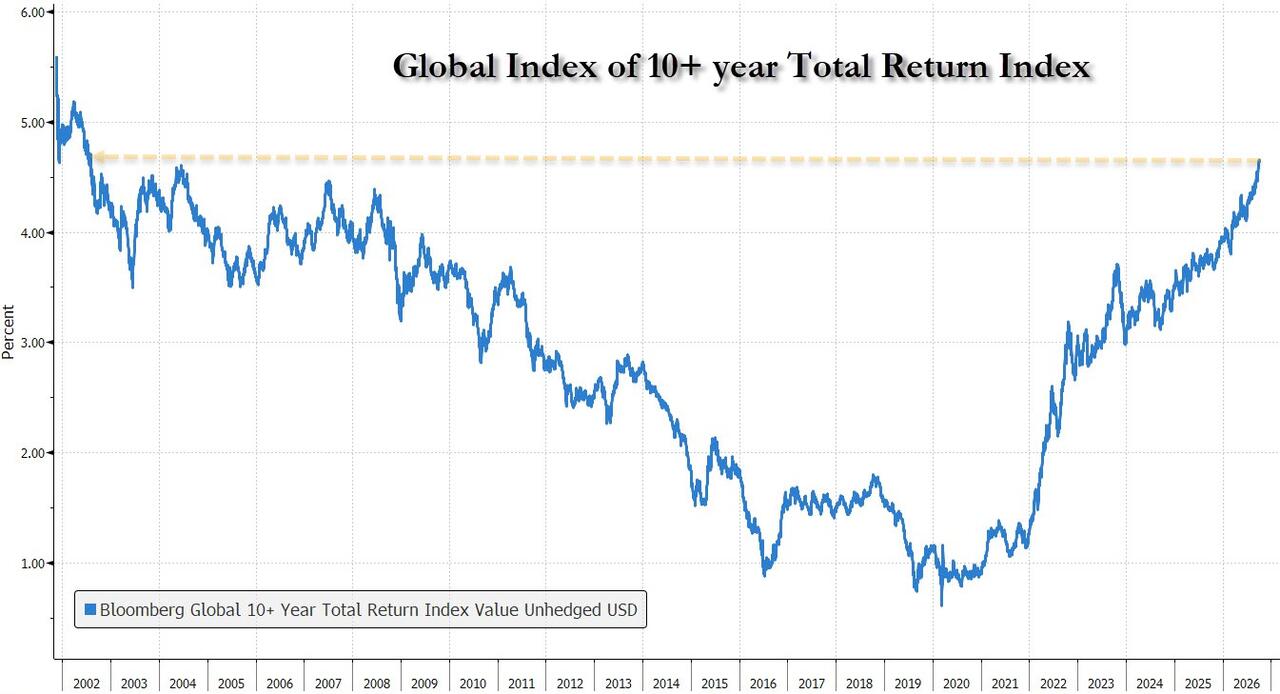
Given the high stress and high alert in bond markets, which has pushed global 10Y yields to the highest level since 2022 and with Europe finding itself on the verge of another sovereign debt crisis...
... the main focus in the week ahead will be on central banks, with the minutes from the September FOMC meeting on Wednesday and the ECB’s account of its latest meeting on Thursday.
There is also a busy run of central-bank speakers, while the data calendar includes US ISM services today and the University of Michigan survey on Friday, a run of German activity data through the week, and Japanese wages on Wednesday.
In the US, the week begins in the shadow of Friday’s important September employment report. Headline payrolls rose just +29k, compared with +133k expected, while private payrolls increased +46k versus +127k expected. There were also 60k of downward revisions to headline payrolls over the previous two months, and average hourly earnings rose only +0.1% against +0.3% expected. Nevertheless, DB's US economists think the details still point to a broadly stable labor market. The unemployment rate edged up only slightly to 4.175% from 4.141%, the broader U-6 rate fell a tenth to 7.6%, and participation rose two-tenths to 61.8%, its highest since May last year. Prime-age participation and the employment-to-population ratio also recovered further after their unusually large June declines. So although the headline payroll number was disappointing, the wider labor-market picture remains relatively resilient, particularly alongs