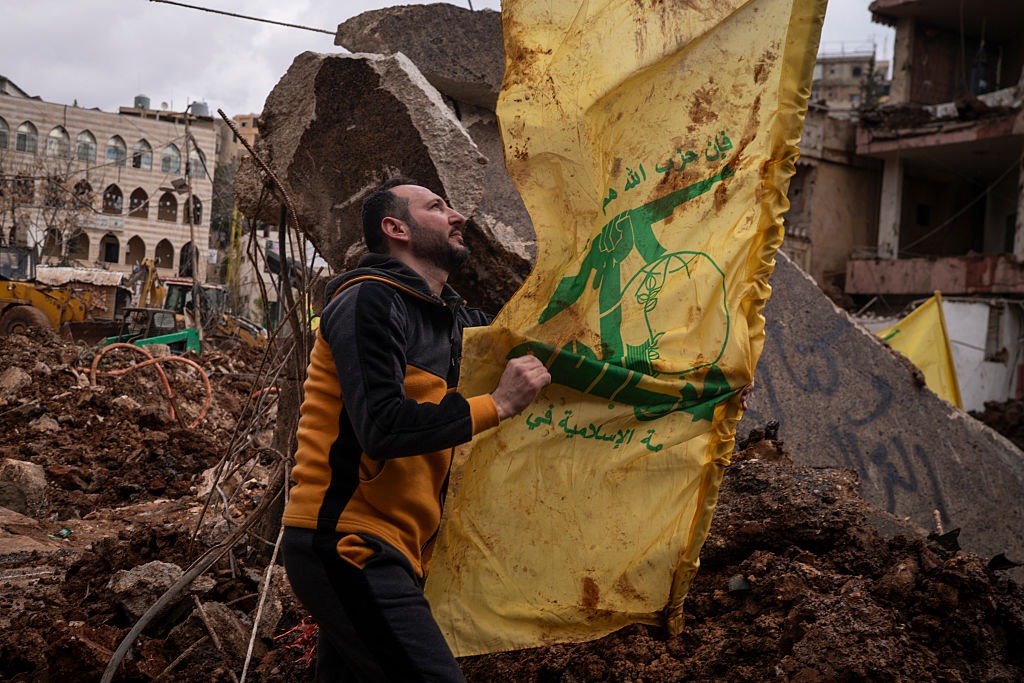
On March 2, Lebanon's Hezbollah terror group formallyjoinedthe current Israeli-US war with Iran by firing missiles and drones at various Israeli military bases, oil infrastructure, and northern communities.
Hezbollah's decision to resume its attacks on Israel came in violation of the November 2024 US-brokered ceasefire agreement between Israel and the terror organization. It also came in violation ofcallsfor the "disarmament of all armed groups in Lebanon," as required by United Nations Security Council Resolution 1701.
In August 2025, the Lebanese government, under Prime Minister Nawaf Salem and President Joseph Aoun,initiateda five-stage plan to establish a state monopoly on weapons. In response, the US hasprovidedmore than $230 million to support Lebanese security forces in their effort to disarm Hezbollah and other armed groups, and to confiscate rockets and missiles.
Hezbollah, however, has sincerefusedto disarm, rejecting Lebanese government directives and international pressure, specifically from the US and Israel, to relinquish its weapons. "The state is holding talks with Hezbollah to persuade it to hand over its weapons, but it refuses," Lebanese Foreign Minister Yousef Rajjistatedin November 2025.
Hezbollah Chief Naim Qassemthreatenedopen confrontation if Lebanon's government proceeds with plans to disarm his organization:
"The [Hezbollah] party will fight a (historic) battle if necessary in the face of this Israeli-US project, whatever the cost. There will be no life in Lebanon if the government tries to confront the party."
Since the resumption of the fighting between Israel and Hezbollah this month, the cost has been painfully high for hundreds of thousands of Lebanese civilians who were forced toevacuatetheir homes. "We're sleeping here in the streets – some in cars, some on the street, some on the beach,"complainedone man in Beirut. "No one even brought a blanket."
Hezbollah's decision to enter the war was not spontaneous or impulsive. Rather, it was a calculated decision to help its patrons in Tehran.
The leaders of Hezbollah undoubtedly knew that their entry into the war would elicit a strong response from Israel. They were also aware that the decision would bring destruction on Lebanon and cause suffering to hundreds of thousands of civilians.
For Hezbollah, however, serving the interests of the Iranian regime has always taken precedence over the well-being and safety of the Lebanese people.
Source: Gatestone Institute :: Articles