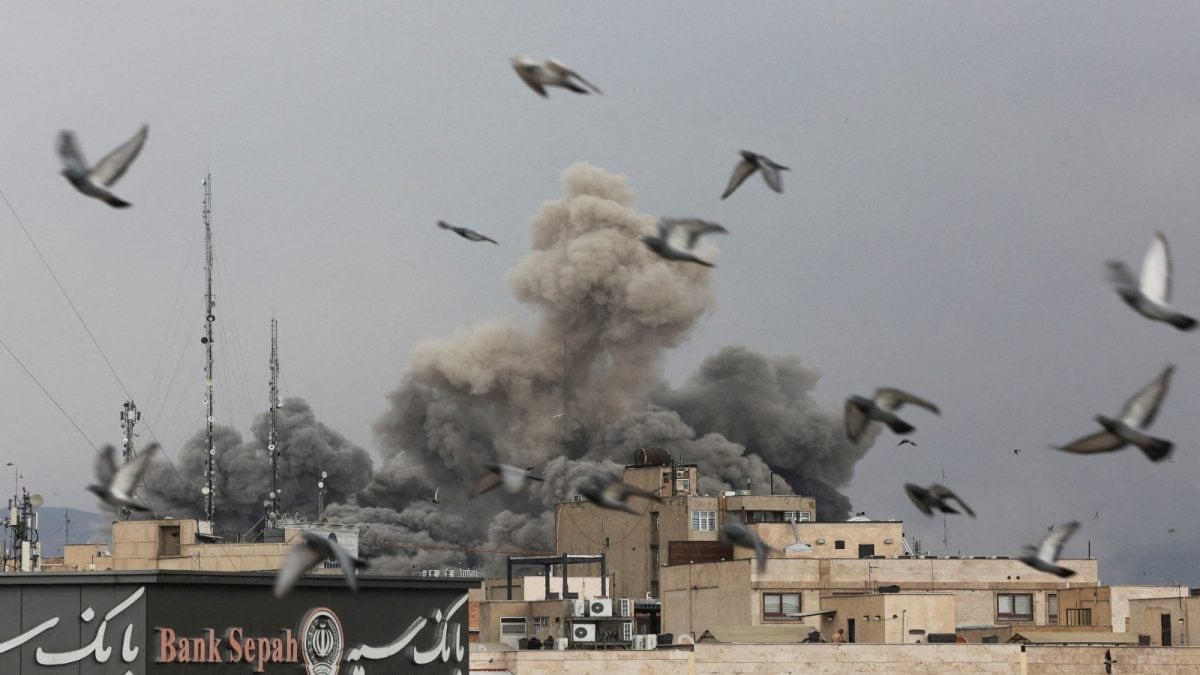
The United States and Israel launched an intensive air campaignacross Iran, striking missile bases, air defences, military command centres and other strategic infrastructure on February 28.
The opening wave involved hundreds of coordinated strikes aimed at rapidly weakening Iran’s military capabilities.
Iran responded with missile and drone attacks targeting U.S. bases and regional interests, raising fears of a wider regional conflict.
The killing of Iran’s supreme leader, Ali Khamenei, early in the conflict triggered a major political shift, with his son Mojtaba Khamenei appointed as the new leader.
Throughout the fighting, U.S. President Donald Trump has maintainedthat the campaignis succeeding and indicated that decisions about ending the war would be made in coordination with Israeli prime minister Benjamin Netanyahu. The conflict has also had global repercussions, including rising oil prices and concerns about the security of shipping through the Strait of Hormuz, a critical route for the world’s energy supplies.
The war between theUnited States, Israel and Iranin 2026 is rooted in decades of geopolitical rivalry, nuclear tensions and regional proxy conflicts in the Middle East. The hostility intensified after the collapse of the Joint Comprehensive Plan of Action (Iran nuclear deal) in 2018, when Trump withdrew the United States from the agreement and re-imposed sanctions on Iran. Since then, Iran expanded its nuclear program while Israel repeatedly warned that Tehran was moving closer to developing nuclear weapons.
Tensions further escalated through a series of covert attacks, cyber operations and targeted killings attributed to Israel against Iranian nuclear scientists and facilities, as well as Iranian support for armed groups across the region, including Hezbollah and other allied militias. Israel has long considered Iran its most serious security threat and has vowed to prevent it from obtaining nuclear weapons.
The situation worsened after the broader regional instability following the 2023 Hamas attack on Israel and the subsequent Gaza war, which increased confrontations between Israel and Iran-aligned groups across the Middle East. By early 2026, intelligence assessments in Washington and Tel Aviv suggested that Iran had significantly advanced its missile and nuclear capabilities.
1. How far have U.S. and Israeli strikes degraded Iran’s military?
Ten days into the war,the U.S. and Israelsay their air campaign has targeted missile sites, air defences, military command centers and infrastructure across Iran. Officials claim the strikes have significantly weakened Iran’s ability to coordinate attacks, though Tehran continues to launch missiles and drones. Investigations by Dutch fact-checking group Bellingcat, the New York Times, and The Washington Post have linked the February 28, 2026, strike on a girls’ elementary school in Minab, southern Iran, to aU.S. Tomahawk cruisemissile.
Source: World News in news18.com, World Latest News, World News
