Authored by Milan Adams via Preppgroup,
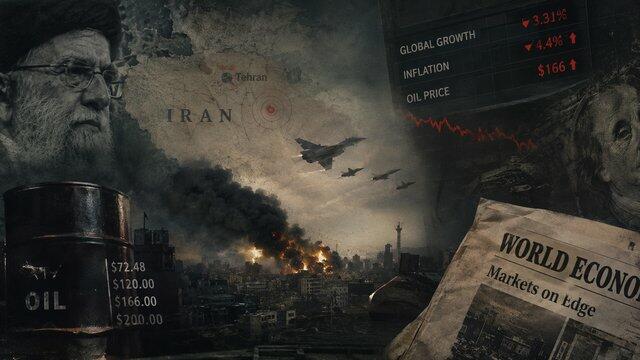
Midnight fell differently on February 28, 2026. Across trading floors from Singapore to Chicago, monitors flickered with data streams that would soon curdle into panic. At 0400 hours Tehran time, American B-2 Spirit bombers and Israeli F-35I Adir fighters crossed into Iranian airspace, unleashing Operation Epic Fury. Nine hundred strikes in twelve hours. Ali Khamenei, Supreme Leader of the Islamic Republic, perished in the initial bombardment, his body recovered from the rubble of a command bunker beneath Tehran's northern suburbs. Markets had anticipated conflict. They had not anticipated decapitation.
Brent crude, trading at $72.48 per barrel at market close on February 27, surged past $120 within seventy-two hours. By March 19, Dubai crude reached $166 per barrel, an all-time record. California gasoline exceeded $5 per gallon.
Kristalina Georgieva, Managing Director of the International Monetary Fund, stood before cameras in Washington on April 9, 2026. "All roads now lead to higher prices and slower growth," she declared. Her institution had just slashed global growth projections to 3.1 percent, down from 3.4 percent anticipated before the first missiles launched. "Had it not been for this shock, we would have been upgrading global growth." Instead, the Fund warned of a "severe scenario" where global growth collapses to 2.0 percent, brushing against the technical definition of worldwide recession - a threshold breached only four times since the Second World War. "This would mean a close call for a g