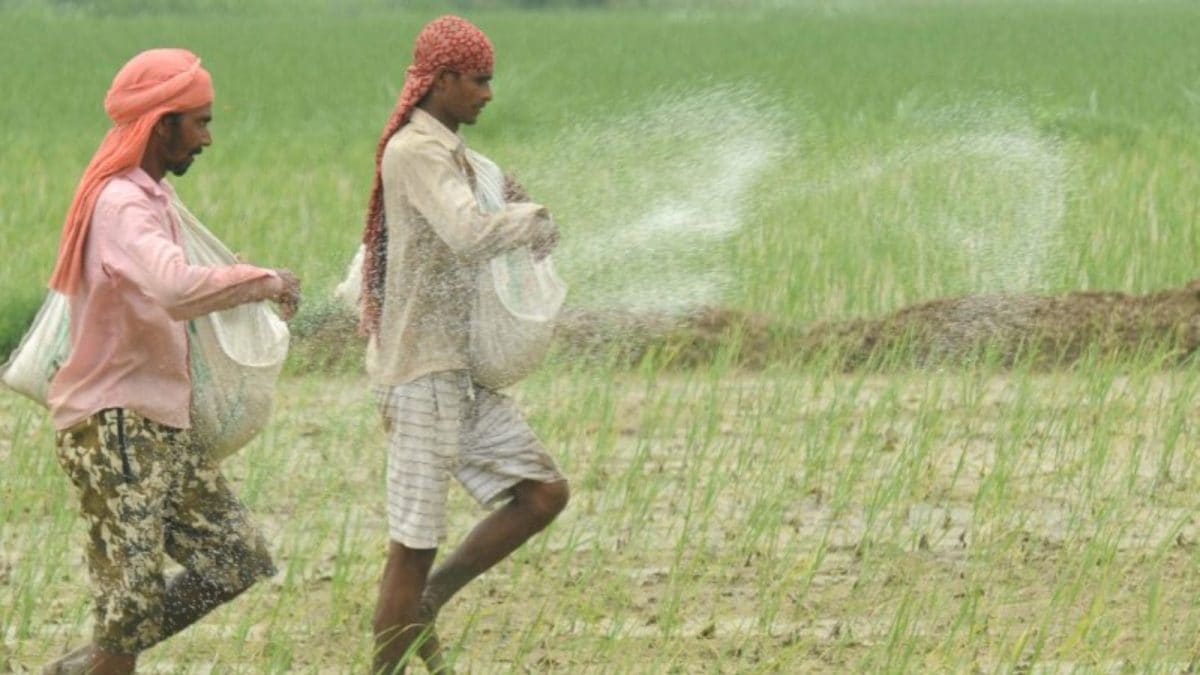
The escalatingtensions in West Asiahave brought into focus a lesser-known vulnerability in India’s agricultural system—its heavy reliance on fertiliser imports from the Gulf. As the Iran-Israel conflict disrupts shipping routes, energy markets and food supplies, experts warn that fertiliser supply chains could face pressure in the coming months.
According to analysis by policy researcher Girish Avadhany, India’s imports are highly concentrated inGulfproducers.
Around 63 per cent of India’s nitrogen fertiliser imports come from Gulf countries such as Saudi Arabia, Oman, Qatar and the UAE. For DAP (di-ammonium phosphate), the Gulf accounts for roughly 32 per cent of imports.
1/ India’s fertilizer imports are insanely concentrated. ~ 63% of nitrogen fertilizer imports come from Gulf producers (Saudi, Oman, Qatar, UAE). For DAP, the Gulf accounts for ~32%. Huge pc of India’s food production runs through this fertilizer corridor.data:@sohbetkarbuzpic.twitter.com/D0E5lMn9HS
— Girish Avadhany (@AvadhanyGirish)March 8, 2026
This means a large portion of India’s food production depends on fertiliser supply routes passing through the Gulf and theStrait of Hormuz, one of the world’s most important shipping corridors.
Analysts cited by Scroll note that disruptions in this route could affect the movement of key fertiliser inputs such as urea, ammonia and phosphates, which are essential for agriculture and global food production.
India’s Massive Fertiliser Demand
One of the top fertiliser consumers globally is India, especially for urea. Moneycontrol estimates that India consumes about 35-36 million tonnes of urea annually, while the production is approximately 28-29 million tonnes per year.
As a result, there’s a shortfall of around seven million tonnes of urea each year requiring importation, despite being one of the largest global producers of fertiliser.
Source: World News in news18.com, World Latest News, World News
