Scan the QR code to download the News18 app and enjoy a seamless news experience anytime, anywhere.
In a statement, the Israel Defence Forces said the targeted fuel depots were used by the Iranian regime to supply fuel to multiple consumers, including its military units. (Image: Getty)More than 12 hours after the attacks, massive flames were still burning at the oil facilities. Thick black smoke spread across the sprawling city, which is home to over 10 million residents. (Image: Getty)Residents of Tehran woke up to an eerie scene on Sunday morning. Thick black smoke blanketed the sky, making the city appear unusually dark. (Image: AFP)The Iranian Red Crescent Society warned that the explosions released toxic hydrocarbon compounds, sulfur, and nitrogen oxides into the air, worsening pollution across the city. (Image: AFP)In retaliation, Iran fired Kheibar Shekan solid-fuel ballistic missiles at Israel’s largest oil refinery in Haifa, escalating tensions further. (File Image: AFP)Further, Iran’s military warned on Sunday that it would target oil sites in the region if Israel continued to strike energy infrastructure in the Islamic Republic. (Image: AFP)Download App NowStay Ahead, Read FasterEnjoy uninterrupted reading? Unlock the full story, distraction-freeScan the QR code to download the News18 app and enjoy a seamless news experience anytime, anywhere.ORlogin1/8Israel launched overnight strikes on March 7, targeting five oil facilities in and around Tehran. According to reports, the attacks triggered massive fires and explosions across the Iranian capital. (Image: Getty)
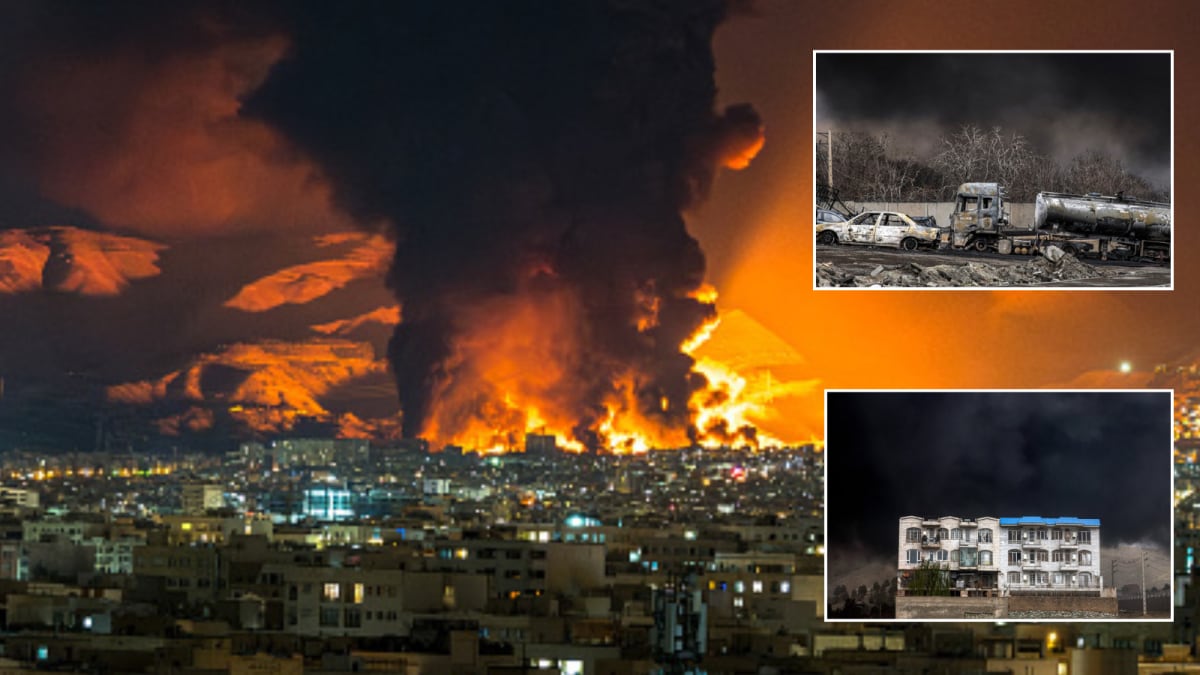
In a statement, the Israel Defence Forces said the targeted fuel depots were used by the Iranian regime to supply fuel to multiple consumers, including its military units. (Image: Getty)More than 12 hours after the attacks, massive flames were still burning at the oil facilities. Thick black smoke spread across the sprawling city, which is home to over 10 million residents. (Image: Getty)Residents of Tehran woke up to an eerie scene on Sunday morning. Thick black smoke blanketed the sky, making the city appear unusually dark. (Image: AFP)The Iranian Red Crescent Society warned that the explosions released toxic hydrocarbon compounds, sulfur, and nitrogen oxides into the air, worsening pollution across the city. (Image: AFP)In retaliation, Iran fired Kheibar Shekan solid-fuel ballistic missiles at Israel’s largest oil refinery in Haifa, escalating tensions further. (File Image: AFP)Further, Iran’s military warned on Sunday that it would target oil sites in the region if Israel continued to strike energy infrastructure in the Islamic Republic. (Image: AFP)
Download App NowStay Ahead, Read FasterEnjoy uninterrupted reading? Unlock the full story, distraction-freeScan the QR code to download the News18 app and enjoy a seamless news experience anytime, anywhere.ORlogin
Stay Ahead, Read FasterEnjoy uninterrupted reading? Unlock the full story, distraction-freeScan the QR code to download the News18 app and enjoy a seamless news experience anytime, anywhere.ORlogin
Stay Ahead, Read FasterEnjoy uninterrupted reading? Unlock the full story, distraction-freeScan the QR code to download the News18 app and enjoy a seamless news experience anytime, anywhere.
1/8Israel launched overnight strikes on March 7, targeting five oil facilities in and around Tehran. According to reports, the attacks triggered massive fires and explosions across the Iranian capital. (Image: Getty)
Israel launched overnight strikes on March 7, targeting five oil facilities in and around Tehran. According to reports, the attacks triggered massive fires and explosions across the Iranian capital. (Image: Getty)
NewsPhotogalleryworldFire, Toxic Smoke, Acid Rain: Israeli Strike On Iran's Oil Sites Looks Apocalyptic - See Pics
Fire, Toxic Smoke, Acid Rain: Israeli Strike On Iran's Oil Sites Looks Apocalyptic - See Pics
Source: World News in news18.com, World Latest News, World News