By Tsvetana Paraskova of OilPrice.com
International Energy Agency says global electricity demand is growing at its fastest pace in 15 years, set to rise more than 3.5% annually through 2030.
While renewables, nuclear, and natural gas are expanding rapidly, grid infrastructure is becoming the key bottleneck, with over 2,500 GW of power and load projects stuck in connection queues worldwide.
Grid investment must rise about 50% above current levels to keep pace, with BloombergNEF and Goldman Sachs warning that persistent grid constraints could trigger power shortages and even undermine the U.S. position in the global AI race
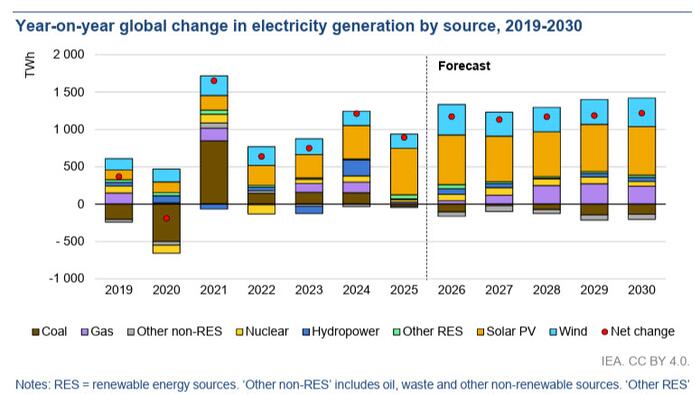
Global electricity demand is rising at the fastest pace in 15 years and will continue to do so at least until the end of the decade as AI infrastructure, advanced manufacturing, and electrification have ushered in The Age of Electricity, the International Energy Agency (IEA) says.
Global power demand is expected to grow by more than 3.5% per year on average through the end of the decade, the agency said in its new Electricity 2026report.
Renewables, nuclear, and natural gas are the big winners of the electricity demand boom, but the rise in all these power-generating sources would not mean anything if they struggle to connect to the grid.
Global electricity demand increased by 3% annually in 2025, following growth of 4.4% in 2024, the IEA said in the report.
Between 2026 and 2030, the annual average growth rate would be 3.6%, driven by higher consumption from industry, electric vehicles (EVs), air conditioning, and data centers, according to the agency.
While emerging economies, including China, India, and the Southeast Asian region, will drive 80% of the additional power demand by 2030, advanced economies see growth in electricity demand after 15 years of stagnation, the IEA said. Artificial intelligence, data centers, and advanced manufacturing support the return to growth in power demand in advanced economies.
Source: ZeroHedge News