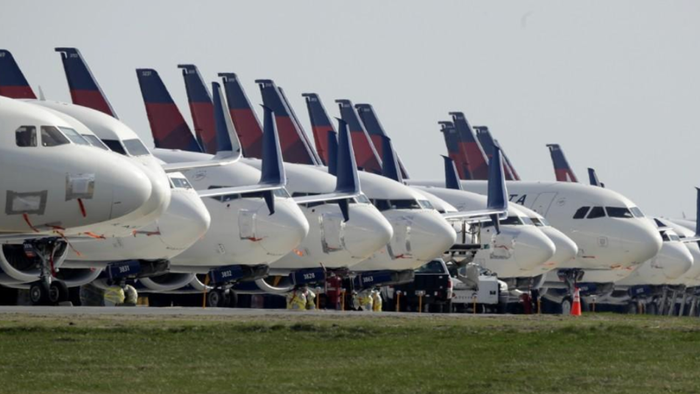
Flight disruptions tied toOperation Epic Furyin the Middle East exceeded 14,000 by the end of last week. While there were early signs of normalization by mid-week, the global aviation industry remains disrupted, with some of the weakest airlines facing an increased risk that surging energy prices could lead to the idling of commercial jet fleets.
The epicenter of the disruption is Persian Gulf airports and airlines. As of Friday, ten countries had closed their airspace, either partially or completely, since Operation Epic Fury against Iran began one week ago, according to Flightradar24 data.
Despite ongoing IRGC drone and missile attacks across Gulf states - sometimes targeting civilian infrastructure such as airports - some airports began resuming flights by midweek, including Dubai, Abu Dhabi, and King Khalid International near Riyadh, Saudi Arabia. However, there are reports of a direct strike on the airport in Dubai on Saturday.
It is clear that flight disruptions across the Gulf states will persist as long as Operation Epic Fury continues. With U.S. CENTCOM stating overnight that theoperation is only acceleratingand only suggests disruptions will extend into next week.
The big risk flagged by Deutsche Bank analysts, led by Michael Linenberg, is that surging jet fuel prices could hit some of the weakest airlines.
With Brent crude futures up roughly 52% year to date and jet fuel up 100% to 125%, Linenberg warned clients in a note on Friday that "financially weakest carriers could halt operations."
"Year-to-date oil prices are up ~50% while jet fuel prices are up 100% - 125%. Absent near-term relief, airlines around the world could be forced to ground 1,000s of aircraft while some of the industry's financially weakest carriers could halt operations," the analyst said.
US jet fuel crack spreads (i.e., the difference between underlying oil prices and jet fuel prices) for Gulf Coast, New York Harbor, and West Coast now range from $85 to $95 per barrel, a level that is at or above the underlying feed stock - WTI oil price currently trading at $86.04 and Brent oil price $88.99 (see Figure 1 below).
The last time we witnessed this phenomenon was in 2005 when crack spreads of as high as $65 per barrel exceeded ~$60 per barrel oil prices in the aftermath of Hurricanes Katrina and Rita. The damage to the airline industry was significant and widespread including major airlines Delta and Northwest filing for Chapter 11 bankruptcy in September 2005.
He warned that surging crack spreads amount to a major headwind of more than $20 billion for the airline industry and identified the carriers he sees as most exposed:
Source: ZeroHedge News
