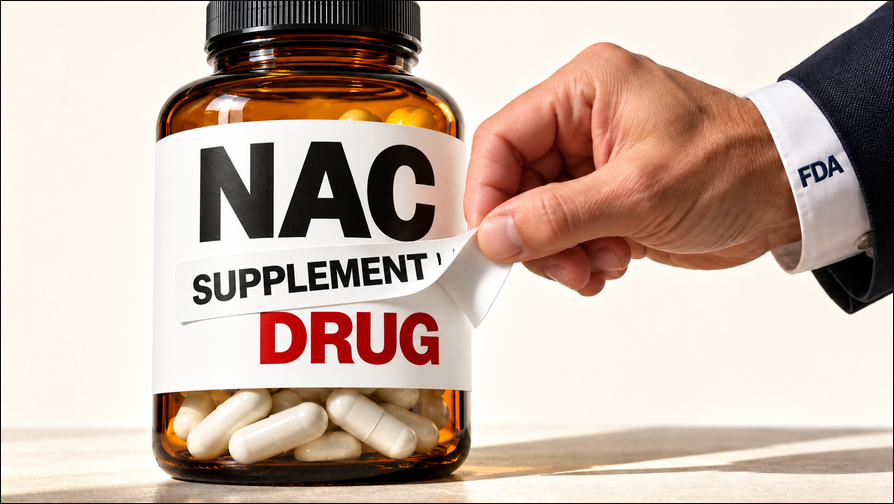
N-acetyl cysteine, or NAC, is one of the most popular amino acid supplements in America. People take it for liver support after a long night, for their lungs and, lately, as a longevity staple. One brand among dozens, NOW, said in 2021 that it alone had sold "millions, perhaps billions" of NAC pills with no adverse event reports. NAC is also the latest supplement to land under the Eye of Sauron, otherwise known as the FDA.
The FDA's weapon is a clause in federal law: an ingredient approved as a drug, or authorized for serious study as one, before it was sold as a supplement can't be a supplement. The FDA has used the clause against red yeast rice, whose active compound is the same molecule as Merck's cholesterol drug lovastatin; against a form of vitamin B6 in 2009; against CBD after the seizure drug Epidiolex was approved; and against NMN in 2022, a ban it reversed in September 2025 after an industry lawsuit.
NAC's case is simpler on paper. It was approved as a drug in 1963, before it was sold as a supplement, the FDA says. What the agency has done with that fact since is anything but simple.
The latest