Donald Trump gave Xi Jinping the full state-visit treatment in Washington, but markets were more interested in what the two leaders did not deliver.
After three days of ceremony, an unusually warm presidential welcome and repeated pledges to stabilize relations between the world's two largest economies, the main economic outcome was a two-month extension of the existing U.S.-China trade truce, pushing its expiration from November 10 to January 10, 2027.
That averted an immediate return to escalation, but fell short of the longer runway many investors had expected.
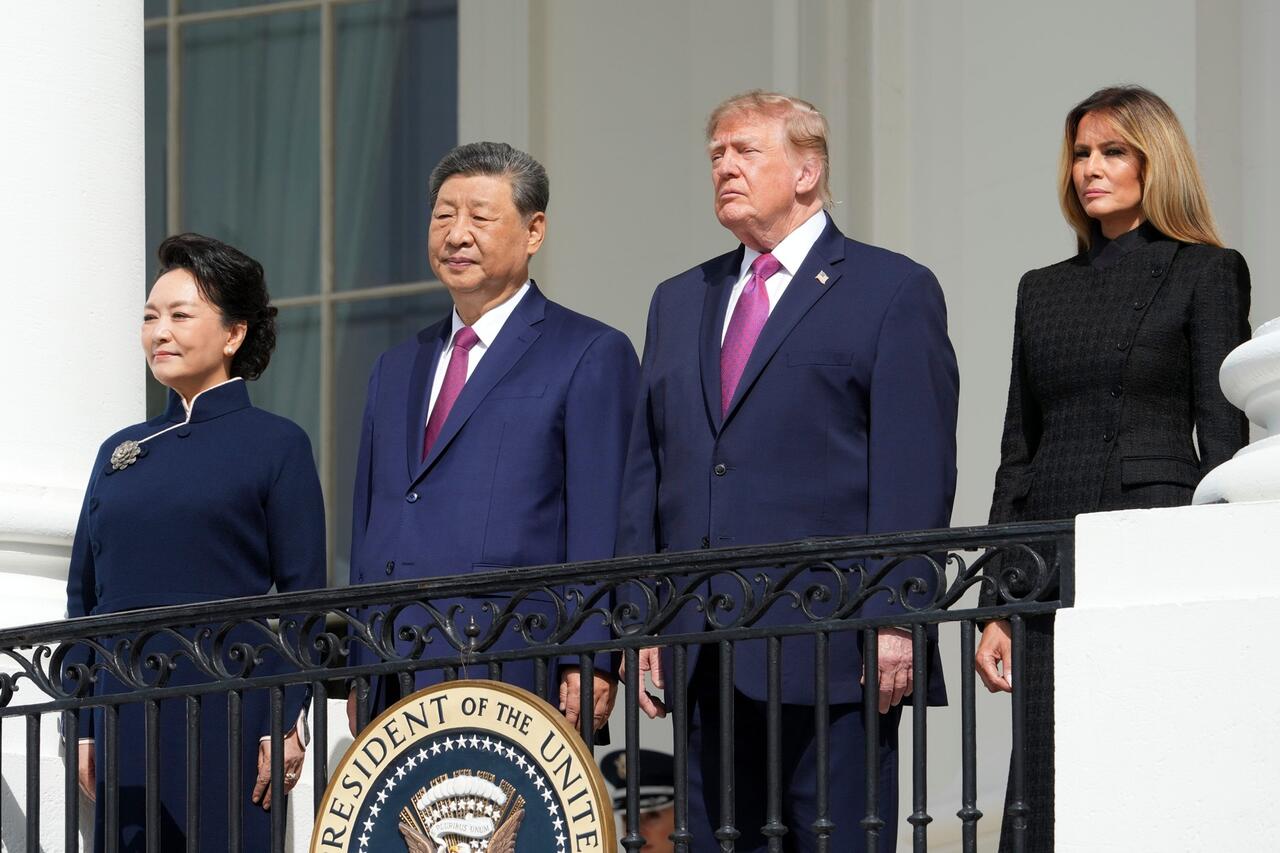
President Donald Trump, center right, first lady Melania Trump, right, China's President Xi Jinping, center left, and his wife Peng Liyuan watch a silent drill platoon review on the new helipad from the Blue Room Balcony of the White House, Thursday, Sept. 24, 2026, in Washington. (AP Photo/Alex Brandon)Following the meeting, China's CSI 300 fell 1.7% on Thursday, its worst session in a month, while the Shanghai Composite lost 1.2%. On Friday, with the mainland shut for the Mid-Autumn holiday, the Hang Seng dropped another 1.7% to a two-month low, with technology and AI shares leading the decline. The yuan also gave back part of its pre-summit advance as the dollar strengthened.
The reaction was notable because expectations were hardly euphoric going in. The summit had been billed primarily as an exercise in stabilizing a relationship still divided over tariffs, advanced technology, rare-earth supplies, Taiwan and Iran. Even against that modest bar, the two-month extension came in short: Wall Street had generally been discussing three to six months, while some inv