DUBAI, United Arab Emirates (AP) — The Iran war’s targets widened dangerously into civilian infrastructure Sunday as Bahrain accused Iran of striking one of the desalination plants that are crucial for Gulf nations’ drinking water.
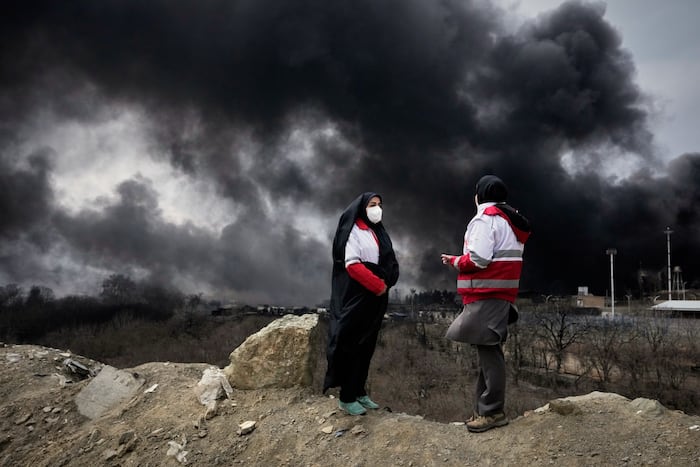
While Israeli-struck oil depots smoldered in Tehran after a late-night strike, prompting environmental warnings for citizens, Iran’s president vowed to expand attacks on U.S. targets across the region on the ninth day of the war.
Saudi Arabia reported its first deaths, saying a military projectile fell onto a residential area and killed two people of Indian and Bangladeshi nationality. It said 12 other Bangladeshis were wounded. Foreign residents and workers have made up most of the war’s deaths in Gulf nations.
Anger has grown in the region following hundreds of Iranian missile and drone strikes. Arab League chief Ahmed Abouel Gheit lashed out at Iran for a “reckless policy” of attacking Arab countries.
U.S. President Donald Trump and Israeli Prime Minister Benjamin Netanyahu have vowed to press ahead with the coordinated campaign against Iran, even as Washington's stated war aims have varied. Trump told ABC News he wants a say in who comes to power in Iran once the war is over, adding that new leader “is not going to last long” without his approval.
In Israel, the military reported the first soldier deaths since the war began, saying two were killed in southern Lebanon while Israel targets the Iran-backed militant group Hezbollah. Three people were injured in Israel in an afternoon strike.
The war, which Israel and the United States launched with airstrikes on Feb. 28 that killed Iran's supreme leader, has killed at least 1,230 people in Iran, at least 397 in Lebanon and at least 11 in Israel, according to officials. Six U.S. troops have been killed.
The conflict has rattled global markets, disrupted air travel and left Iran’s leadership weakened by several thousand Israeli and U.S. airstrikes.
Iranian President Masoud Pezeshkian backtracked from conciliatory comments a day earlier in which he apologized for attacks on Gulf neighbors’ soil. Iranian hard-liners had swiftly contradicted him, saying war strategy wouldn’t change.
“The more pressure they impose on us, the stronger our response will naturally be,” Pezeshkian said Sunday. “Our Iran, our country, will not bow easily in the face of bullying, oppression or aggression — and it never has.”
Source: WPLG
