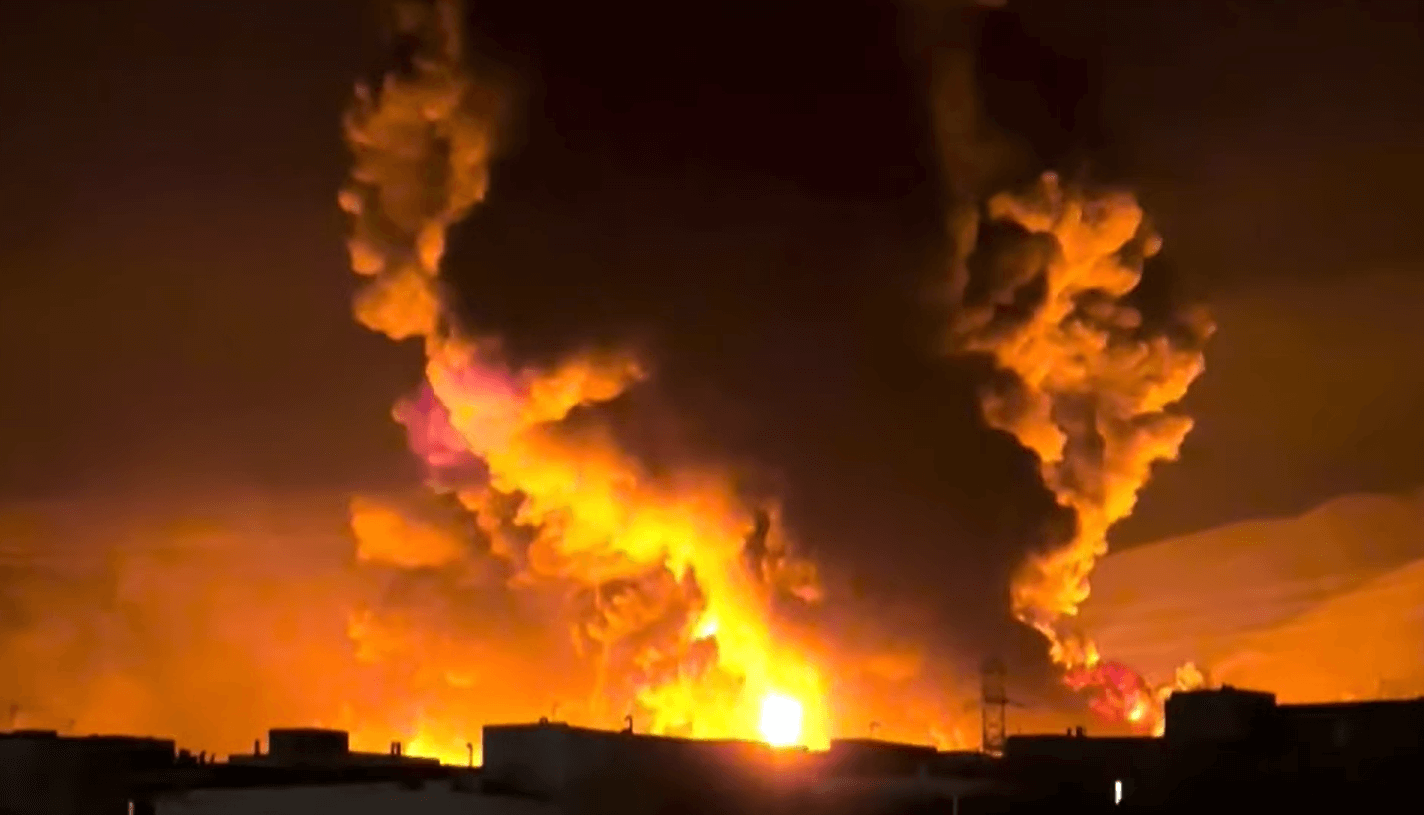
On Saturday, March 7, 2026, the skyline of Tehran was lit by towering flames and thick black smoke after Israeli strikes hit oil storage facilities tied to Iran's energy sector, marking a dramatic escalation in the ongoing war. For the first time, the conflict has expanded from military and security sites to critical infrastructure, signaling a deeperTehran-Israel confrontationwith potential global implications.
Al Jazeera reporter Tohid Asadi, reporting from Tehran, described the scene saying, 'This is not the first time. Back in June, during the 12-day war, we saw fuel depots being targeted, but this is unprecedented.' Residents across the capital reported loud explosions, and images circulating online showed massive fires consuming storage tanks near industrial zones.
The strikes reportedly hit multipleoil depotsand petroleum product transfer centers in Tehran and the Alborz region, igniting fires visible across the city. Emergency teams rushed to contain the blazes, while residents voiced growing concern about safety and air quality.
Tohid Asadi further noted, 'There is a high risk of being surrounded by toxic air,' highlighting the immediate humanitarian consequences of the strikes. This was not merely a military blow but also a psychological and environmental shock for civilians living near Tehran's energy infrastructure.
Targeting the energy sector represents a strategic shift in the Israel-Iran conflict. Oil depots and fuel storage facilities are central to Iran's economy, underpinning both domestic energy distribution and export revenues. By striking these facilities near Tehran, Israel signals its ability to pressure Iran economically while escalating military tension.
Al Jazeera reporter Mohamed Vall, also on the ground in Tehran, explained, 'The attacks on oil facilities are part of a psychological war against Iranians, to frighten them and make them believe that it's really going to be the end for them.' He added, 'The Israelis are probably planning to cause a situation of crisis in terms of fuel in Iran, and Iranians will consider this as an act of aggression and terrorism.'
The strikes also reflect the evolving nature of modern conflict, in which energy and economic infrastructure often become central targets alongside traditional military installations.
The conflict has intensified rapidly over the past nine days, with both sides exchanging missiles, drones and air strikes. By extending attacks to the energy sector, Israel is demonstrating its capability to reach deep into Iranian territory. Yet, as Mohamed Vall noted, 'Still, Iran is a large country with many such facilities, so it is doubtful the strike will cause a full crisis.'
Nevertheless, the symbolic impact is significant. Fires at Tehran's oil depots underscore that the war is no longer distant for ordinary residents. For many, the strikes are a vivid reminder that the conflict is unfolding in their neighborhoods.
The targeting of Tehran's energy infrastructure could have ripple effects far beyond Iran. Energy analysts warn that damage to oil depots, even temporarily, may influence fuel distribution, disrupt supply chains and create volatility in international oil markets.
Source: International Business Times UK
