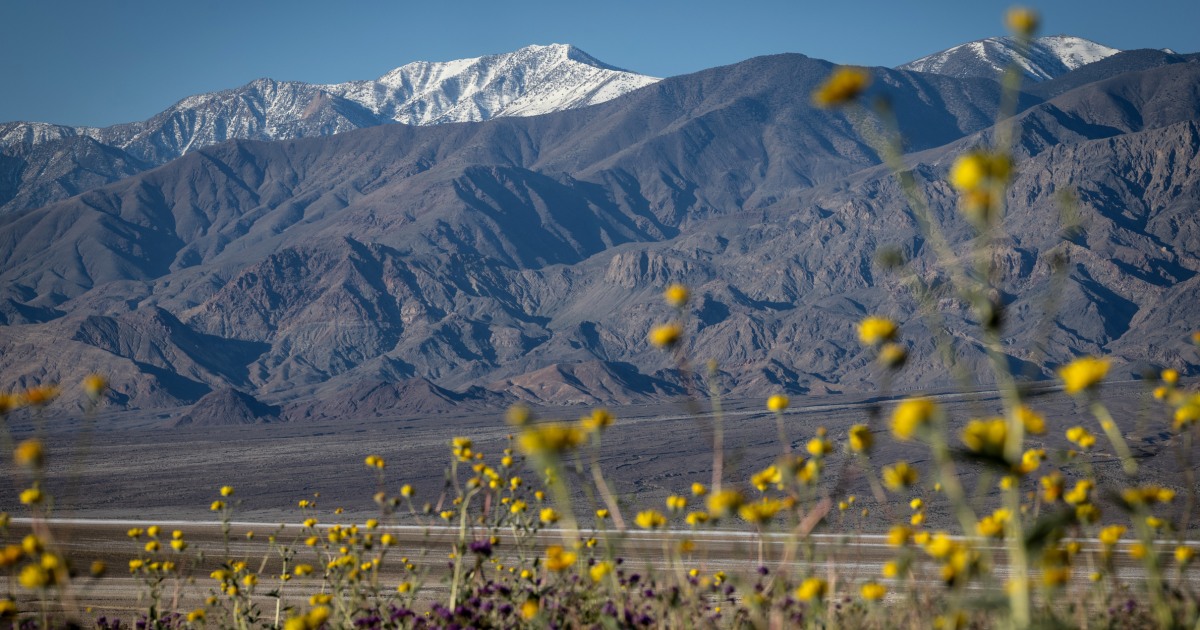
A superbloom of wildflowers has painted the normally barren landscape ofDeath Valley National Park— one of the most extreme places on the planet andthe hottestand driest spot in North America — in pretty pink, purple and yellow hues.
“This area that’s known basically for hot weather, sand and dirt has just become this amazing landscape of colors,” said David Blacker, executive director of the nonprofit Death Valley Natural History Association. “The smell is just amazing.”
This year’s superbloom is the most spectacular that Death Valley has seen in a decade,according to the National Park Service. It’s a result of rainier-than-normal conditions throughout the region last fall and early winter.
Abby Wines, acting deputy superintendent at Death Valley National Park, said that on average, Death Valley typically receives only about 2 inches of rainfall each year.
“From November through early January, we had about two and a half inches of rain, so we had more than our annual average in just two and a half months,” she said.
Wines said thatsome wildflowers usually emerge in the park every spring, but superblooms (though that’s not an official botanical term) only occur after especially wet fall and winter seasons.
The most extensive blooms — ones that can be seen at low elevations almost everywhere in the park — also need the “right” type of rain, according to Blacker.
“We need multiple days of drizzly, foggy, gentle rain that soaks in, but not the heavy monsoon rains that wash out our highways and destroy our roads,” he said. “And then we need mild temperatures going into spring, because once the flowers come up, their big enemy is wind and heat.”
The types of wildflowers that bloom in the desert are known as ephemerals. Unlike cacti, which store water tosurvive hot and arid environments, these flowers can exist for long periods of time in seed form in the soil.
“You can think of it like drought evasion,” said Erik Rakestraw, a curator of botany at the Arizona-Sonora Desert Museum in Tucson. “In their seed form, it’s like they’re not even existing. They’re just laying in the soil.”
Source: Drudge Report
