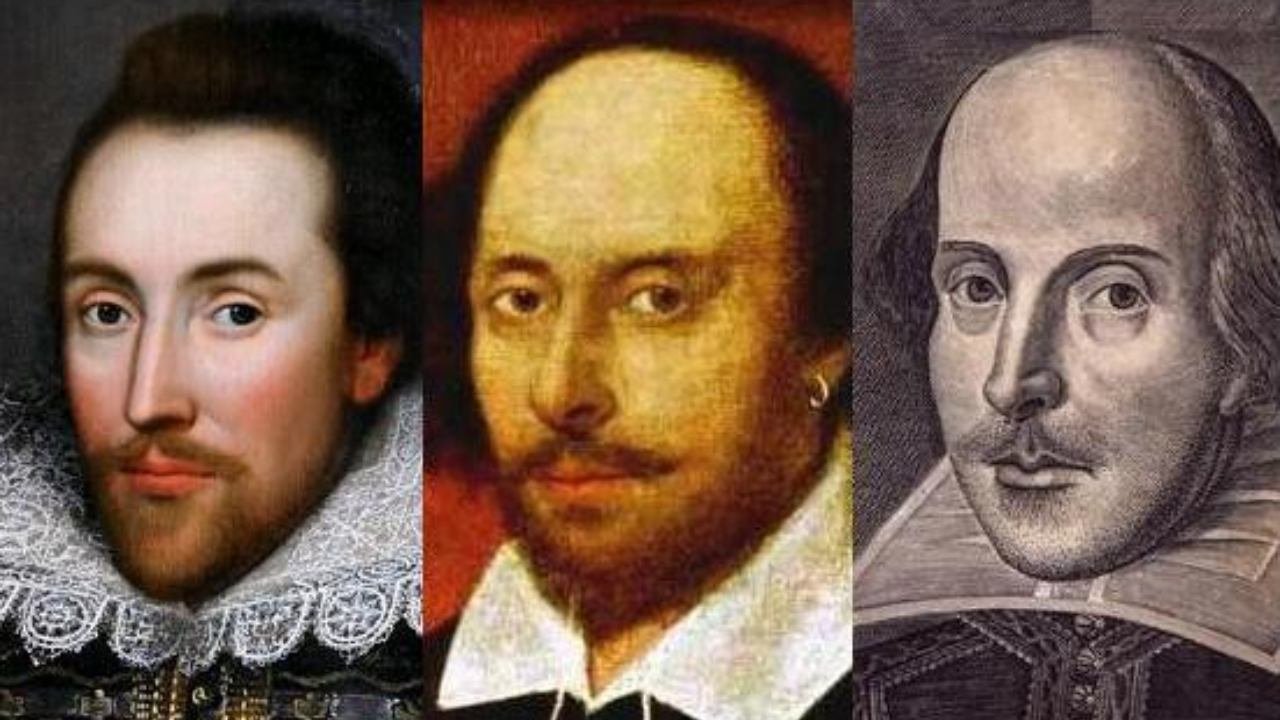
This post, authored byJames Alexander, was republished with permission fromThe Daily Sceptic
Hegel said everything important in world history happens twice. Marx added, grimly: “The first time as tragedy, the second as farce.” And here is my thrupenny bit. Everything important said by anyone in world history is said twice: the first time as farcical observation, the second as academic argument.
As evidence I submit the following. A few weeks ago I took abrief lookat the hypothesis that Shakespeare was a black lady. I accepted with grave pleasure the fact that Shakespeare is an anagram of A She-Speaker: but, of course I had to be caustic about the claim accompanying the staggering anagram. And against the argument that the name Shakespeare might allude to Shakti, the female power that lies underneath all existence, I solemnly ventured the observation that it might equally and oppositely – equality and opposition being essential to scepticism – allude to the Arabic word Sheikh, and the male power that lies underneath all existence.
Today I received a notification from Academia.edu telling me about apiecewritten by Sushil K. Jain from Canada, entitled, and hold your breath, ‘Shakespeare, the Sheikh, Who Became a Peer’, subtitled, ‘The Eastern Mind Behind the English Stage: A New Model of Shakespearian Authorship’, published 2026. There we are. First time as farce, second time as academic argument.
I have printed it out and will let you know what it says. It is 120 pages long. Actually, it is not very academic, though it has a fair number of citations and is written in a sort of AI-neutral prose style.
Right, I read it last night. The first thing I have to say is that the author nowhere says that he is guilty of a woeful pun. “The Sheikh who became a Peer”, indeed.Jain’s style – and I do not know how much any AI bot was involved in the writing of this: it is very smooth and laborious and explanatory and is very easy to skip through without missing anything – is Indian-joyful and also solemn or serious: and I think this is because Jain is beating the drum of modern globalism, cosmopolitanism, anywhereism, in such a way that his line of thought might sing in the contemporary academic world of postcolonialism and immigration studies. Let’s hear him in his own words.
Shakespeare’s plays bear the unmistakeable imprint of a Persian-educated, Indian-heritage, Arabic-speaking scholar. … [They] exhibit a depth of cultural knowledge — of Ottoman-Venetian politics, Indian Ocean trade, Persian narrative structures and Islamic intellectual traditions — that exceeds what Shakespeare could plausibly have accessed through reading alone.
Evidence? Well, it is mostly speculation according to the following grand logic:
But there are allusions toOthello(of course), Aaron the Moor inTitus Andronicus, the Indian boy (never seen) inMidsummer Night’s Dream, and, as usual, the one play that is always essential in the most sober or the most drunken Shakespeare analysis,The Tempest. Oddly enough, there is nothing about the history plays. Yes, indeed, the Sheikh didn’t contribute much toHenry IV Part I, did he? But why was Shakespeare so digressive? Ah, well, in order to explain why Shakespeare abandoned Aristotle and the preservation of the unities we have to allege that he, or one of his cronies, knew Persian.
Like every sensible reader of Shakespeare, Jain notices that there is a gap between “the monumental works” and “the modest documentary trail”. That’s right: in order to make sense of Shakespeare at all, we have to ask the question: why do we know so little about the greatest writer of English?
Source: modernity
