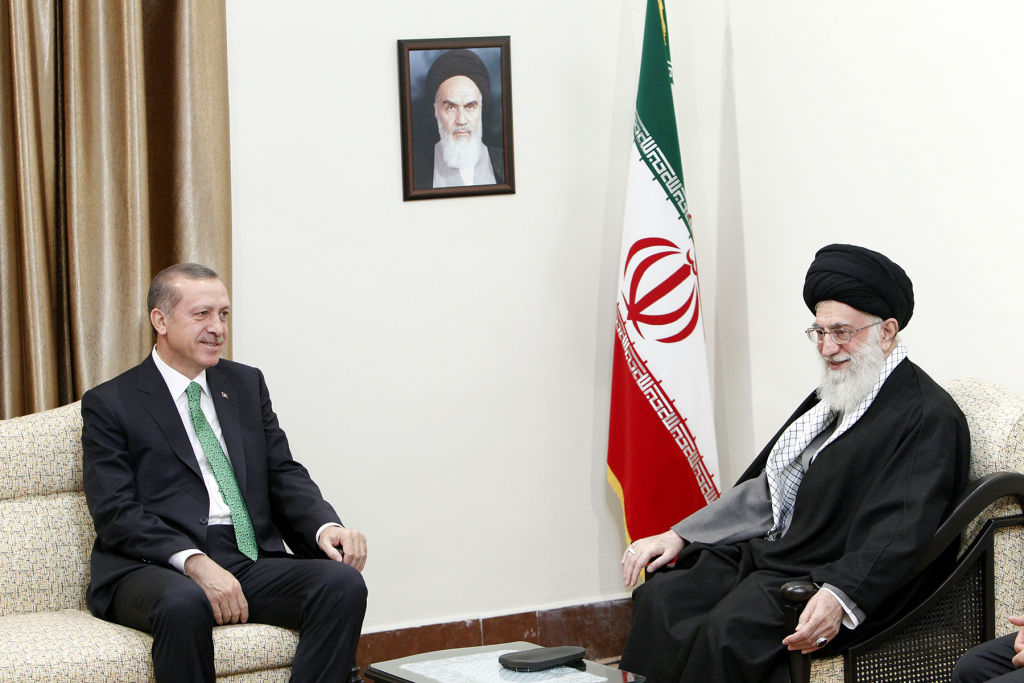
US President Donald J. Trump's decision to launch his devastating military campaign against Iran's ayatollahs means that countries, such as Turkey and Qatar, which have previously been ambivalent about their attitude towards Tehran, will now need to undertake a serious reappraisal of where their true interests lie.
Prior to Trump launching "Operation Epic Fury", the military campaign designed to eliminate Iran's ability to produce nuclear weapons, ballistic missiles or support its proxies once and for all, several important regional playerssought to remain neutralas the tensions deepened between Washington and Tehran over Iran's nuclear programme.
Even though they claimed to be allies of the US, they also sought to maintain links with the ayatollahs, even when it became abundantly clear that the Trump administration was determined to confront Iran over its clear delaying tactics in the recent round of nuclear negotiations.
Now, following the demise of Iran's Supreme Leader, Ayatollah Ali Khamenei, as well as scores of other prominent members of the regime, countries that have previously tried to maintaincordial relationswith the ayatollahs face a stark choice: do they want to maintain their ties with known Islamist extremists, or forge closer ties with the US and its allies?
How they respond to this dilemma could have vital implications for their future development. By aligning themselves with the West, they will have the opportunity to benefit from having access to the exciting technological revolution taking place in Silicon Valley, involving new technologies such as artificial intelligence. On the other hand, if they choose to maintain their ties with extreme Islamist groups, such as the Muslim Brotherhood and the founders of Iran's Islamic Revolutionary Guards Corps, they will be left to fend for themselves.
What if, however -- Washington and Jerusalem should both carefully note -- they chooseboth? With the Iranian threat gone, what would prevent them from complying with Trump's demands of the moment and enjoying the benefits of modernity -- andthen, when he is no longer in office, continue supporting terrorism, religious extremism and jihad (holy war)?
Just because one is happy to have a roaring economy -- as we already see with Qatar -- that does not necessarily mean one will be happy with what is already beingreportedas "concern" about Israel's increased standing in the region.
The first suggestion that many Arab leaders may be reconsidering their neutral status in the conflict between the US and Iran came over a week ago, when Gulf leadersvoicedtheir condemnation of Iran's "reckless and indiscriminate attacks" on their territory and infrastructure.
Leaders of the Gulf Cooperation Council (GCC), a regional organisation comprising Saudi Arabia, Bahrain, Kuwait, Oman, Qatar and the United Arab Emirates, indicated they were giving serious consideration to exercising their right "to respond to Iranian attacks" in order to protect regional security and stability.
In an attempt to escalate the conflict, Iran has deliberately targeted several of its Gulf neighbours, launching missiles and drones targeting sites in Kuwait, Bahrain, Dubai, Abu Dhabi, Oman, Qatar, and Saudi Arabia. The attacks are seen by many as a deliberate ploy by the Iranian regime to pressure pro-Western Gulf states into calling on Trump and the Israelis to end their military campaign against the ayatollahs.
Source: Gatestone Institute :: Articles
