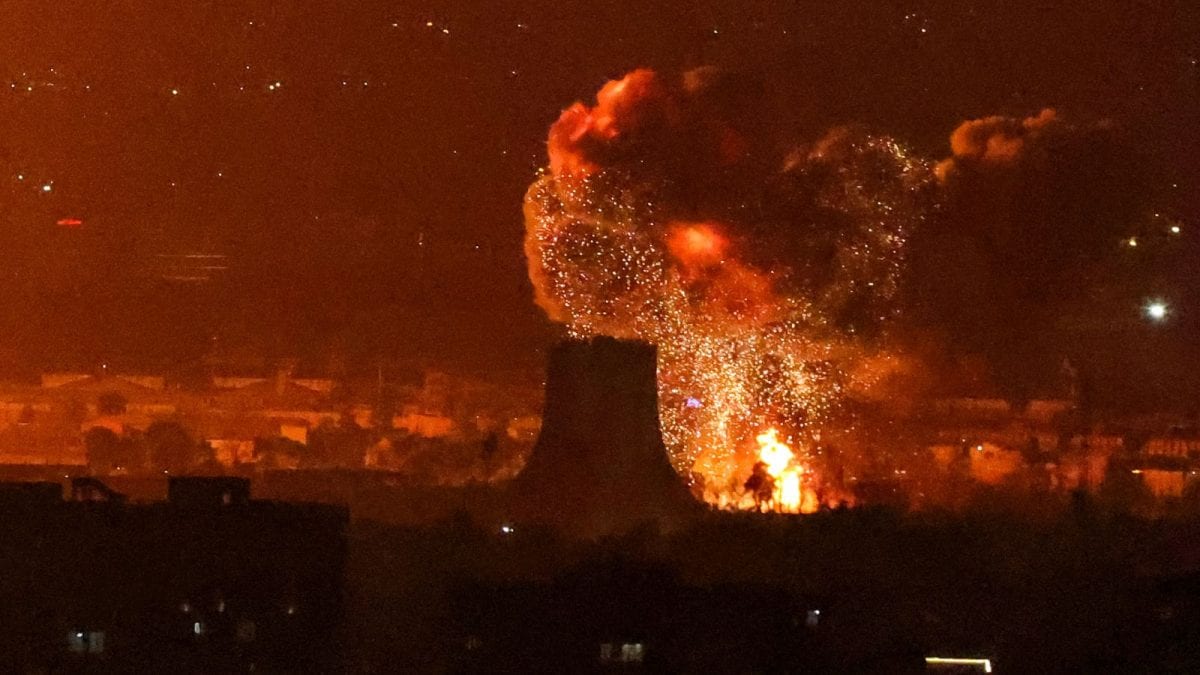
Israel on Sunday said it targeted oil and military infrastructure across Iran as the ongoing West Asia conflict entered its second week and the ninth day.
According to the Israeli military, it has carried out 3,400 strikes, including the killing of Iran’s Supreme Leader Ayatollah Ali Khamenei, since the country launched ‘Operation Epic Fury’ with the United States.
In a series of posts on its social media platform, the Israel Defense Forces (IDF) gave a detailed account of the operations and also posted a video of how it destroyed Khamenei’s “underground military bunker" as it ramped up its assault in the last 48 hours of the war. It said it has significantly expanded its offensive, launching what it called a “new phase" targeting critical military infrastructure, air defence systems, andenergy resourcesacross Iran and beyond its borders as well.
“Iran’s threat extends far beyond its borders. Through Hezbollah and other proxies, the Iranian regime targets civilians across the region. Together with the United States we are dismantling this terror network," the IDF said in a post on X on March 6.
Iran’s threat extends far beyond its borders.Through Hezbollah and other proxies, the Iranian regime targets civilians across the region.Together with the United States we are dismantling this terror network.pic.twitter.com/XsIqewO0cG— Israel Defense Forces (@IDF)March 6, 2026
The IDF said it has deployed roughly 7,500 munitions during the operation. The latest waves of strikes have seen a marked shift in strategy, moving beyond purely military installations to target civil industrial facilities for the first time. Military spokesman Brigadier General Effie Defrin said the military had “initiated a wave of strikes targeting the Iranian terror regime military infrastructure across Iran".
This escalation, particularly the targeting of oil depots, has raised significant international concerns regarding global fuel stability and the security of shipping transport in the Gulf.
Israeli and US forces targeted five oil facilities in and near Iranian capital Tehran. This involved strikes on four oil depots and a petroleum products transport centre, as per Keramat Veyskarami, CEO of the National Iranian Oil Products Distribution Company.
Veyskarami said the attacks killed four personnel, including two oil tanker drivers, and caused significant damage to the facilities, though he claimed the resulting fires were brought under control. The intensity of the strikes was visible to residents and observers alike;APvideo footage showed “pillars of fire" lighting up the night sky on Saturday (March 7), leaving a “dark haze" and the lingering smell of burning over Tehran by Sunday morning.
While Iranian officials have said the country has “sufficient gasoline reserves", the targeting of this infrastructure has deepened global market concerns regarding crude production and exports from the Gulf.
Source: World News in news18.com, World Latest News, World News