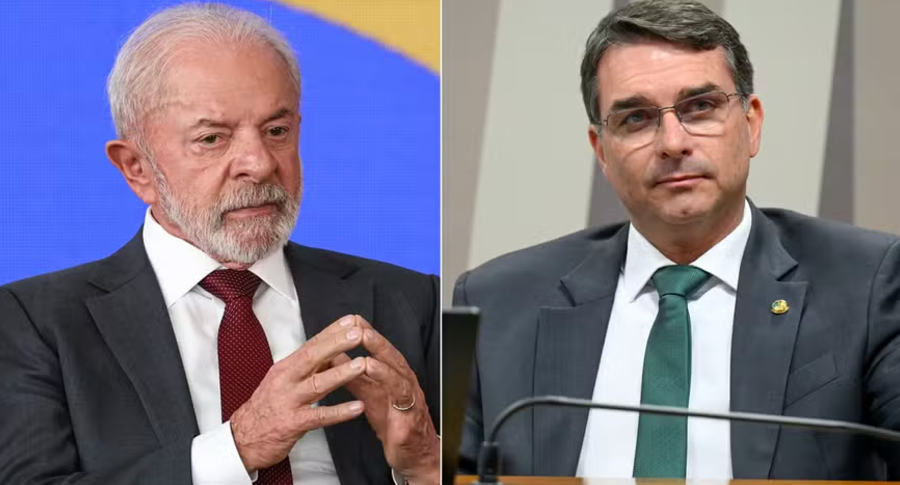
Socialist Brazilian President Luiz Inácio Lula da Silva's polling lead over right-wing Senator Flávio Bolsonaro has eroded in recent weeks, leaving both statistically tied in UBS' latest runoff polling average.
Arend Kapteyn, UBS' global head of economics and strategy research, described the upcoming election in early October as "extremely close" in a note to clients on Monday.
Lula (Left); Bolsonaro (Right)Kapteyn's note today puts Bolsonaro at 50.4% in a hypothetical runoff, against 49.6% for Lula, adding that the narrowing spread leaves the candidates statistically tied.
Kapteyn continued:
On 4 October, Brazilians will vote for a president, the entire Chamber of Deputies and two-thirds of the Senate. Brazil currently has one of the highest real interest rates in the world, contributing to increasingly adverse debt dynamics. In our view, an election outcome that delivers a credible fiscal consolidation program could significantly improve the macroeconomic outlook. Relative to our baseline, real interest rates could fall by at least 2.5 percentage points (to around 5% from 7.5%), potential growth could be 1pp higher (2.5% rather than 1.5%), and inflation could be around 1pp lower (3.5% rather than 4.5%).
Our poll aggregator currently shows first-round voting intentions of 42.5% for Lula and 36.0% for Flávio Bolsonaro. Given the historical polling error of approximately 3 percentage points, the candidates' confidence intervals overlap. Rejection rates are elevated for both candidates, while other contenders collectively attract 21.5