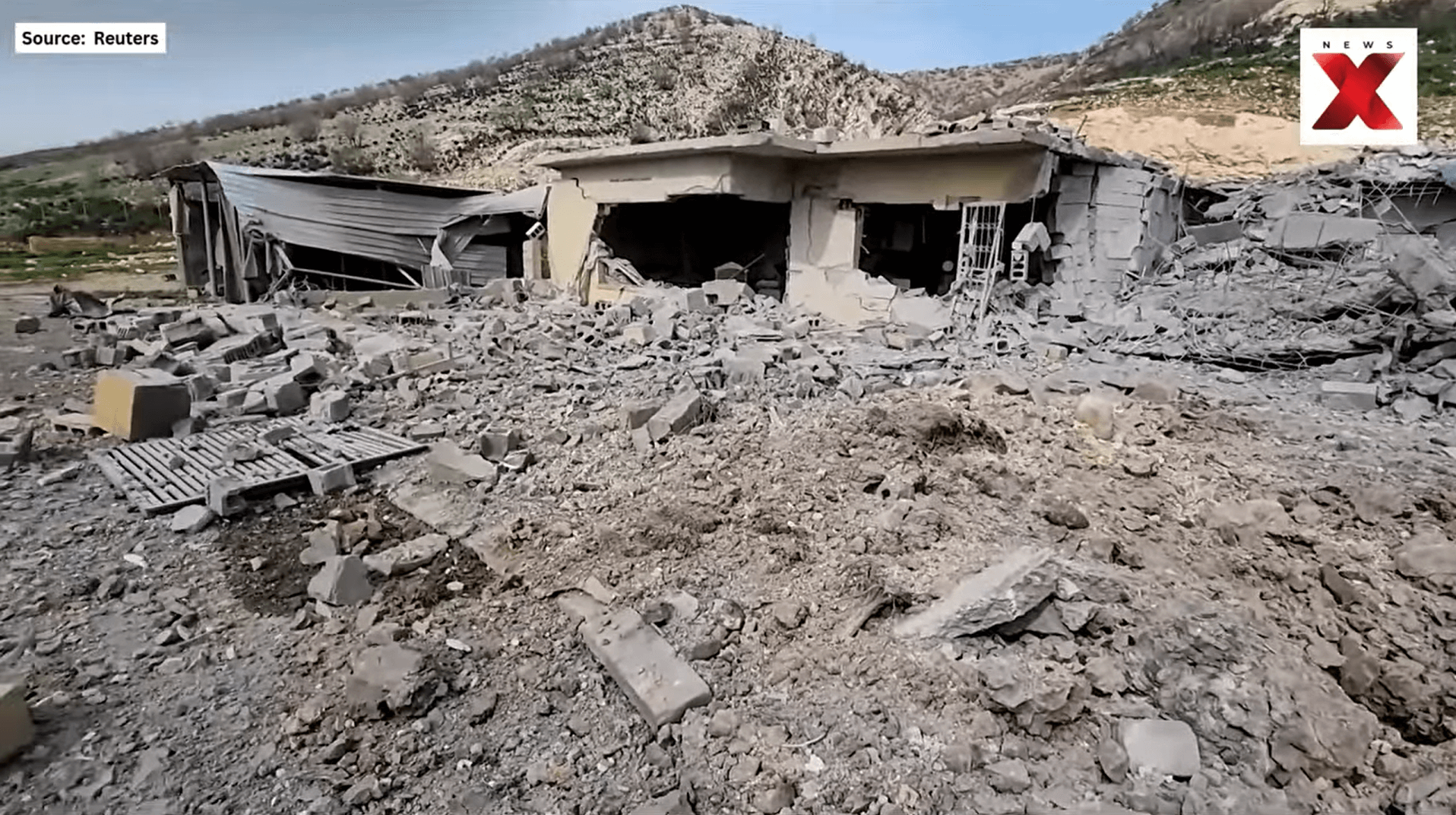
An internalUS military investigationhas concluded that American forces likely struck agirls' elementary school in southern Iran, killing up to 168 children and their teachers, marking the deadliest single act of civilian harm inOperation Epic Furyto date.
The White House has not ruled out that US military personnel carried out the strike that, according toIranian state media, killed at least 168 children and 14 teachers. The school, named Shajareh Tayyebeh, Arabic for 'The Good Tree,' was filled with girls aged between seven and twelve when the bombs fell on the morning ofFeb. 28, 2026, the first day of the joint US-Israeli campaign against Iran.
The formal acknowledgement of a likely American role came fromReuters, which reported on March 6 that two US officials familiar with the inquiry believed American forces were responsible. CENTCOM spokesperson Capt. Timothy Hawkins confirmed to reporters that 'it would be inappropriate to comment given the incident is under investigation.' That stance has been maintained across the Pentagon's senior leadership.
Defence Secretary Pete Hegseth and US Central Command declined to provide specifics on the probe, saying the investigation is ongoing. White House Press Secretary Karoline Leavitt referred questions about the strike to the Pentagon.
At a press conference on WednesdayMarch 4, Hegseth said: 'All I know, all I can say, is that we're investigating that. We, of course, never target civilian targets.' TheIDFtook a similar posture. An IDF spokesman said at a briefing on Friday that he was 'not aware of any IDF activity in the area.' Both governments stressed they do not deliberately target civilians, though neither produced evidence to challenge the findings of the independent investigations that had emerged.
TheCENTCOM press releaseconfirming the launch of Operation Epic Fury, published on Feb. 28, states that US and partner forces began striking targets at 1:15 ET to 'dismantle the Iranian regime's security apparatus,' with targets including IRGC 'command and control facilities, Iranian air defence capabilities, missile and drone launch sites, and military airfields.' TheSayyid al-Shuhada IRGC naval basein Minab, located less than 60 metres from the school, falls squarely within that target category.
Independent investigators reached conclusions that align with the findings Reuters attributed to US military sources. A CBC News visual investigation of new satellite imagery and social media footage suggests the bombing was the result of a precision airstrike on a military complex immediately adjacent to the school.
CBC's visual investigationsteam reviewed and verified multiple videos from the scene showing several distinct smoke plumes, suggesting the area was struck more than once. Satellite imagery released by Planet Labs confirmed the findings, revealing multiple impact craters within the complex.
Jeffrey Lewis, a professor at Middlebury College who specialises in satellite imagery, said the imagery was consistent with a precision airstrike. 'Almost all the buildings in the compound are hit,' Lewis toldNPR, adding that the images showed 'very precise targeting.' Given Minab's location in southeastern Iran, Lewis said, 'a strike is much more likely to be a US strike than an Israeli strike because of the type of munitions and the geographic location.'
AnAl Jazeera investigationraised further questions about the pattern of the strike. Missiles hit the military base and the school but bypassed the specialised clinic complex located between the two, a precision that the investigation argued strongly indicates the executing party was operating with coordinates that distinguished between the compound's different facilities. An analysis byABC Newsconfirmed that a wall had been constructed sometime between 2013 and 2016, effectively separating the school from the cluster ofIRGCbuildings it once belonged to.
Source: International Business Times UK
