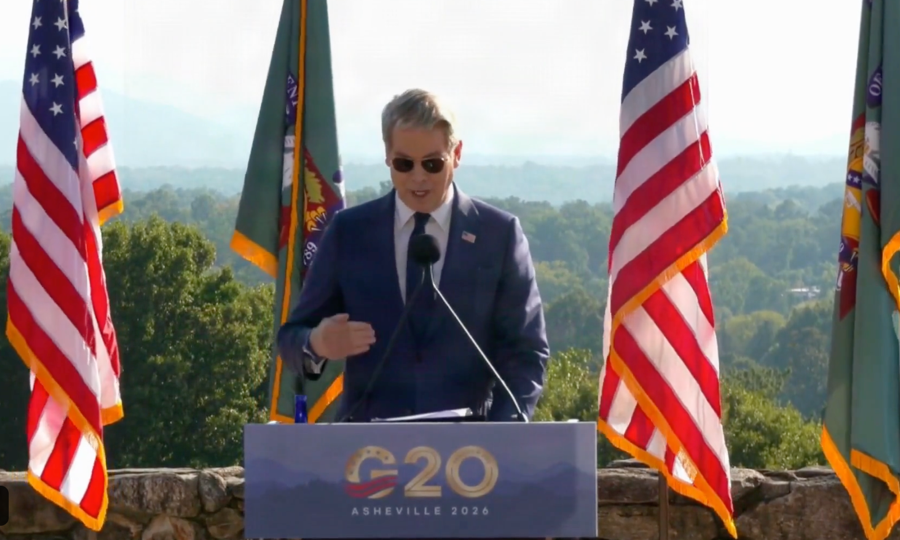
The Group of 20 finance meetings in Asheville, North Carolina, concluded on Tuesday after four days of discussions among finance ministers and central bank chiefs on global trade. The news late Tuesday was that China had derailed the group's efforts to issue a joint communiqué by refusing to endorse specific language targeting trade surpluses and export-dependent economic models.
"The country with the world's largest and unsustainable current account surplus, the People's Republic of China, was the dissenter," Treasury Secretary Scott Bessent told reporters.
Bessent added, "Non-market-based economies pushing out a never-ending spring of cheap exports is not sustainable."
US and European officials told the Financial Times that Beijing objected to language intended to support the smooth functioning of global supply chains for energy, food, fertilizer and critical minerals.
Asked why China had opposed the language agreed upon by the group, a senior US official explained: "They are guilty. If we are worried about persistent distortions, they are the worst offenders. For the G20 to have something at 19-1 is unbelievable."
The dispute over the communiqué, an official joint statement agreed to by all G20 members after a meeting that typically summarizes areas of agreement, economic concerns, policy commitments or priorities, and areas requiring further cooperation, offers another glimpse into the widening economic fracture between Beijing and the West. China's staggering $1.2 trillion trade sur