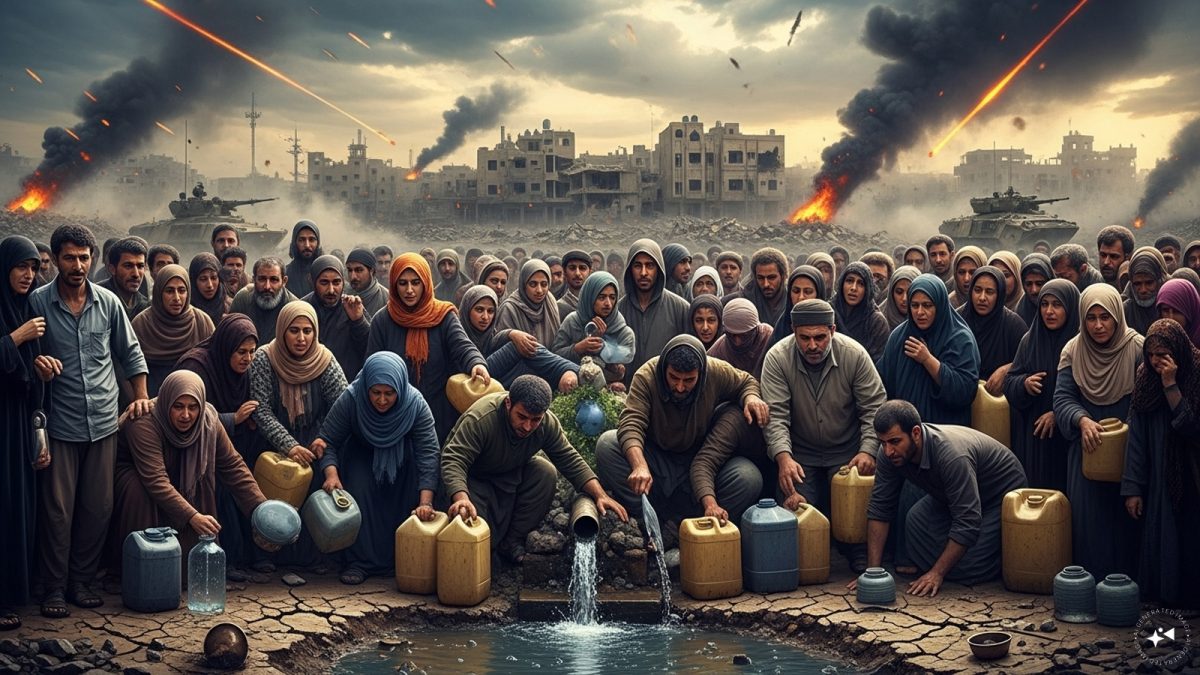
Unless you’ve been living under a rock, you must have read the umpteen headlines over the past few days warning of rising oil prices as the US-Israel-Iran war surges. When conflict erupts in the Middle East, global attention almost automatically turns to oil. But, according to analysts, the current war has blown the lid off a different strategic reality: the most precious commodity may not be oil but water.
Experts quoted by Bloomberg argue that while energy supplies influence global markets, Iran’s internal stability and long-term war capacity are increasingly tied to its severe water crisis.
A War In A Water-Stressed Nation
Iran is among the most water-stressed countries in the world, with nearly all of its renewable water resources already being used for agriculture, industry and domestic consumption.
As per the Indian Council Of World Affairs, decades of drought, declining rainfall and over-extraction of groundwater have pushed reservoirs to dangerously low levels. By 2025, several major reservoirs were close to empty after years of reduced inflows and excessive consumption.
Agriculture is the biggest driver of this crisis. The sector consumes more than 90 per cent of the country’s water supply, often through inefficient irrigation systems that waste large volumes of water. This leaves Iran with little buffer to absorb shocks, including those caused by war.
Iran is a major oil producer, but oil revenues alone cannot sustain a population facing water shortages. Water directly affects food production, electricity generation and daily life.
According to Geopolitical Monitor, shrinking rivers, depleted aquifers and disappearing lakes have already reduced agricultural output and forced some rural communities to migrate to cities. In extreme cases, environmental stress has triggered protests and unrest, including demonstrations by farmers demanding water access.
For a country engaged in conflict, such domestic instability can become a strategic vulnerability.
Military conflict can intensify water scarcity in several ways, including infrastructure damage, energy shortages, and economic strain. While bombing or sabotage can disrupt dams, pipelines and treatment plants, water pumping and desalination require electricity, which can be disrupted in war. To add to it, sanctions and war costs reduce funds available for water management.
Source: World News in news18.com, World Latest News, World News
