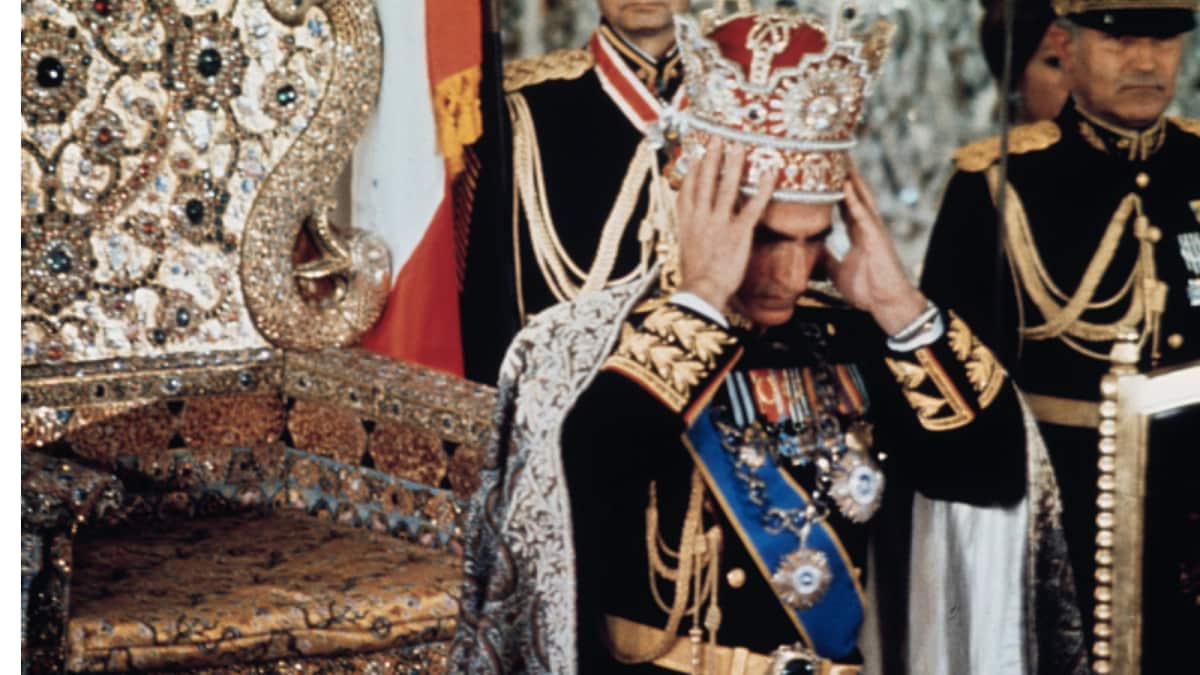
The final days of Mohammad Reza Shah Pahlavi, Iran’s last monarch, were marked not by imperial grandeur but by illness, political isolation and exile.
For decades, he was known as the “King of Kings" — a monarch who ruled one of the Middle East’s most powerful states and hosted lavish celebrations attended by global leaders and royalty. Yet when he died in 1980, the once-powerful ruler was far from the country he had governed for nearly four decades.
A King Who Ruled Iran for Nearly Four Decades
Mohammad Reza Pahlavi became the Shah of Iran in 1941, after Allied forces forced his father, Reza Shah, to abdicate during World War II. However, he was formally crowned 26 years later, after ascending to the throne, on October 26, 1967.
He delayed the coronation until his 48th birthday to signify that his country had achieved stability and progress.
Educated partly in Switzerland, the young monarch inherited a kingdom at a moment of geopolitical tension and rising nationalism.
During his reign, the Shah sought to transform Iran into a modern state. His ambitious reform programme, known as the White Revolution, expanded infrastructure, improved literacy, and promoted industrial growth using the country’s vast oil revenues.
But modernisation came with a cost. Critics accused the Shah of ruling with an iron hand, suppressing dissent and concentrating power around the monarchy.
By the late 1970s, growing inequality, political repression and anger against his pro-Western policies triggered mass protests across Iran.
A Revolution Forced The King To Flee
Source: World News in news18.com, World Latest News, World News
