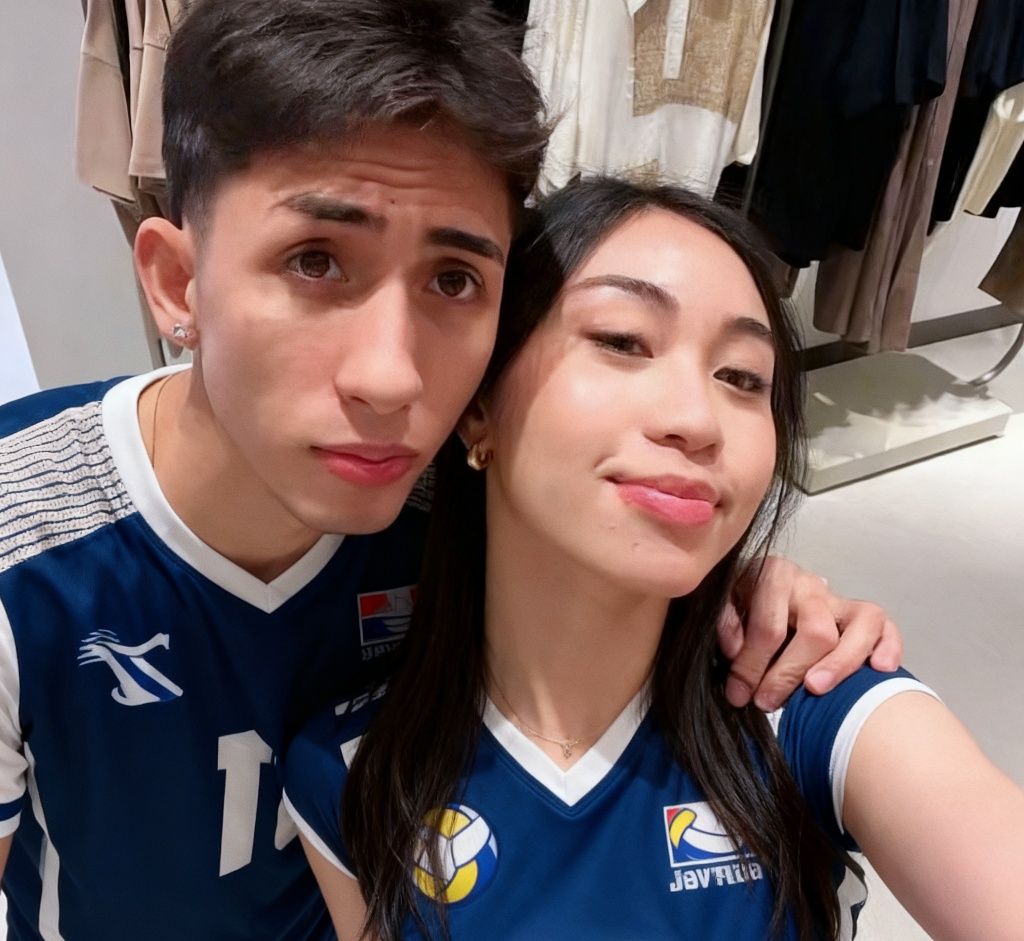
The line that hooks people is not even the scandal bit. It is the faux-sentimental one: 'last day.' That phrase — dropped into a so-called 'boyfriend video' about Zyan Cabrera — works because it sounds intimate, like you have stumbled into someone's private life at a turning point. But that intimacy is also the trap.
Over the past week, Zyan Cabrera — also tagged online as Jerriel 'Cry4zee' — has been swept up in a wave of posts branding her a 'Pinay Gold Medalist' and attaching her name to promises of a 'viral video,' a 'leaked clip,' or a shocking reveal. Fact-check warnings have been blunt: this is not a sports story, and it is not a romance story either. It is an internet scam dressed up as both.
So when a 'viral video' appears to suggest her boyfriend says it is their 'last day,' it raises the obvious curiosity-bait question — are they in a long-distance relationship? The more important question is harsher: who benefits from you asking at all?
LatestLY has described the 'Zyan Cabrera Gold Medalist' trend as a phishing campaign that uses suggestive captions and misleading thumbnails to push people into clicking malicious links that can compromise social media accounts. NewsX likewise warns that 'Gold Medalist' posts are being paired with obscene or blurred imagery and 'viral MMS' language to lure clicks, with the real aim being credential theft and malware distribution.
That is the ecosystem your 'last day' video sits inside. It does not have to be explicit to be dangerous; it just has to be emotionally sticky enough that people share it, comment on it, or tag friends — spreading the bait further.
And the 'boyfriend' angle is especially useful because it gives the clickbait narrative a storyline. Not just 'Who is she?' but 'What happened between them?' It turns a faceless scam into something with characters, stakes, and an implied conclusion — exactly the structure that keeps people engaged long enough to click.
No — at least not from the material currently driving traffic. The claim that Zyan Cabrera is a 'gold medalist' is not supported by credible sports records; it has been repeatedly flagged as a fabricated label used to exploit Olympics-era search behaviour and public curiosity. Once the foundation is demonstrably false, it becomes reckless to treat adjacent claims — like a boyfriend declaring a 'last day' — as reliable evidence of anything, including relationship status.
last day#zyancabrera#jeriell#goldmedalist#viral#fyp
A long-distance relationship is a simple enough concept: two people are together, but live in different places for work, study, or family. The problem here is not the idea; it is the sourcing. Scam pages can stage, edit, miscaption, or entirely invent video context. They can also repurpose unrelated clips, slap on names and hashtags, and watch the algorithm do the rest.
So the honest answer to your question is frustratingly plain: there is no verifiable basis, from reputable reporting, to confirm whether Zyan Cabrera and the man described as her boyfriend are long distance — or even together. The 'last day' line, without authentication, is a narrative device, not proof.
Source: International Business Times UK
