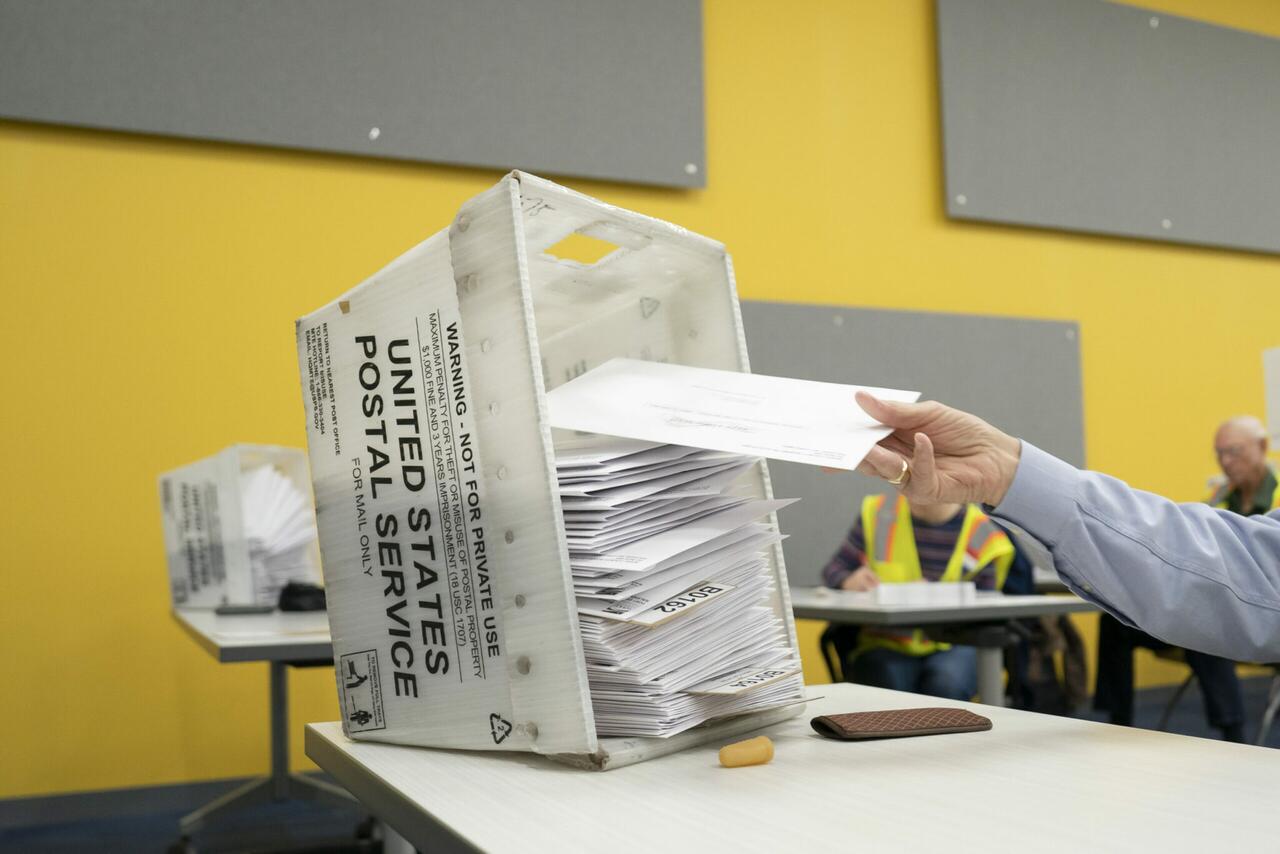
When did "election integrity" become such a contentious issue in the US? Perhaps it was election night in November 2020 when Joe Biden and the Democrats received an impressive "hockey stick" spike in votes after most Americans went to bed. Most of these votes came from absentee mail-in ballots, an event which inflated Joe Biden's numbers to 81.2 million - The greatest number of votes any candidate has ever received in US history.
That's right, the candidate who was rarely seen for half of the campaign cycle and who could barely fill a room during campaign speeches was apparently the most popular candidate of all time.
It's understandable why a large percentage of the public viewed this incident with great suspicion. In 2024, with covid confusion gone and all eyes watching the polls carefully, Kamala Harris fell short of Biden by 6.3 million votes. Ironically, many Dems suggested that that the election was "rigged" in Trump's favor because of the sizable discrepancy between Harris and Biden.
They didn't consider the possibility that the 2020 election might have been rigged in Biden's favor, giving him a vote count that probably won't be matched again for many elections to come.
Or, maybe Joe Biden really was that charismatic, earning the most votes of all time. He's a sharp and engaging guy. In any case, the Trump Administration has made election integrity the centerpiece of its political mission. Two important policies are at stake: Voter identification which nearly 80% of the public supports, and limitations on mail-in ballots including tracking and verification to prevent fraud.
Democrats are aggressively opposed to both, calling the mea