Authored by Luc Lelièvre via Mises Institute,
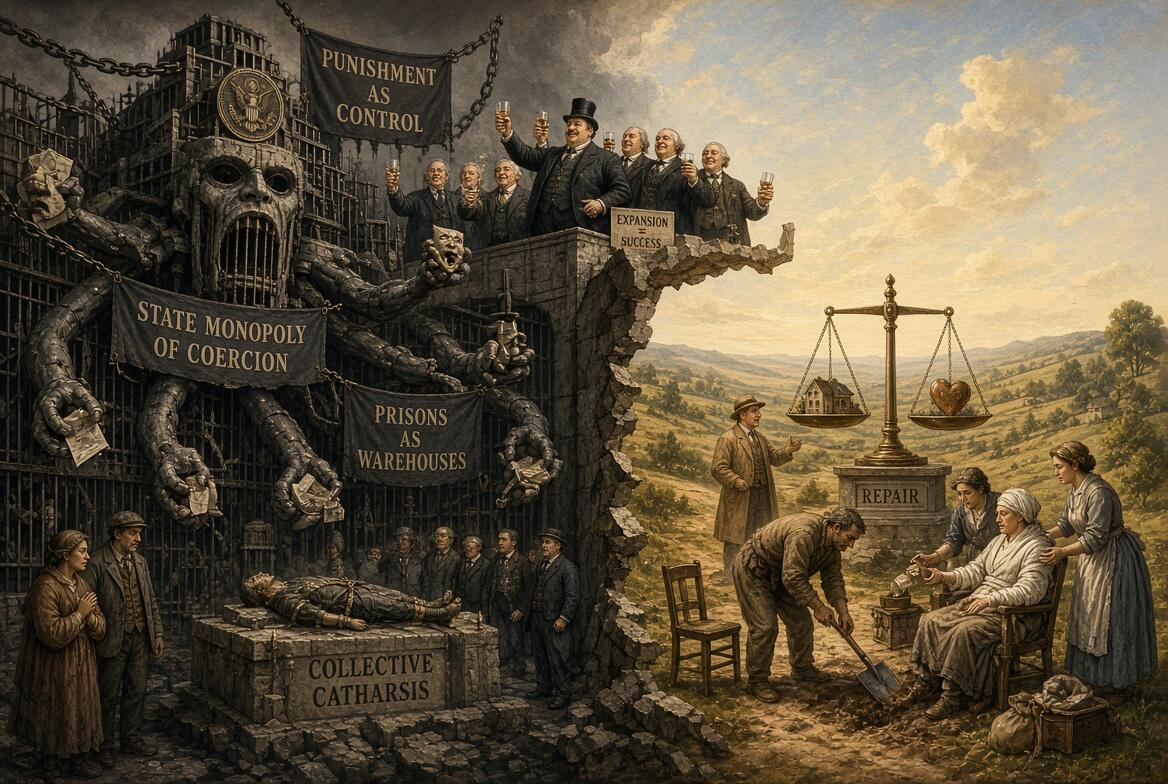
Loïc Wacquant and Murray Rothbard come from completely different worlds. Wacquant, in Punishing the Poor (2009), analyzes how modern states manage marginalized populations through policing and incarceration. Rothbard, in The Ethics of Liberty (1982), argues that the state is a monopoly of coercion and that real justice means restitution to victims rather than punishment imposed by the government. At first glance, they seem to have nothing in common. Yet, when you look closely at what each says about crime and punishment, they describe remarkably similar institutional dynamics: a penal system that does not exist to deliver justice but to maintain political power, control vulnerable communities, and satisfy the public's desire for punishment.
Wacquant argues that modern punishment targets not crime itself but people with low incomes. In Punishing the Poor, he writes that "it is not so much crime that is being fought, but the poor themselves." He attributes this dynamic to welfare retrenchment and what he interprets as neoliberal restructuring. This is Wacquant's interpretation. My purpose here is not to defend or refute it, but to summarize his institutional analysis and compare it with Rothbard's critique of state power. Wa