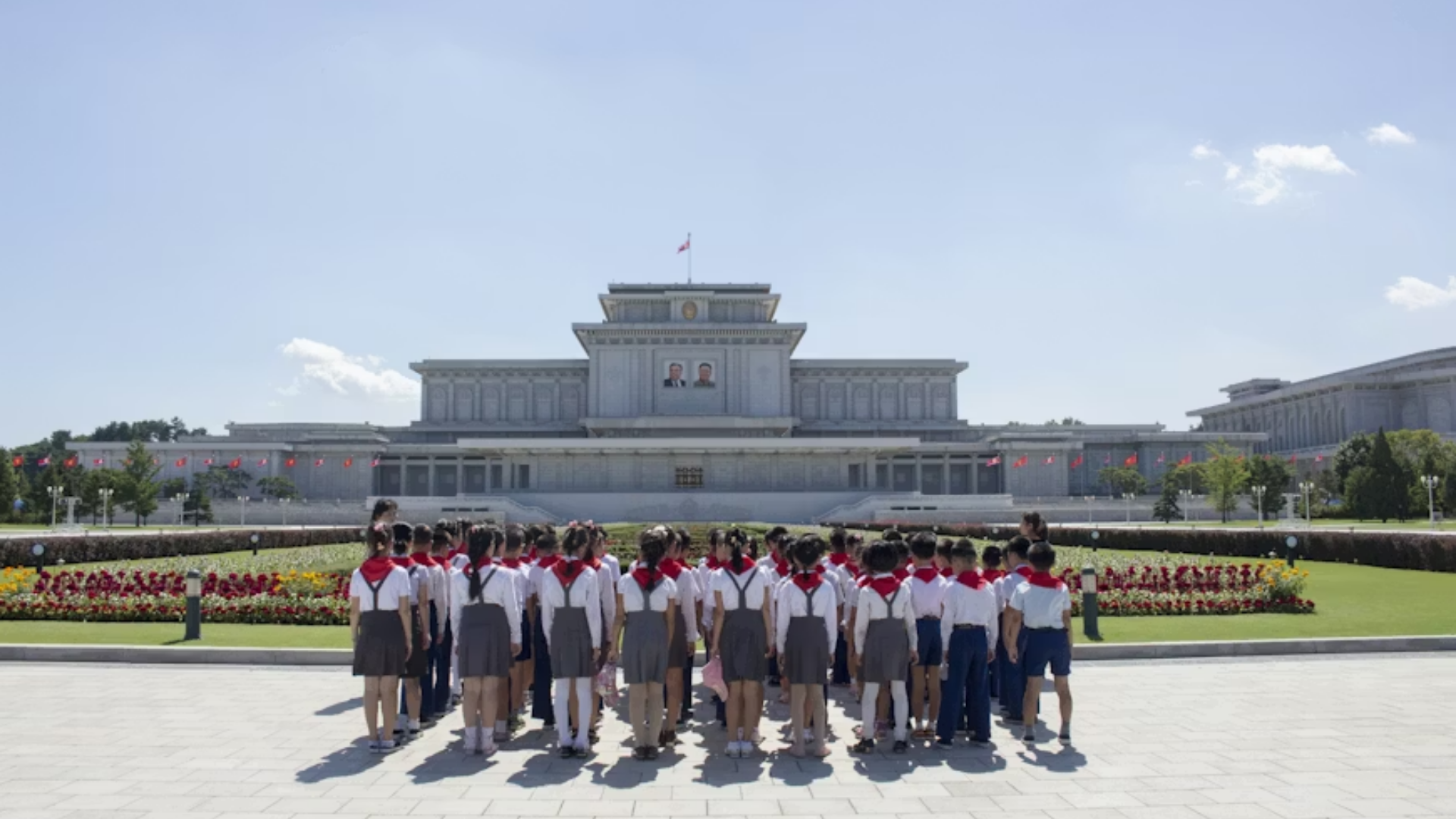
Dystopian lawsinNorth Koreaare reportedly being used to execute some teenagers for consuming South Korean media, as the regime intensifies its war against the 'rotten ideology' of foreign culture.
The victims include North Korean teenagers and schoolchildren who were reportedly targeted by the regime's specialized '109 Group' enforcement unit. According to a new report from Amnesty International, based on 25 in-depth interviews with escapees, most of whom were aged between 15 and 25 at the time of the events described, the victims faced extreme penalties for watching globally popular South Korean dramas and listening to K-pop.
The report details a 'system built on fear and corruption', where the 2020 Anti-Reactionary Thought and Culture Act allows for the death penalty for those distributing large amounts of South Korean content. One interviewee reported that high school students in Yanggang Province were executed for watching theNetflixsensationSquid Game, while others were punished for listening to the world-renowned boy bandBTS.
Other 'corrupting' shows specifically named in the report includeCrash Landing on YouandDescendants of the Sun. The findings were published on Wednesday, 4 February 2026, drawing on testimonies gathered throughout 2025. Many of the described executions took place between 2021 and 2024, as border closures made information flow even more perilous.
The atrocities occurred across North Korea, specifically in provinces such as Yanggang, South Pyongan, and North Hamgyong, where public executions were allegedly used as 'ideological education' to deter the population from accessing external information.
Testimonies gathered by Amnesty describe a harrowing reality in which children are forced to witness public executions as a form of ideological conditioning against foreign influence. Kim Eunju, 40, recalled being taken to watch executions at the age of 16, saying, 'Authorities showed us everything... it's ideological education: if you watch, this happens to you too.'
Amnesty International said escapees recalled tens of thousands of people being forced to attend a public execution in Sinuiju in 2017 or 2018, a spectacle intended to serve as a warning to the population. Separately, former students described being subjected to school-based public criticism sessions, where teenagers were singled out and reprimanded for hours for having what authorities labelled 'corrupted spirits' linked to foreign media consumption.
Sarah Brooks, Amnesty International's Deputy Regional Director, said the laws mean watching a television show can 'cost you your life', creating an 'ideological cage' for the entire population.
The report highlights a staggering level of corruption, where the severity of punishment often depends on a family's wealth and connections rather than the act itself. One escapee,Kim Joonsik, 28,revealed that he was caught watching South Korean dramas three times but avoided legal punishment because his family had the means to pay bribes.
Conversely, three of his sister's high school friends were sent to labour camps because their families were unable to pay the necessary fees. 'People without money sell their houses to gather $5,000 or $10,000 to pay to get out', another defector, Choi Suvin, explained.
Source: International Business Times UK
