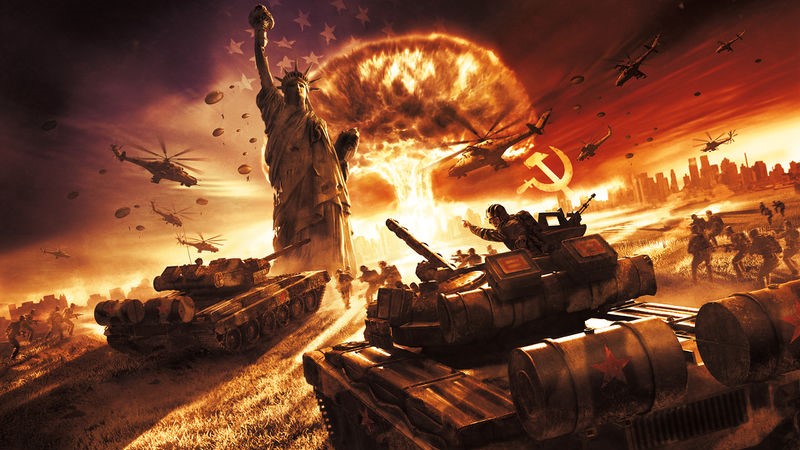
A new analysis suggests that if World War 3 erupts with nuclear weapons, only two countries could realistically sustain life while the rest of the planet faces catastrophic famine.
Fears of a global conflict involving nuclear powershave intensified in recent weeks asmilitary tensions involving the United States, Israel and Iranhave escalated dramatically, while separate hostilities involving Pakistan and Afghanistan have raised concerns about a wider geopolitical confrontation. With several nuclear-armed nations now entangled in regional conflicts, experts warn that the prospect of a nuclear world war has returned to public debate.
Researchsuggests the consequences of a nuclear conflict would extend far beyond the initial explosions, with scientists warning that the aftermath could trigger severe global environmental disruption. Peer-reviewed studies published in Nature indicate that even a relatively limited nuclear exchange could send massive quantities of soot into the atmosphere, blocking sunlight across the planet for years. The resulting drop in global temperatures would devastate agriculture worldwide, triggering mass famine on an unprecedented scale.
Investigative journalist Annie Jacobsen examined this scenario in her book 'Nuclear War: A Scenario', drawing on scientific studies and interviews with defence specialists. 'Hundreds of millions of people die in the fireballs, no question,' she said, adding that the collapse of agriculture would prove even deadlier in the long term. 'Places like Iowa and Ukraine would be just snow for 10 years, and so agriculture would fail,' Jacobsen said. 'When agriculture fails, people just die.'
In her research, Jacobsen highlightedAustralia and New Zealand as the two countries that could survivea global nuclear conflict, citing their geography and climate. Both nations are located in the Southern Hemisphere, relatively isolated from the world's major nuclear powers, and scientific modelling suggests they could experience less severe climate disruption during a 'nuclear winter'. Jacobsen said studies indicate these regions might be the 'only places that could actually sustain agriculture' under such extreme conditions.
Even in these comparatively fortunate regions, survival would not be straightforward. Modern nuclear weapons are estimated to be up to 50 times more powerful than those dropped on Hiroshima and Nagasaki during the Second World War, and a global exchange would severely damage the ozone layer. 'The ozone layer would be so damaged and destroyed that you can't be outside in the sunlight,' Jacobsen warned, describing a scenario where people would be 'forced to live underground... everywhere except for in New Zealand and Australia.'
Despite identifying Australia and New Zealand as potential survivors, experts caution that no location would escape unscathed. John Erath, senior policy director at the Center for Arms Control and Non-Proliferation, told Newsweek that 'there's no question any nuclear war would be bad for everyone', adding that fallout, contaminated water supplies and long-term radiation exposure would affect populations globally. 'Nowhere is truly "safe" from fallout and other consequences,' he warned.
Experts stress that, unlike natural extinction events such as the asteroid that wiped out the dinosaurs, nuclear conflict remains preventable. Reducing stockpiles, strengthening international diplomacy and avoiding escalation between nuclear-armed states remain the most critical safeguards as geopolitical tensions continue to rise.
Source: International Business Times UK
