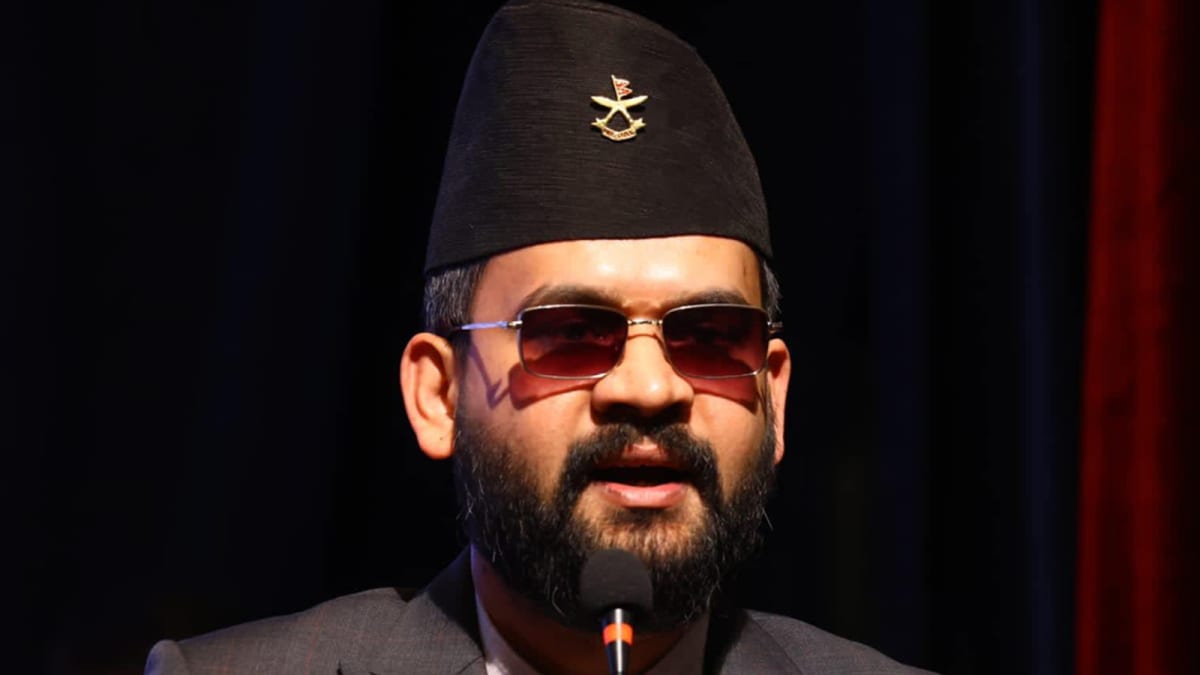
Long before Balendra Shah- known simply as Balen- became the Mayor of Kathmandu or the frontrunner to lead Nepal as Prime Minister, he was saying exactly what he thought about his country’s political class. He was just saying it in rap.
The songs Balen Shah made before politics came calling were a sustained, angry and remarkably consistent critique of Nepal’s entrenched elites, broken democratic promises and a system that claimed to represent ordinary people while consistently failing them.
Read more:Meet Sabina Kafle: The Poet Wife Of Nepal’s Likely Next Prime Minister Balen Shah
Looking back at those tracks now, as Balen’s Rastriya Swatantra Party surges toward a landslide in the March 2026 general elections, they read more like a political manifesto written years before he ever ran for office.
The most direct and confrontational of his tracks, “Balidan"- meaning Sacrifice- takes aim at the central lie of Nepal’s political history. The song references the sacrifices made by ordinary citizens during Nepal’s democratic movements and civil conflict and argues that while the public bore the cost of those struggles, it was the political class that claimed the rewards. The ruling class, the song argues, exploits nationalism and revolutionary rhetoric to maintain power while delivering nothing meaningful in return.
Read more:‘F**k America, India, China’: Nepal PM Frontrunner Balen Shah’s 2025 Post Goes Viral, Triggers Outrage
“Tathya"- meaning Facts- takes the argument in a different direction. Where “Balidan" targets political opportunism, “Tathya" targets the information architecture that sustains it. The song argues that political institutions and media narratives actively hide the truth from citizens, constructing a sanitised version of reality about development, governance and democracy that bears little relation to lived experience.
“Sadak Balak"- meaning Street Child- shifts the lens from the powerful to the powerless. The track centres on marginalised urban youth and the street-level realities that state institutions and political leaders consistently ignore. The argument embedded in the song is that the system that claims to represent the public is failing its most vulnerable members.
The most aspirational of his key tracks, “Nepal Haseko"- meaning Nepal Smiling- carries its anti-establishment message in a different register. The idea of Nepal smiling represents a future that stands in sharp contrast to the present political environment. The song does not rage but it imagines with the implication that Nepal is not smiling now and the reason is the system currently running it.
Source: World News in news18.com, World Latest News, World News
