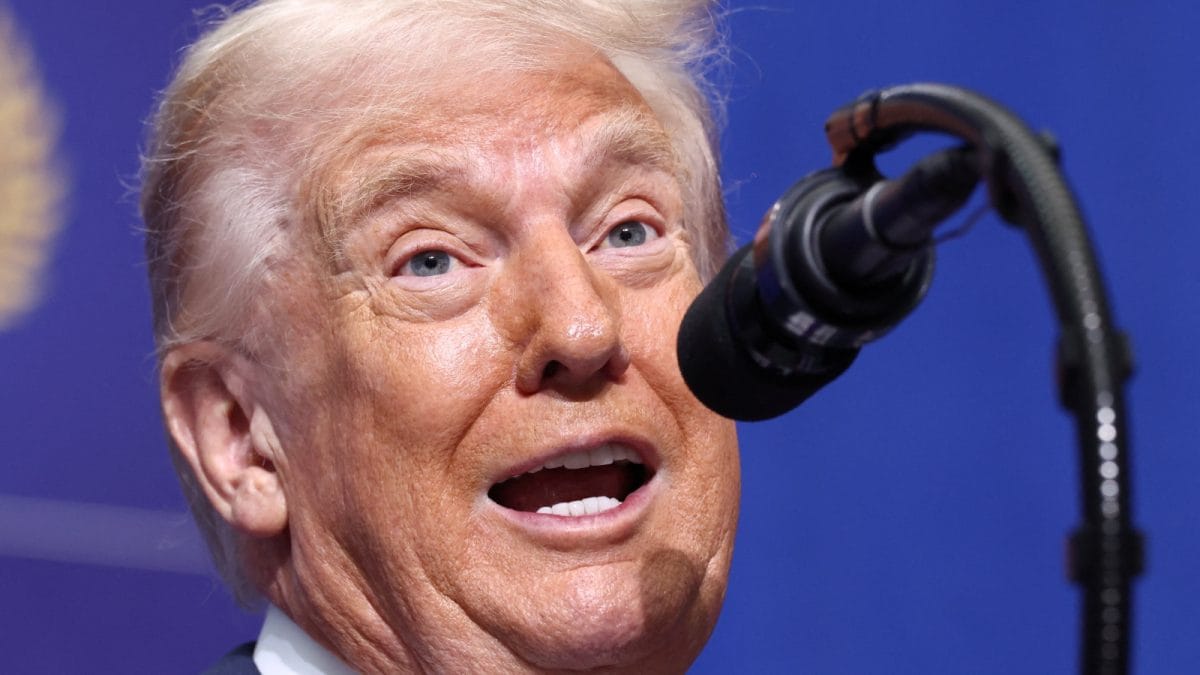
US President Donald Trump’s demand for Iran’s “unconditional surrender" has drawn striking comparisons to a nearly identical moment less than a year ago- one that was followed, just six days later, by a ceasefire.
In a post on Truth Social, Trump wrote, “There will be no deal with Iran except UNCONDITIONAL SURRENDER! After that, and the selection of a GREAT & ACCEPTABLE Leader(s), we, and many of our wonderful and very brave allies and partners, will work tirelessly to bring Iran back from the brink of destruction, making it economically bigger, better, and stronger than ever before. IRAN WILL HAVE A GREAT FUTURE. ‘MAKE IRAN GREAT AGAIN (MIGA!).'"
Read more:Every Past US-Iran Crisis Ended Quickly But This Time Could Be Different. Here’s Why
The words are familiar as on June 17, 2025, Trump issued the same demand during what became known as the Twelve-Day War between Israel and Iran. Six days later, on June 23, he announced that a ceasefire agreement had been reached. It took effect the following day, bringing that conflict to an end. The ceasefire was mediated by the United States and Qatar.
Today, President Trump called for Iran’s “unconditional surrender."The last time we saw this happen was on June 17th, 2025.
6 days later, on June 23rd, a ceasefire was announced.
Will history repeat itself on March 12th?pic.twitter.com/2NxZ6rxBKY
— The Kobeissi Letter (@KobeissiLetter)March 6, 2026
If the pattern holds, a ceasefire announcement could come as early as March 12.
There are, however, significant differences between the two moments. The current conflict is considerably more expansive than the Twelve-Day War- spreading across more than a dozen countries, disrupting Gulf energy exports, killing American soldiers and triggering a leadership vacuum in Tehran following the death of Supreme Leader Ayatollah Ali Khamenei. The June 2025 conflict, by comparison, was geographically and politically far more contained.
Source: World News in news18.com, World Latest News, World News
