Gulf states are reassessing billions of pounds' worth of investment commitments to the United States as the Iran war tears through their energy infrastructure, tourism sectors and defence budgets. TheFinancial Times reported on 5 March 2026thatSaudi Arabia, the United Arab Emirates, Qatar and Kuwaithave begun an internal review of existing and future financial agreements with Washington, including examining whetherforce majeure clausescan be legally invoked.
The development carries enormous consequences for the global economy: these four nations collectively control some of the world's largestsovereign wealth fundsand, during Donald Trump'sGulf tour in May 2025, pledged hundreds of billions of dollars in US investments, agreements now under quiet but serious scrutiny.
A Gulf official told the Financial Times that three of the four big Gulf economies: Saudi Arabia, the UAE, Kuwait and Qatar, had jointly discussed the strains being put on their budgets and economies. The official declined to name the specific states. The language used in that briefing was precise in a way that matters: an internal review is not a withdrawal, and a discussion is not a decision. But the direction of travel is clear.
The official said: 'A number of Gulf countries have begun an internal review to determine whether force majeure clauses can be invoked in current contracts, while also reviewing current and future investment commitments in order to alleviate some of the anticipated economic strain from the current war. Especially if the war and related expenses continue at the same pace.'
Force majeure, a legal term meaning 'superior force,' allows parties to suspend contractual obligations when extraordinary events outside their control make fulfilment impossible. Its invocation in sovereign investment agreements would be without modern precedent in the Gulf's relationship with Washington.
Any move affecting investments in the US or other Western countries could increase pressure on Trump to pursue diplomatic efforts to end the conflict. That pressure is already building in other quarters.Khalaf Ahmad Al Habtoor, the Emirati billionaire and founding chairman ofAl Habtoor Group, became the first high-profile Gulf businessman to publicly condemn Trump over the war on 5 March 2026, asking in anopen letter on X: 'Who gave you the authority to drag our region into a war with Iran?' Al Habtoor pointedly questioned whether the billions Gulf states had contributed to Trump'sBoard of Peace initiativewere 'supporting peace efforts or financing a war that exposes the region to danger.'
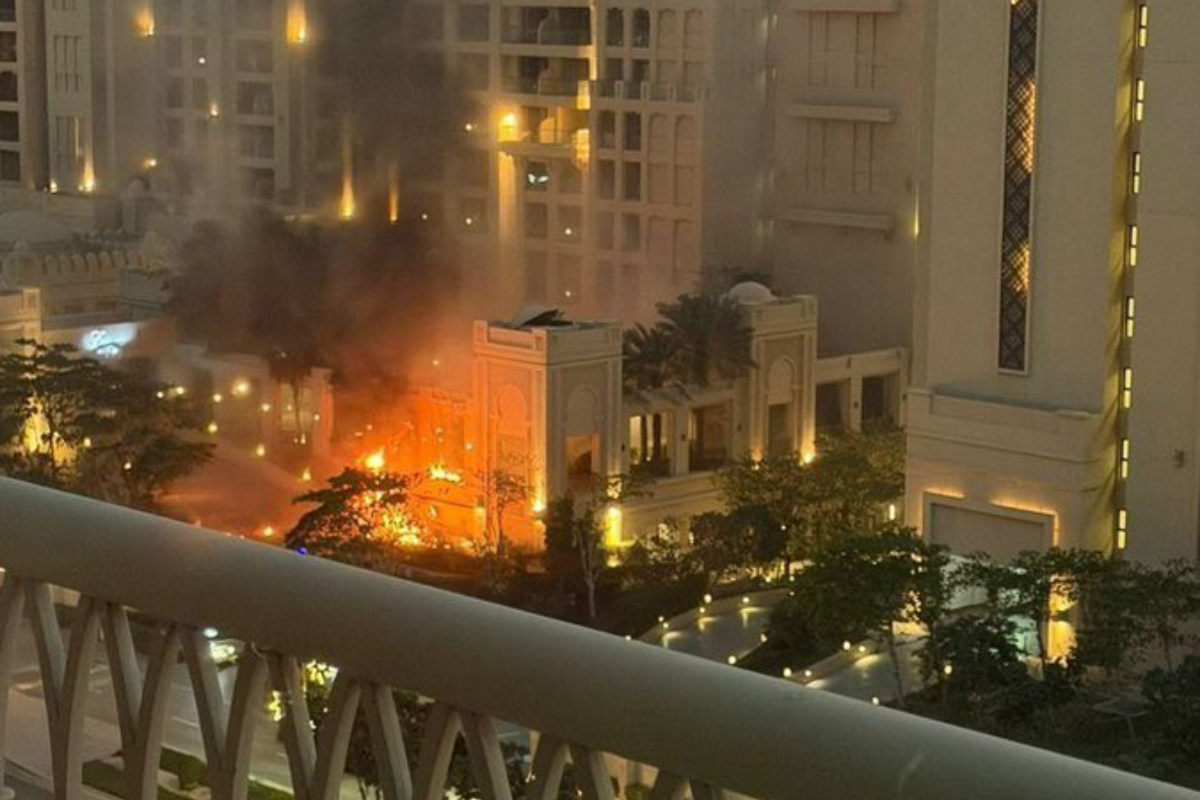
The economic anxieties driving the investment review are rooted in physical damage that cannot be overstated. On 2 March 2026, Iranian drones struckQatarEnergy'soperating facilities atRas Laffan Industrial CityandMesaieed Industrial City. The world's largest LNG producer stated: 'Due to military attacks on QatarEnergy's operating facilities in Ras Laffan Industrial City and Mesaieed Industrial City in the State of Qatar, QatarEnergy has ceased production of liquefied natural gas and associated products.'
QatarEnergy subsequently declared force majeure on LNG shipments, informing affected buyers that contractual deliveries could not be guaranteed after the disruption forced the company to halt LNG output and associated products.
'Further to the announcement by QatarEnergy to stop production of liquefied natural gas and associated products, QatarEnergy has declared Force Majeure to its affected buyers,' the company said in a statement. The consequences were immediate and global. Shortly after the announcement,benchmark Dutch and British wholesale gas prices soaredby almost 50%, while benchmark Asian LNG prices jumped almost 39%.
About 20% of global LNG trade transited theStrait of Hormuzin 2024, primarily from Qatar, according to the US Energy Information Administration. With the strait now effectively blocked, as of 5 March 2026, approximately 1.056 million metric tons of LNG loaded on 13 vessels was stranded in the Persian Gulf west of the Strait of Hormuz, according to ship-tracking data from Kpler, Qatar has no alternative export route.
Source: International Business Times UK
