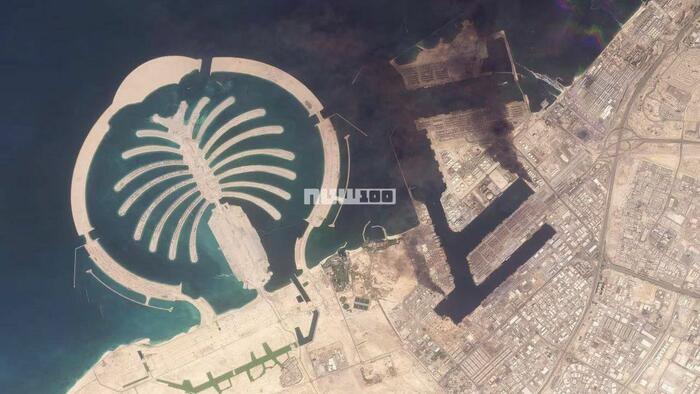
The United Arab Emirates ispissedafter Iran targeted Dubai and other US allieswith over1,000 drones and missiles in retaliation for US-Israeli attacks over the last week - and is nowweighing freezing billions of dollars in Iranian assetsheld in the Gulf state, according to theWSJ, citing people familiar with the discussions. If that happens,it could sever one of Tehran's most vital economic lifelines.
For years, the United Arab Emirates has functioned as a financial hub for Iran, including wealthy individuals, businesses, and accounts associated with the Islamic Revolutionary Guard Corps (IRGC). While some of that (if not most) is legitimate business,the UAE has also been used to launder money through 'shadow banking'and other schemes - something the UAE has worked with the west (probably not that hard) to combat.
The UAE has been a 'Switzerland' of sorts - welcoming capital from around the world with little judgement, including happily doing business with Russian commodities traders and bankers following the invasion of Ukraine, despite US officials insisting that they ramp up scrutiny on money flows and crack down on sanctions evasion. In 2022, Paris-0based Financial Action Task Force placed the UAE on its "gray list" for failing to combat money laundering and terrorism financing.
In 2024,$9 billion linked to clandestine Iranian financial activitypassed through UAE-based firms, largely connected to oil sales by Iran-linked companies in Dubai, according to the Treasury Department.
Iranian Funds for Hezbollah Are Flowing Through Dubai(WSJ)
Treasury Sanctions Iranian Network Laundering Billions for Regime Through Shadow Banking Scheme(US Treasury)
After the UAE closed a handful of accounts held by Russian oligarchs and oil traders at the behest of US officials, the FATF removed them from their list for strengthening their anti-money-laundering policies.But they still hold billions in Iranian assets, and they're not to happy about being targeted in retaliation strikes -which have caused damage at a Dubai airport, residential and tourist areas around the Burj Al Arab hotel, and the Palm Jumeirah man-made island.
Tehran has been selling oil on the international market to fund the IRGC as well as other parts of their defense and security complex,through this shadow banking scheme,according to Treasury.
As such, any move to limit Iranian financial activities - which would likelynotapply to all accounts held by Iranian companies and nationals (hundreds of thousands of whom live in the UAE) - "would be very significant, becausethe U.A.E. is the most important conduit for Iran’s engagement with the global economy,"said Esfandyar Batmanghelidj, chief executive of Iran-focused think tank Bourse & Bazaar, in a statement to theJournal.
U.A.E. authorities are weighing several measures to dismantle illicit Iranian operations, officials familiar with the matter said. They range fromfreezing the assets of U.A.E.-based shadow companiesused to mask trade to a sweeping financial crackdown on local currency exchanges which are used to move money outside of formal banking channels.
Source: ZeroHedge News
