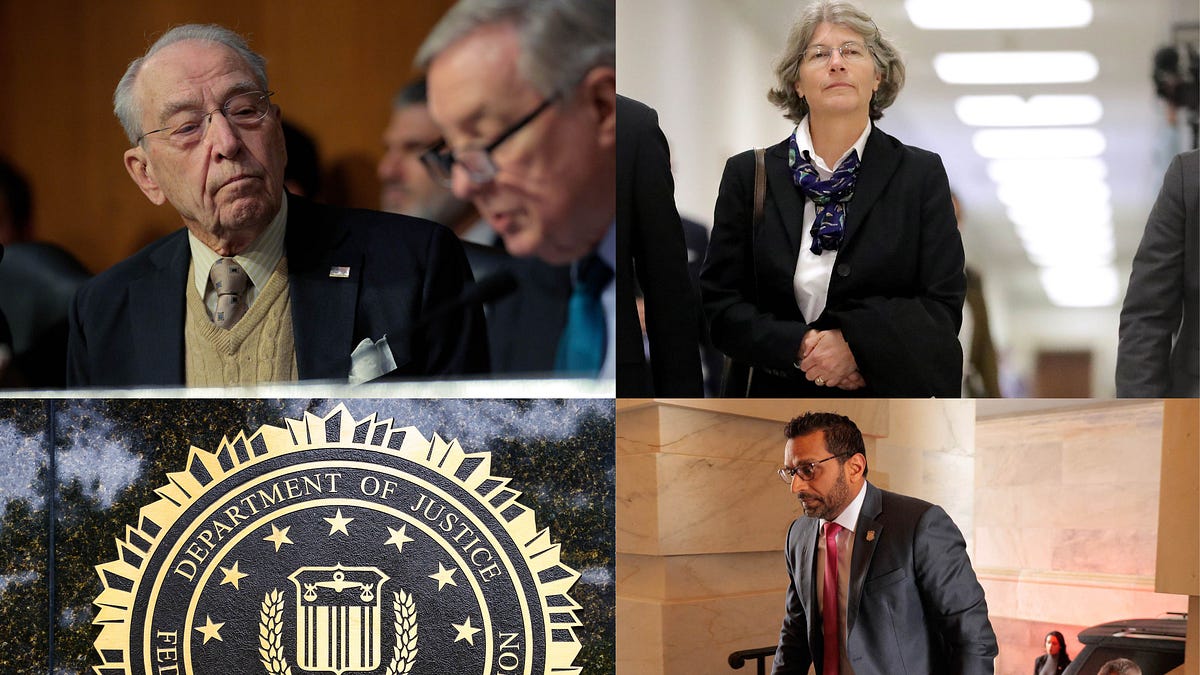
A Federal Bureau of Investigation task force has begun excavating the separate set of books FBI keeps using an inaccessible “prohibited access” file designation, according to multiple government sources. Though an internal fight over how to handle the files continues, embattled FBI Director Kash Patel has assigned personnel to examine decades of hidden history, Racket News has learned, with some files already turned over to Congress.
“This is it — the deep state,” one of the sources said.
Judiciary Committee Chair Chuck Grassley, whose work with whistleblowers and pressure across years was key to prying prohibited access files loose, expressed cautious optimism.
“If it weren’t for whistleblower disclosures to my office, the very existence of the FBI using ‘Prohibited Access’ files for some investigations would have remained in the dark,” he said. “I’veasked Attorney General Bondi and Director Patelto turn over certain Prohibited Access records to Congress. I’ve received some, but am still waiting on others. I urge the DOJ and FBI to keep digging – which previous administrations apparently didn’t make any effort to do – so that the facts can come to light. The FBI’s secret stash of records is scandalous.”
Files given a prohibited access designation are not merely secret. They are “ghosts” which “do not exist,” records rigged to return false negatives when searched for in the FBI’s SENTINEL system. They’re digital descendants of paper records thatas far back as Richard Nixon’s presidencywere kept in locked offices, accessible to just a few officials, typically at the deputy director level and above. Currently, the number of people with the ability to access the files can be counted on one hand.
The implications of the nation’s chief federal law enforcement and counter-intelligence organization having kept a separate, non-searchable filing system are mind-boggling.
“It’s not like turning over a rock and finding a few bugs,” said retired FBI Supervisory Analyst George Hill. “It’s like turning over a manhole and finding a whole city.”
“You don’t run a Constitutional republic on secret files,” added legal analyst Margot Cleveland.
A current government source said the prohibited access designation is “literally designed to hide files from Congress and from the FBI itself. It’s really frigging bad.”
Off-books surveillance and “disruption” of political figures in the Arctic Frost and Trump-Russia investigations comprise part of the find, but the files extend at least as far back as 1999, across Democratic and Republican Party presidencies, involving as many as a thousand distinct case numbers. There are no rules for passing access to the system from one administration to the next. Instead, operation of prohibited access files is described as an oral tradition passed down among senior FBI officials, independent of agents below and political appointees above in Congress and even the White House.
Source: Racket News
