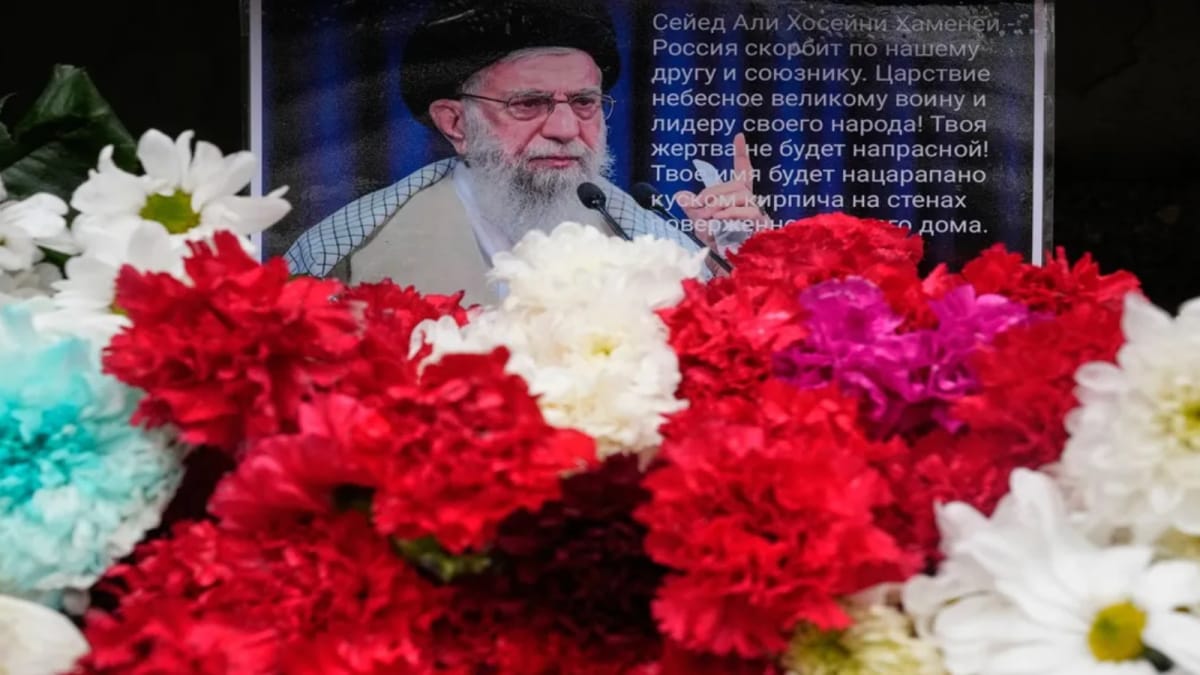
Plans are being made in Iran to introduce a new supreme leader within days, Iranian state media reported, amid growing speculation about who will replace slain Ayatollah Ali Khamenei. The country has been without a supreme leader for a week after Khamenei was killed in the US-Israeli strikes on February 28, creating a power vacuum not seen in the Islamic Republic’s 47-year history.
Read more:Digging In: The Secret Underground Bunker Iran Built To Keep Khamenei Alive And How Israel Found It
Iranian lawmaker Mohsen Zangeneh, who represents Torbat-e Heydarieh, said a new supreme leader will be introduced within two days but added that the final two candidates have both been “reluctant to accept the position."
The semi-official news agency Tasnim reported that the Assembly of Experts- the clerical body constitutionally tasked with selecting a new supreme leader- will convene to begin the process, without giving any timelines. This is only the second succession in the Islamic Republic’s history and the first since the ailing Ayatollah Ruhollah Khomeini transferred power to Khamenei in June 1989.
What Is the Supreme Leader’s Role?
The supreme leader is the highest religious and political authority in the Islamic Republic- a position that carries powers with no real equivalent in most other political systems. He is commander in chief of the armed forces and has direct oversight of the judicial branch, state media and the Guardian Council, giving him effective veto power over legislation and electoral candidates alike. He has the final say on foreign policy and broad areas of domestic policy. The position is held for life.
Read more:‘Our Response Is Clear’: Iran Tells Mediators To Focus On US And Israel, Not Tehran
What Happens The Moment A Supreme Leader Dies?
The death of a supreme leader in Iran triggers an immediate constitutional response. As stipulated in Article 111 of the Iranian Constitution, a three-person Interim Leadership Council is created to temporarily assume the duties of the supreme leader until a permanent successor is appointed. The council, activated on March 1, consists of President Masoud Pezeshkian, Chief Justice Gholam-Hossein Mohseni-Eje’i and a senior cleric from the Assembly of Experts. It holds the powers of the supreme leader in trust- directing the military, overseeing state institutions and managing the war- while the formal succession process unfolds.
Who Selects Iran’s Supreme Leader?
Source: World News in news18.com, World Latest News, World News
