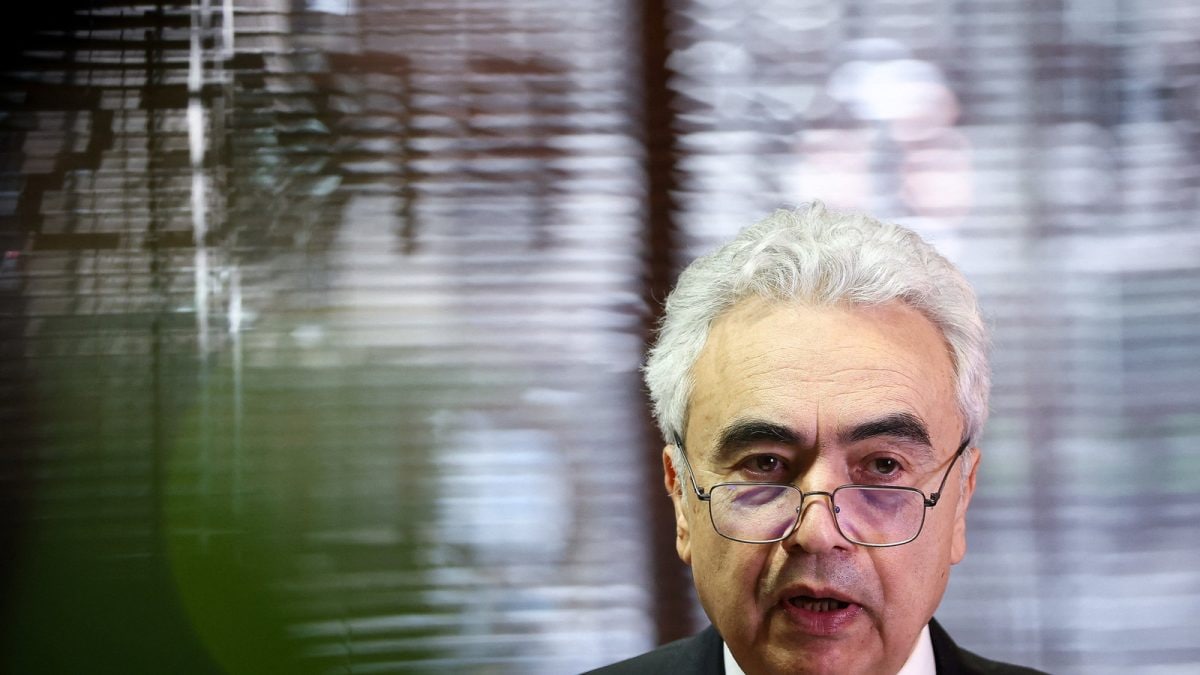
International Energy Agency (IEA) Executive Director Fatih Birol said the escalating crisis in the Middle East has prompted discussions in some countries about whether Europe might need to reconsider its reliance on Russian gas supplies.
Speaking during a public energy discussion, Birol said the disruption caused by attacks on energy infrastructure and shipping routes in the Gulf has raised concerns about energy security in parts of Europe. However, he stressed that a return to Russian gas is still politically sensitive after the Ukraine war.
The Middle East conflict has already triggered sharp increases in global energy prices after attacks on oil and gas facilities in the region and disruptions to shipping routes such as the Strait of Hormuz, a key route for global energy supplies.
Despite the geopolitical tensions, Birol said the world is not facing an oil shortage.
According to the IEA chief, the oil market currently has a “huge surplus" of supply capacity, meaning there is enough crude available globally to meet demand.
He emphasised that fears of a global shortage are exaggerated and that the market fundamentals remain strong.
Birol said the biggest issue affecting energy markets right now is logistics and transportation, not production.
Attacks on tankers and energy facilities, as well as insurance issues for ships travelling through conflict zones, have disrupted the movement of oil and gas shipments. These disruptions are slowing supply flows even though production capacity remains adequate.
Shipping through the Strait of Hormuz, which handles roughly 20 per cent of the world’s oil and LNG trade, has been severely affected by security risks, leading to delays and higher transport costs.
The conflict has already forced shutdowns at major energy facilities in the Gulf, including LNG production in Qatar and oil infrastructure in Saudi Arabia, triggering sharp spikes in gas prices globally.
Source: World News in news18.com, World Latest News, World News
