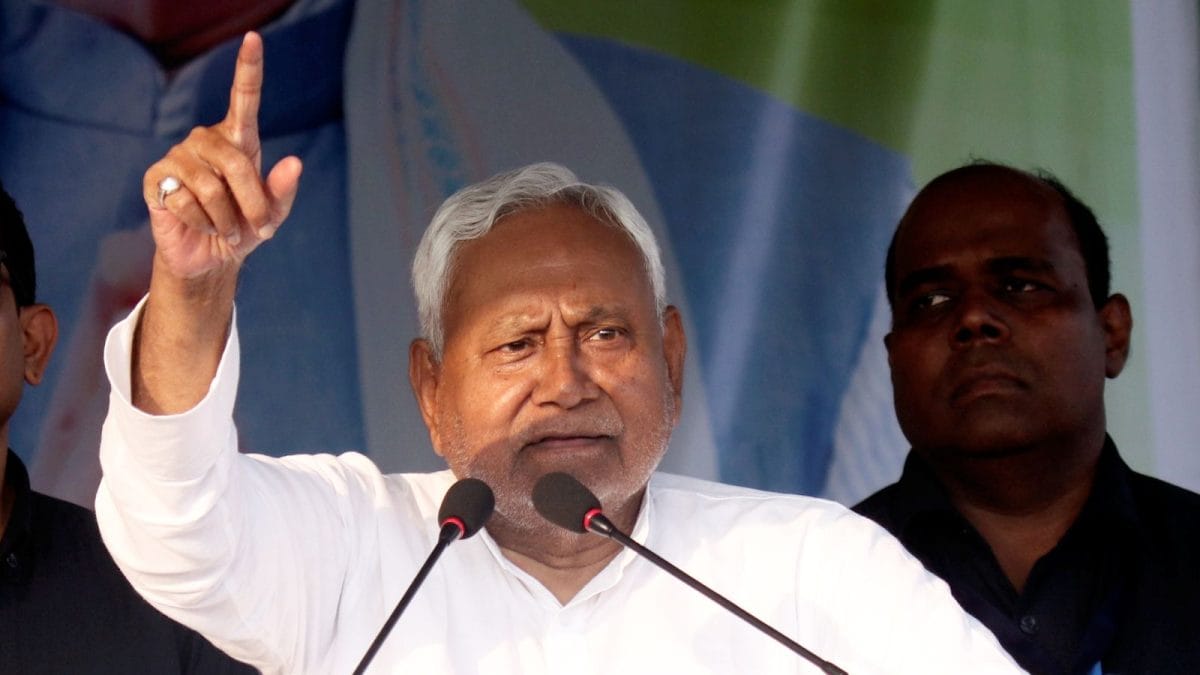
The transition ofNitish Kumarfrom the Chief Minister’s secretariat in Patna to the hallowed halls of the Rajya Sabha marks a historic pivot in Bihar’s political narrative. While the move suggests a national elevation for the JD(U) patriarch, top party sources have indicated to CNN-News18 that the transition is being managed with surgical precision to ensure stability and the preservation of his long-standing influence. Contrary to speculation of an immediate power vacuum, the Chief Minister’s post will officially become vacant only after April 10, the date on which Kumar is expected to take his oath as a member of theRajya Sabha. This timeline provides the NDA bloc with a crucial window to finalise a leadership structure that satisfies both the BJP’s aspirations and the JD(U)’s survival instincts.
According to internal JD(U) sources, the broad contours of thepost-Nitish erahave already been etched out through a strategic understanding with the BJP. Under this new arrangement, the BJP is slated to claim the Chief Minister’s post for the first time in Bihar’s history, a move primarily designed to bring the powerful Home portfolio under its direct control. To balance the scales, the JD(U) is expected to hold two Deputy Chief Minister positions. The cabinet composition will likely reflect a slight edge for the JD(U) with 14 berths, while the BJP is set to receive 13, including the Chief Minister’s chair. This power-sharing formula is a nuanced reversal of the previous arrangement and aims to ensure that while the BJP leads the government, the JD(U) remains the administrative backbone of the alliance.
Perhaps the most significant revelation from the recent internal briefings is the impending political debut of Nishant Kumar, Nitish Kumar’s son. Sources have told News18 that Nishant is likely to be inducted into the party shortly and is being considered for one of the Deputy Chief Minister roles. This move signals a departure from Nitish’s long-standing public stance against dynastic politics, suggesting a pragmatic shift to provide the JD(U) with a “successor-anchor" that can keep the party’s core support base intact. By positioning his son within the state’s top leadership, Nitish Kumar appears to be securing his political legacy while ensuring a trusted conduit remains in the heart of the Bihar government.
Despite his move to Delhi, Nitish Kumar has no intention of becoming a distant figure in Bihar. Sources emphasise that he will continue to maintain Patna as his primary political base, travelling to the capital only for Parliament sessions. In meetings with party MPs and MLAs, Kumar has reportedly stressed that he will remain the “guiding force" of Bihar politics until at least 2030. There are currently no discussions regarding his entry into the Union Cabinet, as his priority remains the strategic oversight of his home state. By choosing the Rajya Sabha over a central ministry, Kumar is positioning himself as an elder statesman who can influence national policy without losing his grip on the grassroots machinery of Bihar.
The leadership transition is less a retirement and more a redistribution of power. By delaying the formal vacancy until mid-April, Kumar is ensuring that the JD(U) remains unified during the delicate process of handing over the reins. His message to the party is one of continuity; while the face of the government may change, the “Nitish Model" of governance and his personal involvement in the state’s welfare remain non-negotiable. As the JD(U) prepares for this new chapter, the focus is clearly on bridging the gap between a regional identity and a national presence, with Nitish Kumar acting as the bridge that connects the two.
Source: Politics News in news18.com, Politics Latest News, Politics News
