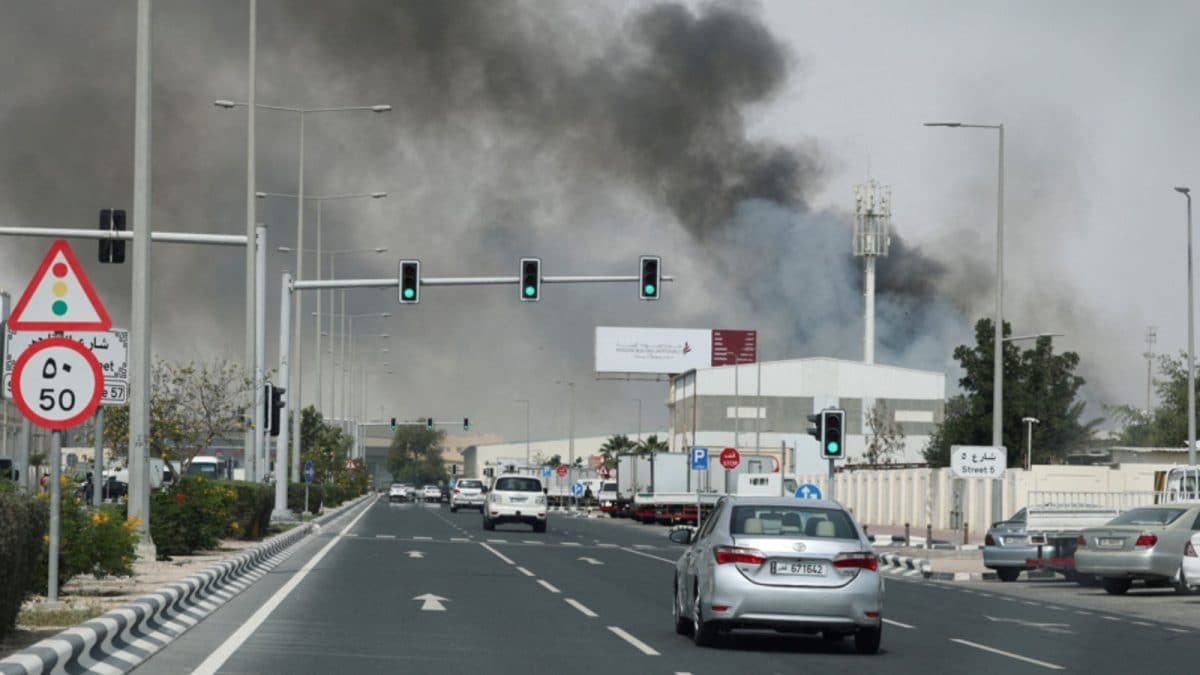
Qatar’s energy minister sounded a stark alarm over the economic fallout from the escalating West Asia conflict, warning that oil prices could surge to $150 a barrel, Gulf energy exports could grind to a halt and GDP growth worldwide would take a serious hit if hostilities persist for even a few more weeks.
Saad al-Kaabi, who also serves as chief executive of QatarEnergy, told the Financial Times that the war had already forced Qatar to declare force majeure after an Iranian drone strike hit Ras Laffan- the country’s largest liquefied natural gas (LNG) facility- and warned that other Gulf exporters were on the brink of doing the same.
Read more:Stranded In UAE Due To Iran-Israel War? SpiceJet Announces Special Flights From Dubai, Fujairah To Mumbai, Delhi, Pune
“Everybody that has not called for force majeure we expect will do so in the next few days that this continues. All exporters in the Gulf region will have to call force majeure," he said, adding, “If they don’t, they are at some point going to pay the liability for that legally, and that’s their choice."
The scale of the disruption at Qatar’s end is already severe. Al-Kaabi said the full extent of damage to the Ras Laffan facility was still being assessed and that it was unclear how long repairs would take. Even in the best-case scenario- an immediate end to hostilities- he warned it would take “weeks to months" to restore normal export operations due to logistical chaos.
“Our ships are all over the place," he said, noting that only six or seven vessels from Qatar’s fleet of 128 LNG carriers were currently available to load cargo.
The most alarming scenario centres on the Strait of Hormuz- the narrow waterway through which roughly one-fifth of global oil and gas shipments pass. Al-Kaabi forecast that crude prices could reach $150 a barrel within two to three weeks if tankers remain unable to transit the strait, while natural gas prices could climb to $40 per MMBtu, nearly four times pre-war levels.
Read more:‘Not Holding Back’: US Military Strikes, Sets On Fire Iranian Drone Ship The Size Of WWII Carrier | Video
Traffic through the strait has slowed significantly since the United States and Israel launched military strikes on Iran. At least 10 ships have reportedly been hit, insurance costs have surged and shipping companies have grown increasingly reluctant to risk the passage.
“The way that we are seeing the attacks, bringing ships into the strait… it’s too dangerous," al-Kaabi said, adding, “It’s too close to the shore to bring ships in."
Source: World News in news18.com, World Latest News, World News
