As things continue to pop off in the Middle East, the United States is still focused on Venezuela - and has brokered amultimillion-dollar gold deal.
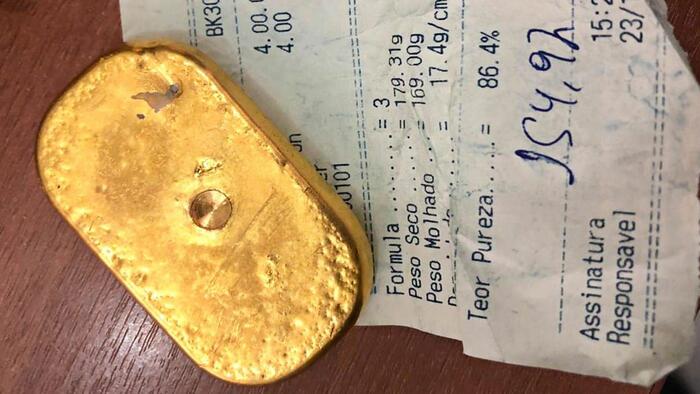
The agreement, first reported byAxios, involvesthe sale of between 650 and 1,000 kilograms of golddoré bars - which are semi-refined with approximately 98% gold content -from Venezuela's state-owned mining company, Minerven, to the global commodities trader Trafigura.The gold is destined for refineries in the United States, marking a shift in Venezuela's resource exports toward American markets.
The deal, valued at roughly $163,000 per kilogram based on current gold prices amid global economic uncertainty,marks the third extraction contractoverseen by the Trump administration since U.S. forces captured Maduro on January 3. It's part of a broader effort to stabilize and reconstruct Venezuela's economy under U.S. influence, with the White House asserting de facto control over the country's vast oil reserves - the world's largest known.
According to the report,U.S. Interior Secretary Doug Burgum played a pivotal rolein shepherding the contract - traveling to Venezuela to discuss opportunities in oil and minerals, while leveraging his position to bridge the gap between Minerven and Trafigura.Under a separate arrangement with the U.S. government,Trafigura will handle the delivery of the gold to American refineries, ensuring compliance and oversight.
This gold transaction is intertwined with larger oil deals,including contracts worth over $1 billion also involving Trafigura. President Trump highlighted the progress in aposton Truth Social, stating, "The oil is beginning to flow, and the professionalism and dedication between both countries is a very nice thing to see!" He also praised Venezuela's acting president, Delcy Rodríguez, for her cooperation.
Rodríguez, in turn, announced plans to reform Venezuela's mining lawsfollowing her meeting with Burgum, aiming to attract more foreign investment and modernize the sector.
The agreement unfolds against the backdrop of heightened U.S.-Venezuela tensions that culminated in Maduro's capture, which the Trump administration justified as a strike against "narco-terrorism."Prior to this, U.S. sanctions had severely restricted Venezuela's access to global markets, forcing the Maduro regime to rely on black-market smugglers and allies like Turkey, Iran, Russia, and China for exporting resources such as gold and oil.
A source familiar with the deals emphasized the benefits for Venezuela toAxios: "There was so much corruption before in Venezuela involving black-market smugglers who skimmed money off the top. Now the money for Venezuela's resources will go to Venezuela's government and people. And instead of the gold going overseas to Turkey or Iran, that resource is coming to the U.S."
This shift redirects revenues back to Venezuela's coffers, providing access to stable U.S. markets and financial systems. It also aligns with Trump's broader strategy of using Venezuelan oil proceeds—estimated at billions from sales of 30 to 50 million barrels—to fund purchases of American products, including agricultural goods, medicine, and energy infrastructure equipment.
Economically, the deal could inject much-needed stability into Venezuela's beleaguered mining industry, which has suffered from years of mismanagement, illegal operations, and environmental degradation. For the U.S., it secures a supply of high-quality gold amid rising global prices, which have surged due to geopolitical uncertainties, including recent U.S. and Israeli actions against Iran.
Source: ZeroHedge News
