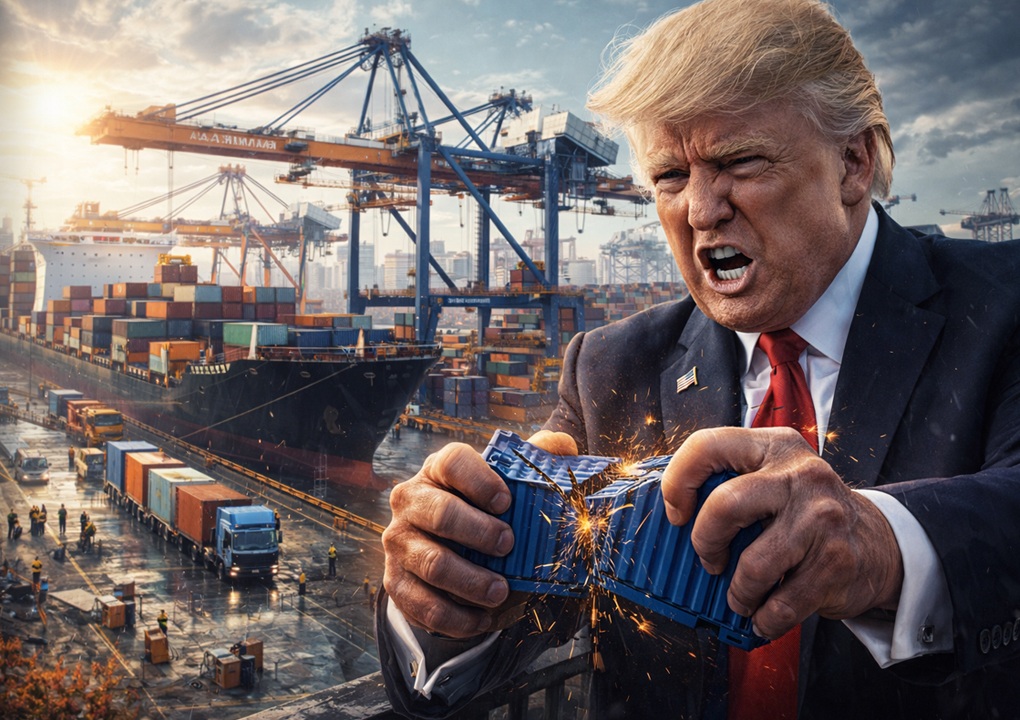
The Supreme Court invalidated key Trump-era tariffs, potentially requiring over $130 billion in refunds to U.S. importers.A new analysis warns delayed repayments are accruing up to $700 million in interest monthly, adding billions to the taxpayer liability.A federal appeals court recently rejected the administration's request to delay the refund litigation process.The White House defends the tariff strategy, citing economic benefits, but has acknowledged it will issue refunds if courts order them.Hundreds of lawsuits from businesses, from small firms to major corporations, are now proceeding to determine the repayment mechanism.
A new analysis warns delayed repayments are accruing up to $700 million in interest monthly, adding billions to the taxpayer liability.A federal appeals court recently rejected the administration's request to delay the refund litigation process.The White House defends the tariff strategy, citing economic benefits, but has acknowledged it will issue refunds if courts order them.Hundreds of lawsuits from businesses, from small firms to major corporations, are now proceeding to determine the repayment mechanism.
A federal appeals court recently rejected the administration's request to delay the refund litigation process.The White House defends the tariff strategy, citing economic benefits, but has acknowledged it will issue refunds if courts order them.Hundreds of lawsuits from businesses, from small firms to major corporations, are now proceeding to determine the repayment mechanism.
The White House defends the tariff strategy, citing economic benefits, but has acknowledged it will issue refunds if courts order them.Hundreds of lawsuits from businesses, from small firms to major corporations, are now proceeding to determine the repayment mechanism.
Hundreds of lawsuits from businesses, from small firms to major corporations, are now proceeding to determine the repayment mechanism.
The stakes of a judicial reversalIn a fiscal and legal reckoning years in the making, the U.S. government faces a staggering financial obligation following a Supreme Court decision that struck down the legal foundation for sweeping Trump-era tariffs. The immediate question is the repayment of an estimated $130 billion to $175 billion in duties now deemed improperly collected from American importers. But a new, pressing concern is the rapidly accumulating interest on that sum, which analysts warn could add hundreds of millions of dollars to the taxpayer tab each month the refunds are delayed. This unfolding scenario pits the executive branchâs trade policy against judicial authority and fiscal responsibility, with billions in potential interest payments highlighting the long-term cost of policy overreach.The mounting interest on a policy reversalAccording to an analysis by the Cato Institute, the delay in issuing refunds for tariffs invalidated by the Supreme Court is costing importers approximately $700 million in interest every monthâabout $23 million daily. The think tank estimates the total refund obligation could reach $175 billion, based on projections from economic models like the Penn Wharton Budget Model. Official U.S. Customs and Border Protection data through 2025 shows collections of $134 billion under the challenged authority, the International Emergency Economic Powers Act (IEEPA).Federal law requires the government to pay interest on reimbursable customs duties collected in error. Using current IRS corporate overpayment ratesâ6% for smaller imports and 4.5% for larger onesâthe Cato report projects that a one-year delay in refunding the IEEPA duties could add approximately $8.4 billion in interest payments alone. This interest represents a direct, growing liability for the federal treasury, separate from the principal amount owed to businesses.Legal pathway cleared for repayment battleThe procedural logjam for refunds began to break this week. The U.S. Court of Appeals for the Federal Circuit denied the Trump administrationâs request to delay related litigation for up to four months. This ruling allows the U.S. Court of International Trade to proceed with establishing a mechanism to process refund claims from thousands of importers. The Supreme Courtâs earlier decision did not affect sector-specific tariffs but delivered a definitive rebuke to the broad, country-based tariffs imposed under emergency powers, triggering a rush of lawsuits.Hundreds of claims seeking refunds have been filed in federal court. Major corporations including FedEx, Costco, Dyson and LâOreal are among the plaintiffs. FedEx has indicated it would pass refunds on to shippers and consumers if it recovers the charges. The Liberty Justice Center, representing some small business plaintiffs, argued the administration cannot claim refunds make businesses whole while simultaneously seeking to delay the repayment process.Administrationâs defense, contextThe White House has defended the underlying tariff strategy. Spokesman Kush Desai, declining to comment directly on the interest analysis, stated Americans âhave seen inflation cool, economic growth accelerate and trillions in investments pour into American manufacturingâ due to President Trumpâs policies. The administration had previously stated it would issue refunds if the judiciary ruled the tariffs unlawful.This clash between presidential trade authority and congressional power is deeply rooted. The Constitution grants Congress the power to âregulate Commerce with foreign Nationsâ and to âlay and collect Duties.â Past presidents have used various authorities, like the IEEPA, to impose tariffs for national security or economic emergencies, but such expansive use often faces legal challenges. The current situation echoes historical tensions over executive overreach, where actions taken under emergency provisions are later scrutinized and reversed by the courts, leaving taxpayers to cover the cost of the policyâs failure.The broader economic and fiscal impactFor businesses that paid the tariffs, the refunds represent a significant potential infusion of capital. For consumers, the Supreme Courtâs invalidation of the tariffs and the prospect of refunds could contribute to lower prices on a range of goods, from appliances to car parts, as import costs fall. However, the specter of massive government repayments complicates the fiscal picture. The refunds, coupled with accruing interest, represent a substantial unbudgeted expenditure, posing a challenge for advocates of balanced budgets and fiscal restraint. It underscores how policy decisions with immediate political objectives can create long-term financial liabilities that burden the national ledger.A lesson in constitutional costThe unfolding tariff refund saga is more than a complex legal dispute; it is a case study in the enduring principles of constitutional balance and fiscal accountability. The courts have reaffirmed limits on executive power, but the financial consequences of exceeding those limits are now coming due. As the Court of International Trade begins the arduous task of structuring repayments, the nation watches a multi-billion dollar lesson unfold: emergency powers are not a substitute for constitutional process, and the price for overstepping, compounded by interest, is ultimately paid by the American public. The episode serves as a stark reminder that in governance, as in economics, there is no such thing as a free tariff.Sources for this article include:YourNews.comCBSNews.comNewsMax.com
In a fiscal and legal reckoning years in the making, the U.S. government faces a staggering financial obligation following a Supreme Court decision that struck down the legal foundation for sweeping Trump-era tariffs. The immediate question is the repayment of an estimated $130 billion to $175 billion in duties now deemed improperly collected from American importers. But a new, pressing concern is the rapidly accumulating interest on that sum, which analysts warn could add hundreds of millions of dollars to the taxpayer tab each month the refunds are delayed. This unfolding scenario pits the executive branchâs trade policy against judicial authority and fiscal responsibility, with billions in potential interest payments highlighting the long-term cost of policy overreach.The mounting interest on a policy reversalAccording to an analysis by the Cato Institute, the delay in issuing refunds for tariffs invalidated by the Supreme Court is costing importers approximately $700 million in interest every monthâabout $23 million daily. The think tank estimates the total refund obligation could reach $175 billion, based on projections from economic models like the Penn Wharton Budget Model. Official U.S. Customs and Border Protection data through 2025 shows collections of $134 billion under the challenged authority, the International Emergency Economic Powers Act (IEEPA).Federal law requires the government to pay interest on reimbursable customs duties collected in error. Using current IRS corporate overpayment ratesâ6% for smaller imports and 4.5% for larger onesâthe Cato report projects that a one-year delay in refunding the IEEPA duties could add approximately $8.4 billion in interest payments alone. This interest represents a direct, growing liability for the federal treasury, separate from the principal amount owed to businesses.Legal pathway cleared for repayment battleThe procedural logjam for refunds began to break this week. The U.S. Court of Appeals for the Federal Circuit denied the Trump administrationâs request to delay related litigation for up to four months. This ruling allows the U.S. Court of International Trade to proceed with establishing a mechanism to process refund claims from thousands of importers. The Supreme Courtâs earlier decision did not affect sector-specific tariffs but delivered a definitive rebuke to the broad, country-based tariffs imposed under emergency powers, triggering a rush of lawsuits.Hundreds of claims seeking refunds have been filed in federal court. Major corporations including FedEx, Costco, Dyson and LâOreal are among the plaintiffs. FedEx has indicated it would pass refunds on to shippers and consumers if it recovers the charges. The Liberty Justice Center, representing some small business plaintiffs, argued the administration cannot claim refunds make businesses whole while simultaneously seeking to delay the repayment process.Administrationâs defense, contextThe White House has defended the underlying tariff strategy. Spokesman Kush Desai, declining to comment directly on the interest analysis, stated Americans âhave seen inflation cool, economic growth accelerate and trillions in investments pour into American manufacturingâ due to President Trumpâs policies. The administration had previously stated it would issue refunds if the judiciary ruled the tariffs unlawful.This clash between presidential trade authority and congressional power is deeply rooted. The Constitution grants Congress the power to âregulate Commerce with foreign Nationsâ and to âlay and collect Duties.â Past presidents have used various authorities, like the IEEPA, to impose tariffs for national security or economic emergencies, but such expansive use often faces legal challenges. The current situation echoes historical tensions over executive overreach, where actions taken under emergency provisions are later scrutinized and reversed by the courts, leaving taxpayers to cover the cost of the policyâs failure.The broader economic and fiscal impactFor businesses that paid the tariffs, the refunds represent a significant potential infusion of capital. For consumers, the Supreme Courtâs invalidation of the tariffs and the prospect of refunds could contribute to lower prices on a range of goods, from appliances to car parts, as import costs fall. However, the specter of massive government repayments complicates the fiscal picture. The refunds, coupled with accruing interest, represent a substantial unbudgeted expenditure, posing a challenge for advocates of balanced budgets and fiscal restraint. It underscores how policy decisions with immediate political objectives can create long-term financial liabilities that burden the national ledger.A lesson in constitutional costThe unfolding tariff refund saga is more than a complex legal dispute; it is a case study in the enduring principles of constitutional balance and fiscal accountability. The courts have reaffirmed limits on executive power, but the financial consequences of exceeding those limits are now coming due. As the Court of International Trade begins the arduous task of structuring repayments, the nation watches a multi-billion dollar lesson unfold: emergency powers are not a substitute for constitutional process, and the price for overstepping, compounded by interest, is ultimately paid by the American public. The episode serves as a stark reminder that in governance, as in economics, there is no such thing as a free tariff.Sources for this article include:YourNews.comCBSNews.comNewsMax.com
The mounting interest on a policy reversalAccording to an analysis by the Cato Institute, the delay in issuing refunds for tariffs invalidated by the Supreme Court is costing importers approximately $700 million in interest every monthâabout $23 million daily. The think tank estimates the total refund obligation could reach $175 billion, based on projections from economic models like the Penn Wharton Budget Model. Official U.S. Customs and Border Protection data through 2025 shows collections of $134 billion under the challenged authority, the International Emergency Economic Powers Act (IEEPA).Federal law requires the government to pay interest on reimbursable customs duties collected in error. Using current IRS corporate overpayment ratesâ6% for smaller imports and 4.5% for larger onesâthe Cato report projects that a one-year delay in refunding the IEEPA duties could add approximately $8.4 billion in interest payments alone. This interest represents a direct, growing liability for the federal treasury, separate from the principal amount owed to businesses.Legal pathway cleared for repayment battleThe procedural logjam for refunds began to break this week. The U.S. Court of Appeals for the Federal Circuit denied the Trump administrationâs request to delay related litigation for up to four months. This ruling allows the U.S. Court of International Trade to proceed with establishing a mechanism to process refund claims from thousands of importers. The Supreme Courtâs earlier decision did not affect sector-specific tariffs but delivered a definitive rebuke to the broad, country-based tariffs imposed under emergency powers, triggering a rush of lawsuits.Hundreds of claims seeking refunds have been filed in federal court. Major corporations including FedEx, Costco, Dyson and LâOreal are among the plaintiffs. FedEx has indicated it would pass refunds on to shippers and consumers if it recovers the charges. The Liberty Justice Center, representing some small business plaintiffs, argued the administration cannot claim refunds make businesses whole while simultaneously seeking to delay the repayment process.Administrationâs defense, contextThe White House has defended the underlying tariff strategy. Spokesman Kush Desai, declining to comment directly on the interest analysis, stated Americans âhave seen inflation cool, economic growth accelerate and trillions in investments pour into American manufacturingâ due to President Trumpâs policies. The administration had previously stated it would issue refunds if the judiciary ruled the tariffs unlawful.This clash between presidential trade authority and congressional power is deeply rooted. The Constitution grants Congress the power to âregulate Commerce with foreign Nationsâ and to âlay and collect Duties.â Past presidents have used various authorities, like the IEEPA, to impose tariffs for national security or economic emergencies, but such expansive use often faces legal challenges. The current situation echoes historical tensions over executive overreach, where actions taken under emergency provisions are later scrutinized and reversed by the courts, leaving taxpayers to cover the cost of the policyâs failure.The broader economic and fiscal impactFor businesses that paid the tariffs, the refunds represent a significant potential infusion of capital. For consumers, the Supreme Courtâs invalidation of the tariffs and the prospect of refunds could contribute to lower prices on a range of goods, from appliances to car parts, as import costs fall. However, the specter of massive government repayments complicates the fiscal picture. The refunds, coupled with accruing interest, represent a substantial unbudgeted expenditure, posing a challenge for advocates of balanced budgets and fiscal restraint. It underscores how policy decisions with immediate political objectives can create long-term financial liabilities that burden the national ledger.A lesson in constitutional costThe unfolding tariff refund saga is more than a complex legal dispute; it is a case study in the enduring principles of constitutional balance and fiscal accountability. The courts have reaffirmed limits on executive power, but the financial consequences of exceeding those limits are now coming due. As the Court of International Trade begins the arduous task of structuring repayments, the nation watches a multi-billion dollar lesson unfold: emergency powers are not a substitute for constitutional process, and the price for overstepping, compounded by interest, is ultimately paid by the American public. The episode serves as a stark reminder that in governance, as in economics, there is no such thing as a free tariff.Sources for this article include:YourNews.comCBSNews.comNewsMax.com
According to an analysis by the Cato Institute, the delay in issuing refunds for tariffs invalidated by the Supreme Court is costing importers approximately $700 million in interest every monthâabout $23 million daily. The think tank estimates the total refund obligation could reach $175 billion, based on projections from economic models like the Penn Wharton Budget Model. Official U.S. Customs and Border Protection data through 2025 shows collections of $134 billion under the challenged authority, the International Emergency Economic Powers Act (IEEPA).Federal law requires the government to pay interest on reimbursable customs duties collected in error. Using current IRS corporate overpayment ratesâ6% for smaller imports and 4.5% for larger onesâthe Cato report projects that a one-year delay in refunding the IEEPA duties could add approximately $8.4 billion in interest payments alone. This interest represents a direct, growing liability for the federal treasury, separate from the principal amount owed to businesses.Legal pathway cleared for repayment battleThe procedural logjam for refunds began to break this week. The U.S. Court of Appeals for the Federal Circuit denied the Trump administrationâs request to delay related litigation for up to four months. This ruling allows the U.S. Court of International Trade to proceed with establishing a mechanism to process refund claims from thousands of importers. The Supreme Courtâs earlier decision did not affect sector-specific tariffs but delivered a definitive rebuke to the broad, country-based tariffs imposed under emergency powers, triggering a rush of lawsuits.Hundreds of claims seeking refunds have been filed in federal court. Major corporations including FedEx, Costco, Dyson and LâOreal are among the plaintiffs. FedEx has indicated it would pass refunds on to shippers and consumers if it recovers the charges. The Liberty Justice Center, representing some small business plaintiffs, argued the administration cannot claim refunds make businesses whole while simultaneously seeking to delay the repayment process.Administrationâs defense, contextThe White House has defended the underlying tariff strategy. Spokesman Kush Desai, declining to comment directly on the interest analysis, stated Americans âhave seen inflation cool, economic growth accelerate and trillions in investments pour into American manufacturingâ due to President Trumpâs policies. The administration had previously stated it would issue refunds if the judiciary ruled the tariffs unlawful.This clash between presidential trade authority and congressional power is deeply rooted. The Constitution grants Congress the power to âregulate Commerce with foreign Nationsâ and to âlay and collect Duties.â Past presidents have used various authorities, like the IEEPA, to impose tariffs for national security or economic emergencies, but such expansive use often faces legal challenges. The current situation echoes historical tensions over executive overreach, where actions taken under emergency provisions are later scrutinized and reversed by the courts, leaving taxpayers to cover the cost of the policyâs failure.The broader economic and fiscal impactFor businesses that paid the tariffs, the refunds represent a significant potential infusion of capital. For consumers, the Supreme Courtâs invalidation of the tariffs and the prospect of refunds could contribute to lower prices on a range of goods, from appliances to car parts, as import costs fall. However, the specter of massive government repayments complicates the fiscal picture. The refunds, coupled with accruing interest, represent a substantial unbudgeted expenditure, posing a challenge for advocates of balanced budgets and fiscal restraint. It underscores how policy decisions with immediate political objectives can create long-term financial liabilities that burden the national ledger.A lesson in constitutional costThe unfolding tariff refund saga is more than a complex legal dispute; it is a case study in the enduring principles of constitutional balance and fiscal accountability. The courts have reaffirmed limits on executive power, but the financial consequences of exceeding those limits are now coming due. As the Court of International Trade begins the arduous task of structuring repayments, the nation watches a multi-billion dollar lesson unfold: emergency powers are not a substitute for constitutional process, and the price for overstepping, compounded by interest, is ultimately paid by the American public. The episode serves as a stark reminder that in governance, as in economics, there is no such thing as a free tariff.Sources for this article include:YourNews.comCBSNews.comNewsMax.com
Federal law requires the government to pay interest on reimbursable customs duties collected in error. Using current IRS corporate overpayment ratesâ6% for smaller imports and 4.5% for larger onesâthe Cato report projects that a one-year delay in refunding the IEEPA duties could add approximately $8.4 billion in interest payments alone. This interest represents a direct, growing liability for the federal treasury, separate from the principal amount owed to businesses.Legal pathway cleared for repayment battleThe procedural logjam for refunds began to break this week. The U.S. Court of Appeals for the Federal Circuit denied the Trump administrationâs request to delay related litigation for up to four months. This ruling allows the U.S. Court of International Trade to proceed with establishing a mechanism to process refund claims from thousands of importers. The Supreme Courtâs earlier decision did not affect sector-specific tariffs but delivered a definitive rebuke to the broad, country-based tariffs imposed under emergency powers, triggering a rush of lawsuits.Hundreds of claims seeking refunds have been filed in federal court. Major corporations including FedEx, Costco, Dyson and LâOreal are among the plaintiffs. FedEx has indicated it would pass refunds on to shippers and consumers if it recovers the charges. The Liberty Justice Center, representing some small business plaintiffs, argued the administration cannot claim refunds make businesses whole while simultaneously seeking to delay the repayment process.Administrationâs defense, contextThe White House has defended the underlying tariff strategy. Spokesman Kush Desai, declining to comment directly on the interest analysis, stated Americans âhave seen inflation cool, economic growth accelerate and trillions in investments pour into American manufacturingâ due to President Trumpâs policies. The administration had previously stated it would issue refunds if the judiciary ruled the tariffs unlawful.This clash between presidential trade authority and congressional power is deeply rooted. The Constitution grants Congress the power to âregulate Commerce with foreign Nationsâ and to âlay and collect Duties.â Past presidents have used various authorities, like the IEEPA, to impose tariffs for national security or economic emergencies, but such expansive use often faces legal challenges. The current situation echoes historical tensions over executive overreach, where actions taken under emergency provisions are later scrutinized and reversed by the courts, leaving taxpayers to cover the cost of the policyâs failure.The broader economic and fiscal impactFor businesses that paid the tariffs, the refunds represent a significant potential infusion of capital. For consumers, the Supreme Courtâs invalidation of the tariffs and the prospect of refunds could contribute to lower prices on a range of goods, from appliances to car parts, as import costs fall. However, the specter of massive government repayments complicates the fiscal picture. The refunds, coupled with accruing interest, represent a substantial unbudgeted expenditure, posing a challenge for advocates of balanced budgets and fiscal restraint. It underscores how policy decisions with immediate political objectives can create long-term financial liabilities that burden the national ledger.A lesson in constitutional costThe unfolding tariff refund saga is more than a complex legal dispute; it is a case study in the enduring principles of constitutional balance and fiscal accountability. The courts have reaffirmed limits on executive power, but the financial consequences of exceeding those limits are now coming due. As the Court of International Trade begins the arduous task of structuring repayments, the nation watches a multi-billion dollar lesson unfold: emergency powers are not a substitute for constitutional process, and the price for overstepping, compounded by interest, is ultimately paid by the American public. The episode serves as a stark reminder that in governance, as in economics, there is no such thing as a free tariff.Sources for this article include:YourNews.comCBSNews.comNewsMax.com
Source: NaturalNews.com
