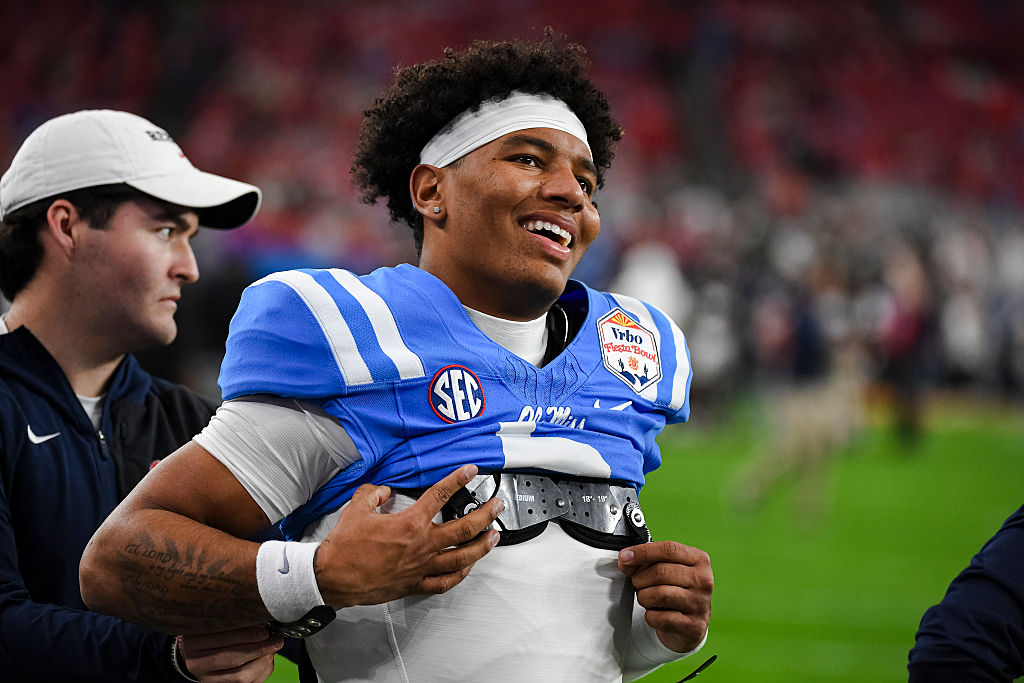
The NCAA is not going down without a fight in its case that played out inside a Mississippi courtroom last month between the NCAA and Ole Miss QBTrinidad Chamblisslike something out of a John Grisham novel.
On Thursday, the organization filed an appeal with the State of Mississippi Supreme Court regarding the preliminary injunction that was granted to Chambliss, which will allow him to suit up for the Rebels this upcoming season.
In what was a dramatic scene, NCAA lawyers did not wait around for the ruling from Judge Robert Whitwell, which took over an hour for him to read, knowing that they would be on the wrong side of that part of the saga, while also understanding that an appeal to a higher court was the next step.
In their argument against the NCAA, attorneys for Trinidad Chambliss noted that the reason he should have been granted a medical redshirt during the 2022 season at Ferris State was due to an ongoing issue with his tonsils. Chambliss' attorneys essentially centered their case around Ferris State not documenting the "lost" season due to a technicality, which they wanted Judge Whitwell to take into consideration.
Ultimately, Chambliss was granted his injunction, and the quarterback is preparing for spring practice in Oxford, with the Judge making a determination that the NCAA did, in fact, ignore medical documents provided by the plaintiffs that proved he was not cleared medically to participate in the season in question at Ferris State.
But, the NCAA was not going down without exhausting all of their options in a timely manner, given this case would drag out past the upcoming season, which is the sole reason why Chambliss was seeking the injunction.
Trinidad Chambliss being allowed to play football next season is unfair to other schools that are abiding by NCAA rules pertaining to eligibility.
"Under the trial court's order, UM will enjoy the benefit of rostering a star quarterback who is no longer eligible to compete," part of the NCAA's appeal reads. "Such an outcome is unfair to D1 schools who follow the rules and must compete against UM in the 2026-2027 DI football season or who may be displaced from postseason competition by UM."
And, the NCAA wants an expedited review of this appeal by the Mississippi Supreme Court because they say the claim by Chambliss isn't viable as a matter of law.
"This case is therefore ripe for judgment in the NCAA's favor," the organization submitted to the court.
Source: The Latest & Most Breaking News With OutKick
