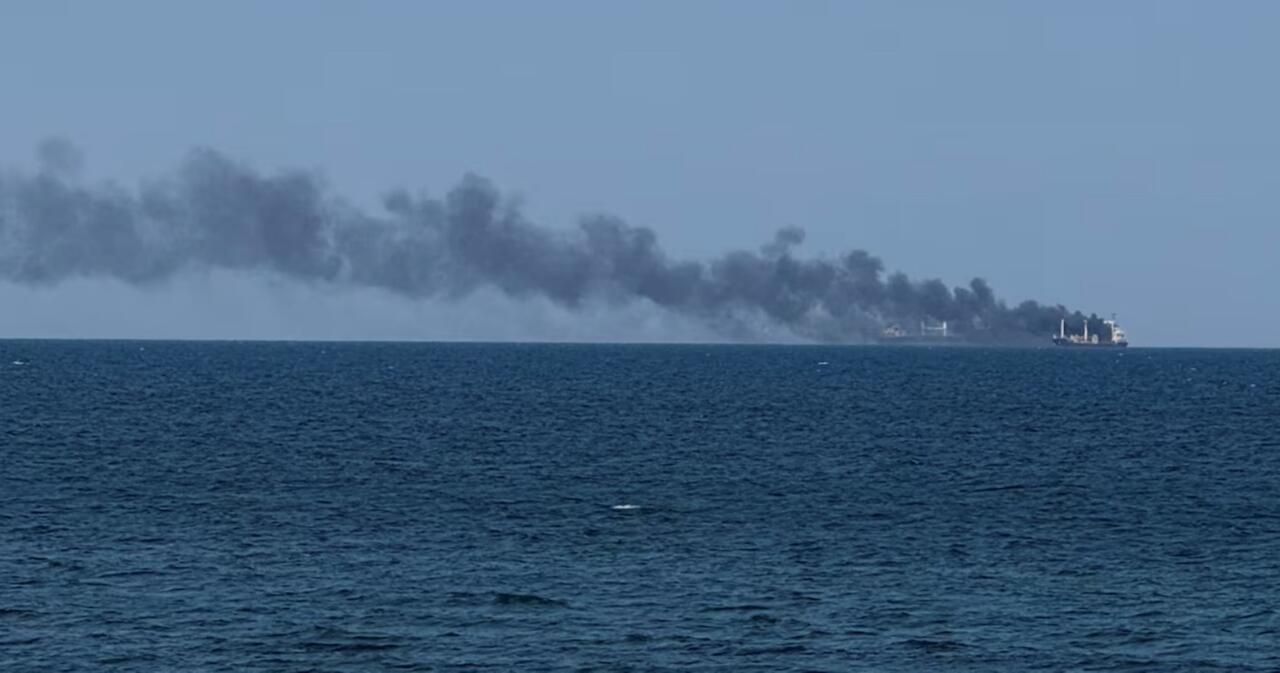
Ukraine has quietly floated a deal through a third-party mediator to halt reciprocal strikes on civilian vessels in the Black Sea, Reuters reports, in what appears to be a calculated bid to unfreeze a critical global commodity corridor and to relieve pressure on Ukraine's battered wartime economy.
The maritime artery remains a vital economic lifeline for both nations, channeling massive volumes of grain and agricultural supplies to world markets - especially the Middle East and Africa - but there's now been weekly and almost daily tit-for-tat attacks.
via ReutersWith roughly 90% of Ukrainian grain and sunflower shipments departing from the primary port cluster of Odesa, Chornomorsk, and Pivdenne, the fallout on Ukraine's agricultural sector has been severe.
Kyiv Post cites that as a result grain exports have fallen 76% year-on-year so far in August. But the publication notes that the pressure is longer one-sided, as "on Wednesday, Ukraine launched a major coordinated strike on Novorossiysk, Russia’s key Black Sea naval and grain-export hub, forcing all three grain terminals to suspend operations and hitting naval infrastructure."
It didn't take long on Friday for the Kremlin to dismiss the idea of a Black Sea ceasefire, blaming Ukrainian acts of "terrorism" against maritime traffic. Foreign Ministry spokeswoman Maria Zakharova accused charged Kiev with "brazen acts of terrorism" against shipping.
"We view these attacks (by Ukraine) as a deliberate policy aimed at destabilizing civilian shipping in the Bl