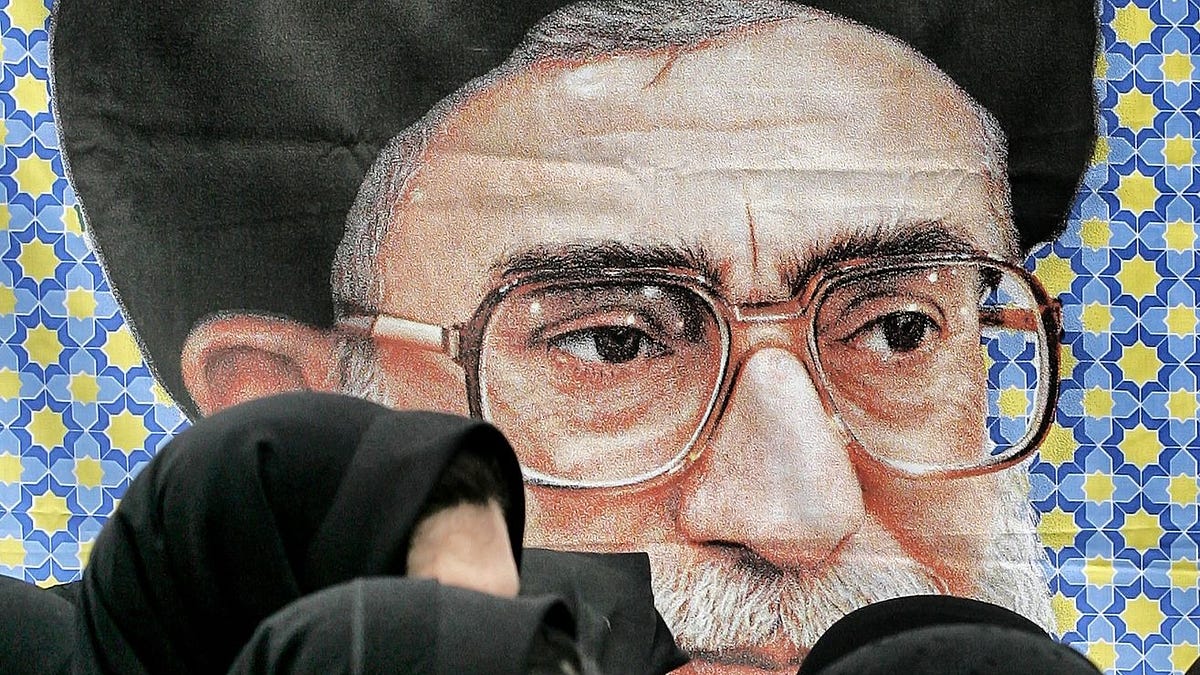
When Trump tells us that the war with Iran is going to be over in four weeks, that’s his computation of the American attention span. No one understands that deficit better, because it happens to match his own. One of the more interesting data points in the last few days was a comment by the Breitbart show’s DC editor, Matthew Boyle, that, unlike the Venezuela raid, the Iran war is not a big topic of interest to his MAGA faithful listeners. Easy to see why. Obliterating the top bench of malodorous mullahs and the evil, moldering slaughterer-in-chief Ayatollah Khamenei did not have the Marvel comic book adrenaline of the January swoop on Caracas, with American military hotshots prevailing in a midnight firefight that snatched the mustachioed tyrant Maduro from his bed—not long after he had the gall to mock Trump in a public dance—and ended with an image of him cuffed and goggled on Truth Social, on his way to the MDC lockup in Brooklyn. There was even a hero helicopter pilot with a shattered leg flying his buddies back to safety after mission accomplished. Trump could have feasted on that PR chest-beating until the midterms.
But his Mars god-of-war complex wouldn’t let him. The rules of hubris usually dictate that you should quit while you’re ahead. After the slam dunk of Operation Midnight Hammer’s bombing of Iran’s nuclear sites and the piping hot Maduro snatch, the White House was very unlikely to be three times lucky with a dangerous foreign intervention. This was the moment for Trump to cash in the Maduro winnings and turn to the subject that bores him to tears: America’s domestic problems. Is that what Chief of Staff Susie Wiles was saying to him in that picture in the Mar-a-Lago war room, where she wears the intense, beseeching look of an aide tasked with steering a president to consider political issues closer to home?
Then, boom! Wiping out Iran’s top leadership in one fire-breathing decapitation strike looked as if Trump had defied the tilting odds of the gambling table. The U.S. military seems to be the last institution left in our chaotic era that isn’t distracted by their Instagram feeds. You have only to compare the crisp briefings of General Razin’ Caine with the wild-eyed blather of Secretary of State Marco Rubio’s explanation of why this war was necessary in the first place—something about Israel going in anyway and the need to forestall retaliation by letting fly America’s lethal onslaught, which left the lame (though possibly accurate) impression that Israel was in the driver’s seat.
Should Trump have briefed Congressional leaders ahead of time? Of course. But his don’t-give-a-shit logic is also his forte. One could argue that, in 2002, the Bush administration spent over a year convincing Congress and the UN, and running around the world to assemble a “coalition of the willing,” to support its manufactured rationale about WMDs in Iraq, and it all went tits up anyway. Some 500 thousand soldiers and civilians were killed in the Iraq bloodbath that followed, a vicious civil war broke out, ISIS was birthed, and it was nine months of mayhem before Saddam Hussein was chased into a Tikrit spider hole. So much for consultation.
One of the superpowers of a psychopath is feeling no fear, no guilt, and no regrets. Did anyone feel that Trump’s addendum of “sadly, there will likely be more” after saluting the American soldiers who “made the ultimate sacrifice,” and threatening to avenge them, was the crossing of a new rubicon of expected casualties? Was anyone affronted that Trump and Netanyahu are now urging Iranian Kurds to rise up, when every time the Kurds have done so in the past on our behalf, we have thrown them under the bus? In 1991, after the first Gulf War, George H. W. Bush encouraged the Kurds to take up arms against Saddam Hussein, then refused to provide military support when Saddam crushed the rebellion. And, in 2019, after the Kurds fought so bravely alongside the U.S. to defeat ISIS, Trump abruptly pulled troops out of northeast Syria, abandoning the Kurds to Turkish military attack. I feel like texting those noble heroes not to take the bait again.
Questioning Trump about Iran’s “imminent threat” to the U.S. is, however, off-target. The “imminent threat” was the danger of missing a stunning opportunity. It’s clear that Trump was still ruminating about the stalled negotiations when he got word from Netanyahu that, for reasons it’s hard to fathom, Khamenei and most of his cabinet were assembling for a powwow, not in a lead-walled bunker, but at the aboveground leadership compound in the heart of Tehran. The U.S. tactic of bombing for negotiating leverage instantly morphed into regime change. Hence, the total absence of planning for how to get the million or so trapped Americans out of the region. As for Khamenei, the malevolent old goat probably preferred to die as a martyr in the rubble than at the end of a U.S. noose like Saddam.
To the simplistic deal-making logic of team Trump, the rump of the regime would surely now be throwing down its arms and offering up a puppet leader like Venezuela’s Delcy Rodriguez. But Iran has a much greater tolerance for pain than the U.S. The B-list mullahs have hastily reassembled a new command structure from their turbaned ranks, and they’re hitting everything they can within range: ports, power plants, airports, oil facilities, tourist destinations. They’ve shut down the Strait of Hormuz. Expect cyberattacks. Iran has been investigating American infrastructure for twenty years. If they can, why not turn off the lights in LA?
While Americans seek clarity, Iran’s specialty is murk: dark alliances, undercover treacheries, crablike strategic moves, creative cruelty. Former Iranian-American hostage Siamak Namazi knows the regime’s capacity for barbarism well. He languished for eight years in Tehran’s Evin prison, where his captors would sometimes coolly interrupt their beating of him to take a cell phone call about picking up their kids from a soccer game. He told me, “[The massacre against Iranian protesters] happened in January over two days, and the way it was handled in the weeks after—pulling patients out of hospitals, charging families to take away corpses, and laying the bodies out to display them on TV—that’s a state saying, ‘Look how cruel I am.’ ” The infinite complexities of the Iranian regime challenge U.S. understanding. “You can think of it as a mafia system with underbosses,” Namazi told me. “Essentially, they’re kleptocrats, all of them. They mismanage everything. In prison, I discovered that even the regime hates the regime.”
In the first hours after the strike, Trump called on the Iranian people “to take back their country.” With what? Sticks and stones? For the sake of projected bravado, our bone-spur president was urging the Iranian people to come out of their houses and die. Now, IRGC forces are camped out on the streets, brandishing AK-47s, and Trump is telling the Iranian people to stay inside. What if we have further radicalized the regime rather than eliminating it? “As cruel as that system is,” Namazi told me, “I can’t imagine how bombing Iran is going to yield a democratic republic.”
Two months from now, most Americans won’t know any more about Iran than they know—or care about—what’s happening in Afghanistan since we left it in the dust. Trump will declare victory and say he gave the Iranians a historic opportunity. If they fail to seize it, it’s on them. Meanwhile, we will be celebrating America’s 250th anniversary of winning freedom and liberty—and scrolling through the Epstein files.
Source: Drudge Report
