By Bas van Geffen, senior macro strategist at Rabobank
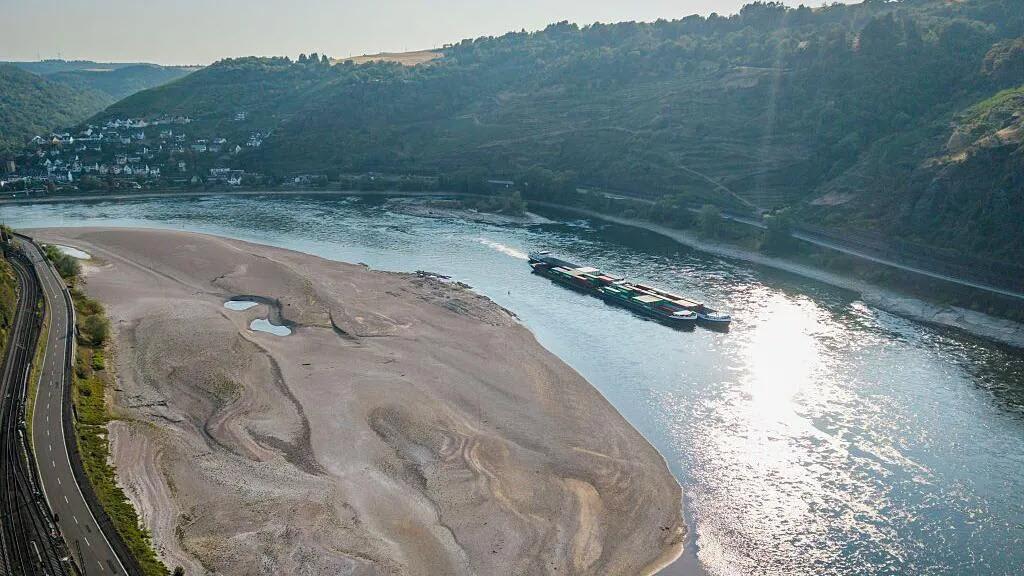
Yesterday, my road cycling took me along the Lek River, which branches off from the Rhine. I frequently ride the path along this river, but the Lek was almost unrecognisable in the distance and what is normally part of the riverbed has now run dry.
It’s a very tangible reminder of numbers we’ve recently been watching on our screens: Upstream, at Kaub, the water level in the Rhine has fallen to historical lows. And a new heatwave that is due to hit Europe, is bound to make matters worse: current forecasts see the level drop to less than 5 centimetres above the station’s zero mark by the end of the week.
The Rhine fell to its lowest ever levels at points in Germany and the Netherlands as heatwave conditions continueShips were already forced to reduce the amount of cargo they carry, but soon they may be unable to sail the entire river. The drought is effectively splitting this key piece of infrastructure into two halves between Cologne and Frankfurt. Inland shipping costs have surged, and companies are scrambling to find alternative transport for resources and finished product. This, as diesel prices in Germany have largely rebounded in the last month.
Concerned about the impact for local industry, several German Bundeslander are suspending Sunday driving bans for trucks and lorries. Indeed, the hit to economic activity will be noticeable.
But these droughts also underline that a once-convenient shipping route is becoming unreliable. Higher shipping costs and possible disruptions of key supplies add to high energy costs and other headwinds facing German industry. And although Germany has ea