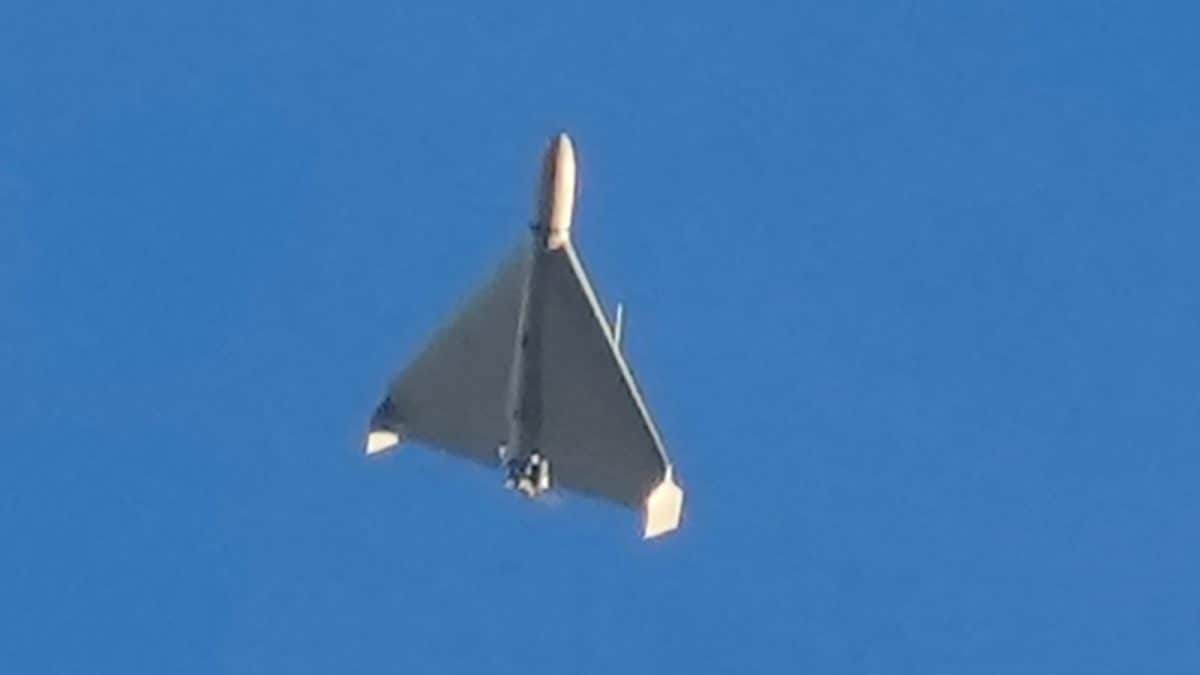
Iran’s Shahed “kamikaze" drones, which roughly cost between USD 20,000 and USD 50,000, have presented a strategic quandary amid the ongoing conflict in West Asia – this weapon built from cheap, commercial electronics is currently extracting a heavy cost from sophisticated western air defence systems.
As Iran launches swarms of Shaheddrones, the United States, Israel and their allies find themselves expending multimillion dollar interceptors to neutralise targets that cost little more than a family car.
The result: a disparity leading to a rapid depletion of western stockpiles. While traditional air defences were designed to intercept ballistic missiles, the “flying moped" sound of the Shahed-136 is now synonymous with a new kind of warfare that prioritises quantity and cost-effectiveness over technological complexity.
Nicknamed the “lawnmower" of the skies due to its unpleasant sound, theShahed-136– often designated as the Geran-2 by Russian military – is a loitering munition designed for one-way “suicide" missions.
Despite its impact, the drone is surprisingly simple. It is a delta-wing aircraft approximately 3.5 metres long with a 2.5-metre wingspan, weighing around 200 kg.
Inside, the technology is largely “off-the-shelf" powered by a four-cylinder, two-stroke MD-550 piston engine – an Iranian reverse-engineered version of a German civilian engine – that drives a wooden pusher-propeller. For navigation, it uses a combination of civilian GPS/GLONASS and an inertial navigation system (INS) often pre-programmed with coordinates before launch.
Watch how the Shahed drone works:
How Shahed-136 Kamakazi Drone Works?pic.twitter.com/svAVOnN8AL— Engineering Explained (@Engineering67)March 5, 2026
The Shahed, however, has seen significant upgrades between 2024 and 2026. Newer versions feature “Nasir" anti-jamming modules and even commercial 4G/LTE modems to receive mid-flight path corrections.
The drone is launched from simple rails, often mounted on the back of civilian trucks using a rocket-assisted takeoff (RATO) booster that is jettisoned once the piston engine takes over. Carrying a warhead of 30 kg to 50 kg, it can fly at low altitudes to evade radar before entering a steep terminal dive onto its target.
Source: World News in news18.com, World Latest News, World News
