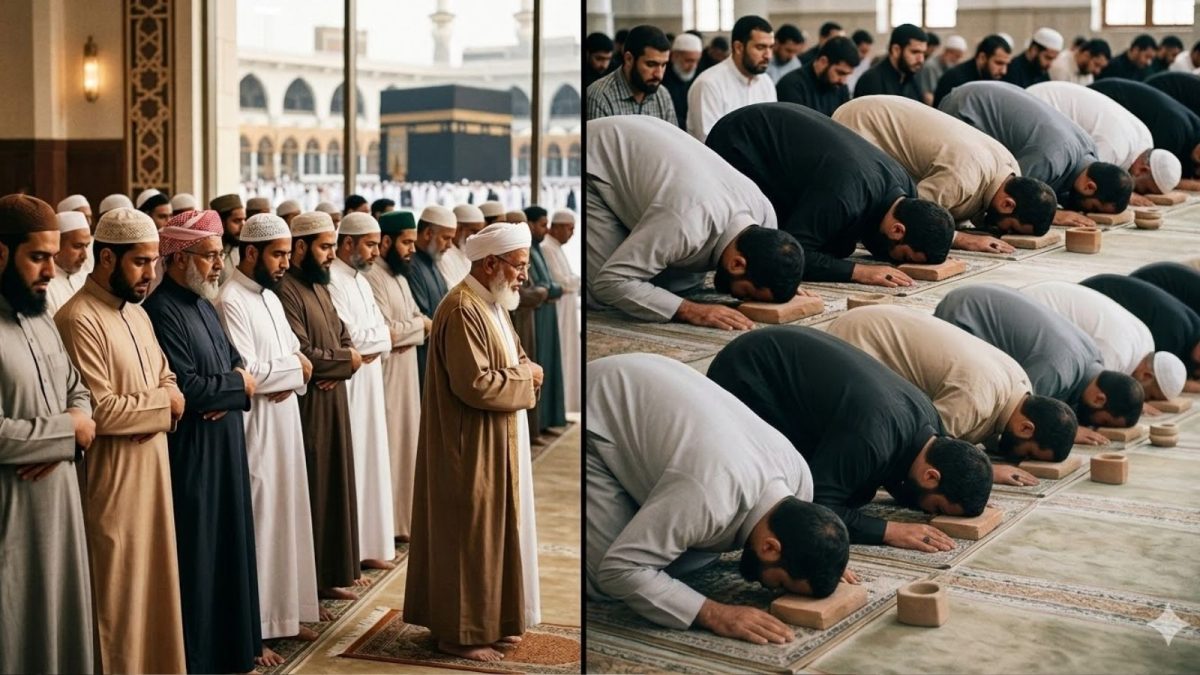
The escalatingwar in West Asiatriggered by theUS-Israel strikes against Iranhas once again drawn global attention to the geopolitical and sectarian dynamics within theMuslim world. Iran’s counter-attacks on targets in the Middle East, including areas where US military facilities are located, have intensified discussions around the political role of Iran and its influence across the region. These developments have also revived public debate about the historical differences between the two major branches of Islam,Sunni and Shia.
Islam today is the world’s second-largest religion. An estimated 1.9 billion people follow Islam globally, and this number is projected to grow to around 2.2 billion by 2030. The Muslim world spans roughly 57 Muslim-majority countries, with some nations having populations that are almost entirely Muslim.
Despite political tensions, it is important to note that Sunni andShia Muslimsshare the same fundamental beliefs of Islam. Both communities believe in one Allah, regard the Quran as the holy book, and accept Prophet Muhammad as the final messenger. The core religious practices like prayer, fasting during Ramadan, charity, and pilgrimage to Mecca, are common to both groups.
However, historical interpretations regarding leadership after the death of Prophet Muhammad led to the development of the two traditions.
According to widely cited estimates, including reports from organisations such as the BBC and the Pew Research Centre, around 85-90% of Muslims worldwide are Sunni, while 10-15% belong to the Shia community. Countries where Shia Muslims form a majority include Iran, Iraq, Azerbaijan and Bahrain, while countries such as Saudi Arabia, Turkey, Pakistan, Bangladesh, Afghanistan, Indonesia and India have large Sunni populations.
The roots of the Sunni–Shia divide go back to 632 CE, after the death of Prophet Muhammad, who was born around 570 CE in Mecca into the Quraysh tribe. Following his passing, the Muslim community faced the question of who should lead the rapidly expanding Muslim society.
A large group of the Prophet’s companions believed that the leader, known as the Caliph, should be chosen through consultation among the community. Through this process, Abu Bakr, one of the Prophet’s closest companions and father-in-law, was selected as the first Caliph. He was followed by Umar ibn al-Khattab, Uthman ibn Affan, and later Ali ibn Abi Talib.
Sunni Muslims regard these four leaders as the ‘Rashidun’ or ‘Rightly Guided’ Caliphs, believing they led the early Muslim community according to the Prophet’s teachings and traditions. Abu Bakr, who ruled from 632 to 634 CE, played a crucial role in stabilising the early Muslim state and in the early efforts to preserve the Quranic text.
Another group within the early Muslim community believed that leadership should remain within the Prophet’s family (Ahl al-Bayt). They held that Ali ibn Abi Talib, the Prophet’s cousin and son-in-law, had been designated as his rightful successor.
Those who supported Ali came to be known as ‘Shiat Ali’, meaning ‘the supporters of Ali’. Over time, this term evolved into Shia.
Source: World News in news18.com, World Latest News, World News
