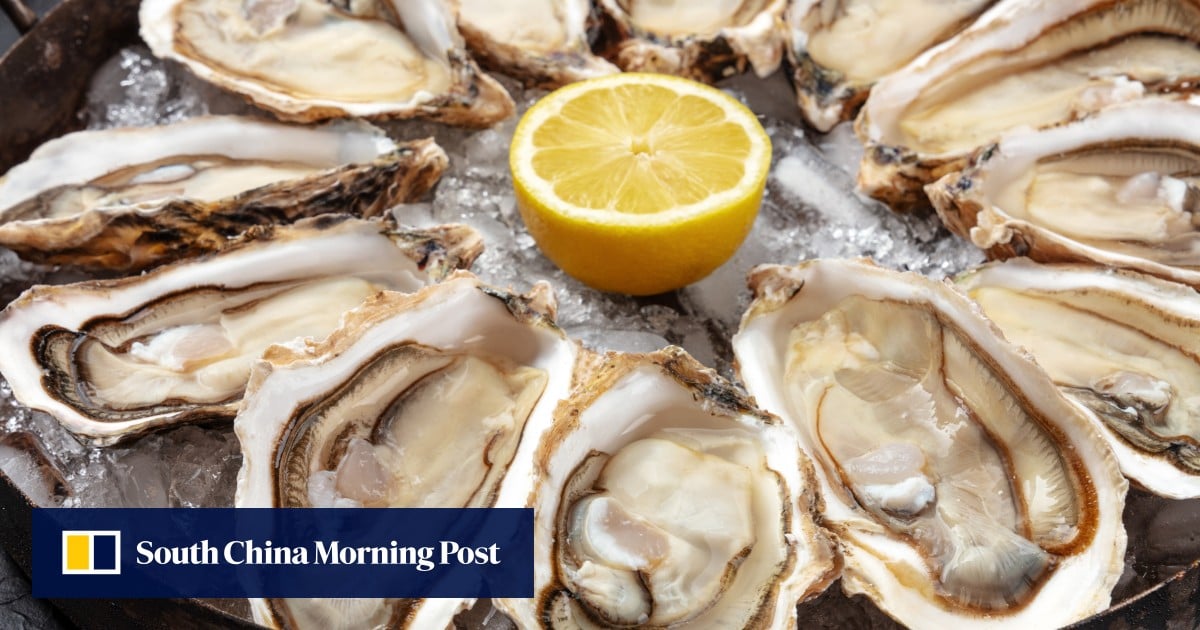
Following a wave of poisoning cases linked to raw oysters, the SCMP looks into the risks of consuming the bivalve shellfish and how to avoid illness
Between January 18 and Monday, the Centre for Health Protection recorded 37 food poisoning cases affecting 115 people. Of these, 33 cases – involving 101 individuals – were linked to norovirus.
Epidemiological findings showed that all those affected by norovirus had eaten raw oysters during the incubation period. The centre has advised the public to avoid eating raw seafood.
Authorities also ordered that the supply of raw oysters from two local companies and a South Korean one be suspended after the seafood was linked to 22 cases of suspected food poisoning.
The South China Morning Post looks into the virus, debunks myths related to consuming oysters and asks experts how best to protect oneself against it.
Norovirus is contagious and can be spread via contaminated water, food and hand-to-mouth transmission, said Lam Wing-wo, a family doctor based in Hong Kong. Sewage leakage or drainage problems could be factors that contaminate water sources.
Source: News - South China Morning Post