Authored by Andrew Korybko via Substack,
Pakistan could set into motion a sequence of events that restores its role as the US’ top regional ally, returns US troops to Afghanistan’s Bagram Airbase if they later team up against the Taliban, and therefore build a new regional order at the geostrategic crossroads of South and Central Asia.
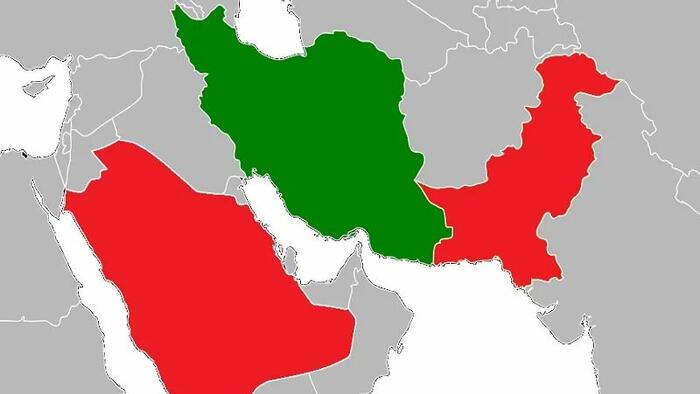
Saudi Arabia has been attacked multiple times by Iran on the pretext that the US military infrastructure on its territory has been used to some extent in theUS campaign against Iran,which led to what can be described as theThird Gulf War, in spite of theSaudi-Pakistani Mutual Defense Pactfrom last September. Iran clearly wasn’t deterred, but Pakistani Foreign Minister Ishaq Dar still reminded Iran about it in what seems to either be another attempt to deter an escalation or intimate impending involvement in the war.
In his words, “We have a defence pact with Saudi Arabia.I conveyed to the Iranian side about our defence pact, to which he asked me to ensure that KSA’s land was not used. Then I had shuttle communication, as a result of which, as you can compare, the least attacks from Iran are to Saudi Arabia and Oman.” Objectively speaking, it reflects poorly on Pakistan that Iran ignored Dar’s reminder and still attacked Saudi Arabia, hence why he coped that “the least attacks from Iran are to Saudi Arabia”.
Mutual defense pacts are supposed to deter attacks, not simply reduce the number and intensity thereof, which in any case didn’t even happen like Dar claimed since Iran continues to attack Saudi Arabia with gusto.Saudi Arabia and Pakistan are now thrown into the dilemma of either activating their mutual defense pact to significantly escalate the conflict through their joint involvement therein, likely coordinated with their shared US ally if that happens, or tacitly admit that it’s militarily impotent.
The crushing reputational costs of failing to activate their previously hyped-up mutual defense pact place additional pressure upon their policymakers to do so, even if the decision is delayed till after the US and Israel destroy more of Iran’s air defenses and missile launchers to reduce the risks to them.Saudi Arabia hosts US bases and its economy is extremely vulnerable to large-scale disruptions from low-cost drone strikes alone, while Pakistan is a “Major Non-NATO Ally” withvery close tiesto Trump 2.0.
The aforesaid factors greatly raise the chances of them activating their mutual defense pact. In that case, Saudi Arabia might also lead some of the smaller Gulf Kingdoms that havealso been attackedby Iran into battle against it as part of an even larger US-coordinated escalation, which could occur in parallel with Pakistani strikes and/or even limited ground ops on the anti-terrorist pretext of targetingBaloch separatists. Pakistan has three reasons to do this apart from the earlier-mentioned reputational one.
In brief, it wants torestore its roleas the US’ top regional partner after India replaced it following theIndo-US trade deal, to which end doing the US a favor in Iran could also be the cover for destroyingrival India’s port in Chabaharwhile improving the odds of them teaming upagainst the Taliban.Pakistan is actively destroying their leftover US stockpiles, which could facilitate Trump’s desiredreturn of US troops to Bagram Airbase, thus possibly replacingIndian influencein Afghanistan with American and Pakistani.
Therefore, by activating its mutual defense pact with Saudi Arabia after Iran’s attacks against its ally,Pakistan can set into motion a sequence of eventsfor building a new regional order with the US at the geostrategic crossroads of South and Central Asia. This outcome could also see them aid their shared Turkish ally’schallenge to Russiain the latter regionalong its vulnerable southern periphery. These calculations are compelling enough that Pakistan’s involvement in the Third Gulf War can’t be ruled out.
Source: ZeroHedge News
