Authored by Leon Stille via OilPrice.com,
-
Rerouting Saudi crude to Asia via Yanbu, Egypt’s SUMED pipeline and the Cape of Good Hope may add around $5 per barrel and up to four weeks to a voyage.
-
That premium is small compared with the economic damage caused by losing access to Hormuz or Bab el-Mandeb altogether.
-
Saudi Arabia’s alternative export infrastructure is not a temporary workaround but a strategic asset—although it cannot replace the kingdom’s wider need to diversify beyond oil.
The latest Saudi oil route looks absurd on a map.
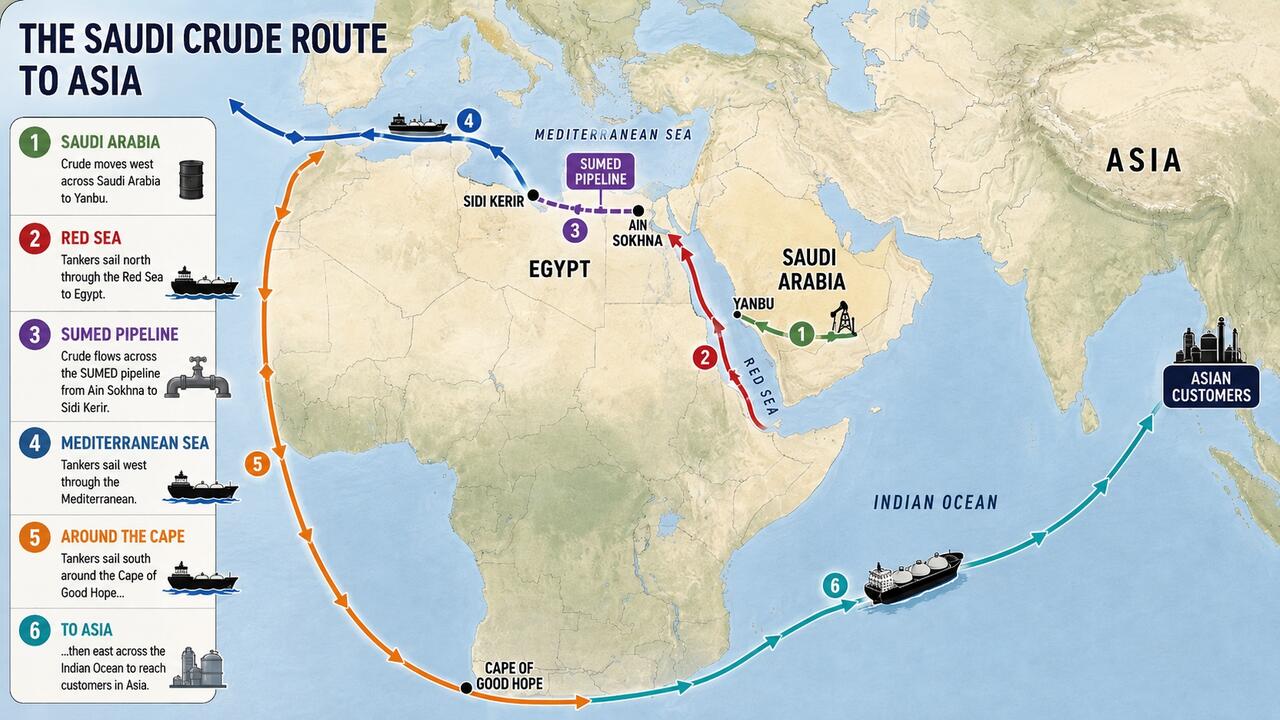
Crude moves west across Saudi Arabia to Yanbu, north through the Red Sea to Egypt, across the SUMED pipeline from Ain Sokhna to Sidi Kerir, then west through the Mediterranean before tankers sail around the Cape of Good Hope to reach customers in Asia.
Oil that started relatively close to Asia first travels thousands of kilometres in the opposite direction.
The detour reportedly adds around $5 per barrel once extra freight, fuel, insurance and pipeline charges are included. For a two-million-barrel cargo, that approaches $10 million. Aramco is therefore considering a separate pricing mechanism for crude loaded from Egypt’s Mediterranean port of Sidi Kerir, because its normal Asian official selling price no longer reflects the logistics. READ MORE AT SOURCE »

« Back to The Culture War