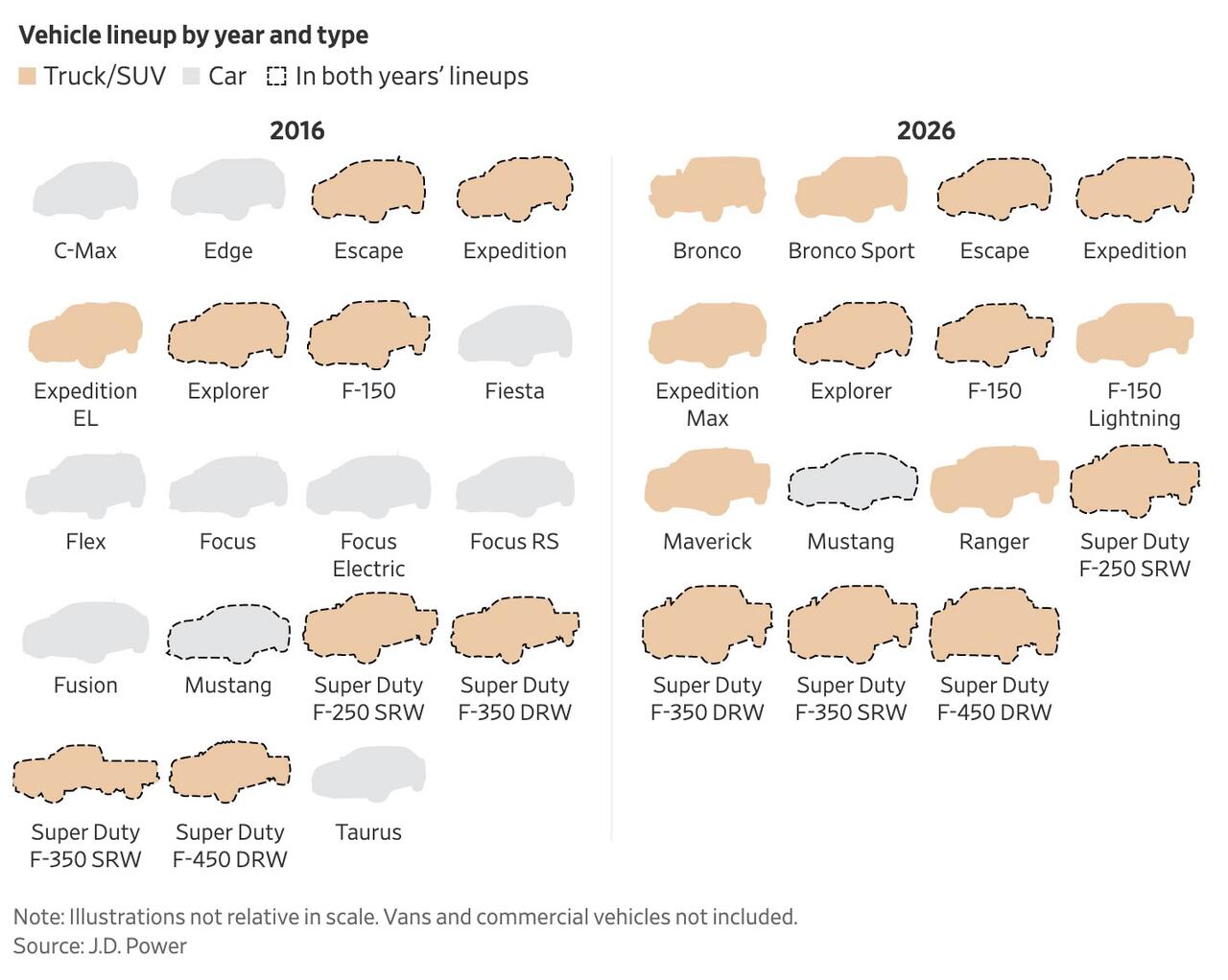
Ford has reshaped its business by narrowing its lineup to vehicles with stronger brand appeal and higher profit potential. Instead of offering a wide range of sedans, hatchbacks, and family cars, the company is concentrating on trucks, SUVs, sports cars, and models that customers can personalize with factory-backed upgrades, according to a new Wall Street Journal report.
At a recent event, Ford showcased customized Broncos, F-150s, and Mustangs, underscoring the company's emphasis on vehicles that stand out rather than blend in. As Matt Simpson, who leads Ford's customization business, put it, "This is the most passionate lineup that Ford has ever had."
The strategy reflects CEO Jim Farley's belief that Ford should focus on distinctive products instead of competing in crowded, low-margin segments. Rather than trying to match rivals across every category, Ford is investing in vehicles that reinforce its identity and command premium prices.
Executives argue that mainstream models such as the Focus and Escape often required costly incentives and discounts to remain competitive, making them less attractive from a financial standpoint.
The Journal writes that the company's decision also mirrors broader changes in the U.S. auto market. Buyers have increasingly gravitated toward larger pickups and SUVs, while the average price of a new vehicle has climbed to roughly $50,000. At the same time, tariffs, labor expenses, and other production cost