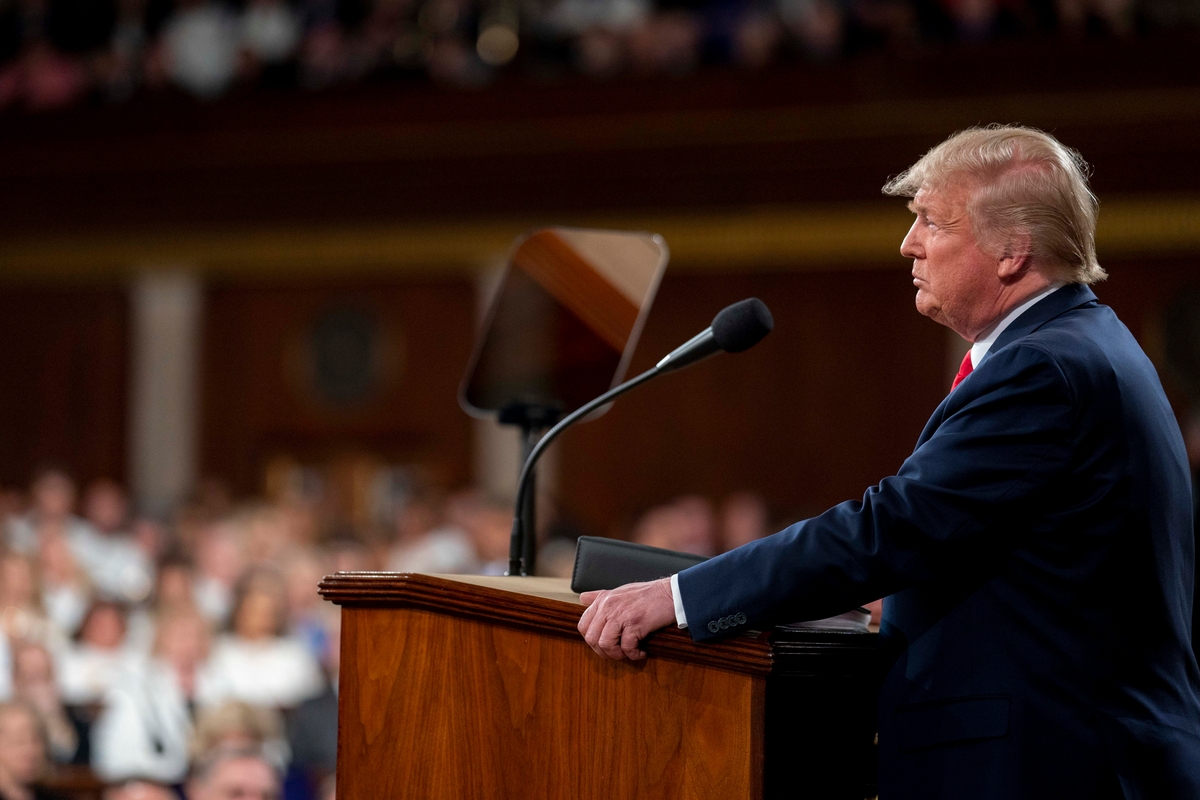
In a striking and wide-ranging address to the United States Congress, Donald Trump combined diplomatic rhetoric with sharp warnings aimed at Iran. He accused Tehran of a series of serious violations and set the stage for what could become one of the most intense diplomatic confrontations in recent memory.
While Trump emphasised that he preferred a diplomatic solution to tensions between the two countries, he also laid out a detailed rationale for why the United States would not tolerate what he described as threats from Iran.
During the2026 State of the Union, the president claimed that Iran was rebuilding its nuclear programme after it had been struck in 2025 and was developing missiles capable of eventually reaching the American mainland.
He further blamed the Iranian government for widespread violence and criticised Tehran's handling of internal unrest, citing the deaths of thousands of protesters in nationwide demonstrations.
Shortly after Trump's speech,Iran's Foreign Ministry fired back. Spokesman Esmaeil Baqaei used the social platform X to dismiss the US claims as 'big lies' regarding Iran's missile programme, nuclear activities, and the reported protest deaths.
Baqaei framed these allegations as part of a broader campaign of misinformation and propaganda, directly challenging the narrative put forward by Washington. While he did not address each claim in detail, he insisted that Tehran would not allow its policies or national security to be misrepresented.
Trump painted Iran as a country with ongoing nuclear ambitions and an expanding missile programme. He claimed Tehran had developed missiles capable of threatening European nations and US forces abroad, and that it was working on systems that could eventually reach the United States.
He reiterated that the US would never allow Iran to acquire a nuclear weapon, describing this stance as the foundation of all diplomatic and strategic actions. Trump also highlighted a US operation in June 2025 targeting Iranian nuclear sites, which he said had 'obliterated' parts of Iran's programme.
Iran, however, has consistently maintained that its nuclear work is purely civilian and peaceful. This position is backed by US intelligence assessments and international watchdogs in recent years.
Trump also cited reports claiming that Iranian authorities were responsible for tens of thousands of deaths during large-scale anti-government protests. This figure is significantly higher than official Iranian reports, which listed over 3,000 deaths and attributed much of the unrest to alleged 'terrorist acts.'
Source: International Business Times UK
